Author Archives: kkovarik

Back to School

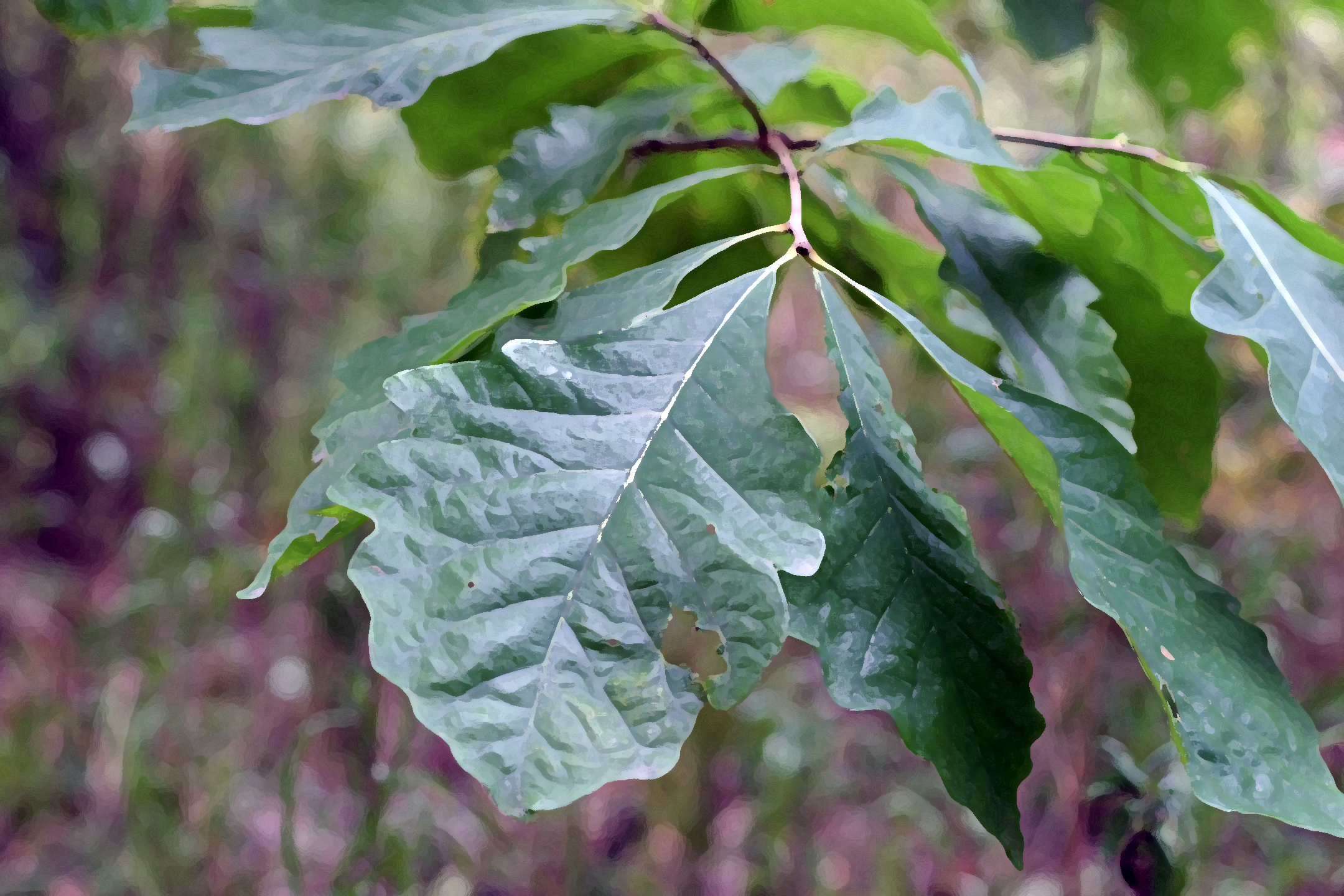
School started last week for Indianola K-8, one of LOUA’s partners, and the teachers there are looking for ways to get involved with the arboretum. One teacher has volunteered her class to help with the leaf drawings for the tree markers in the arboretum.  She plans to take her class on a walking tour, collect leaves from the canopy trees and then begin sketches.  Two of the 2nd grade teachers are interested in beginning the swallowtail habitat.  Other teachers will be introducing seeds and movement into their classes next week. It was a very exciting beginning to the school year, and all of the teachers have come back ready to explore the ecology and environment that surrounds their school.
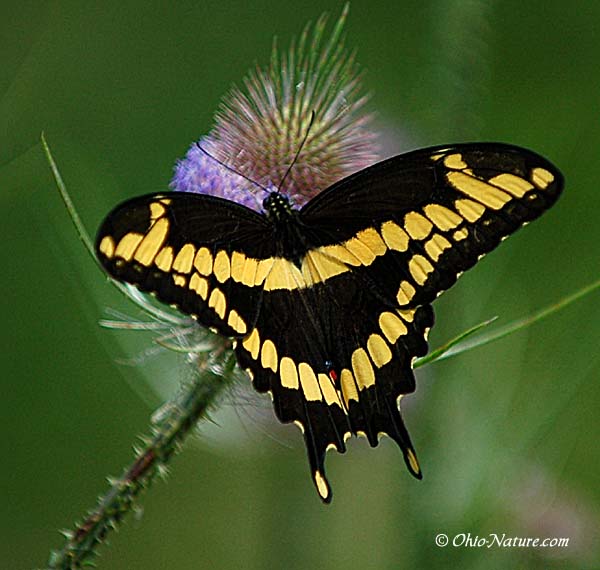
Nineteen of the teachers at Indianola will be using the Outdoor Learning Environment this fall to enrich their classrooms.  Students from kindergarten through eighth grade will be building butterfly habitats, writing poetry, building sculptures, composting, studying weather, leaf identification, along with movement through the garden.

It’s really great that these students are going to be instilled with a love of nature!

Until next time!
Calumet Bridge

I’ve just come back from looking at the Calumet Bridge over the ravine, the one by the North High School. For those of you who aren’t from the neighborhood, the bridge has been removed because it was falling apart more rapidly than expected. Pete and Mike McLaughlin said that they had cut down many of the trees, and I had to go see for myself.

So many trees were now gone, including a beautiful black gum that Pete thought was over 300 years old. Such a magnificent tree, having been here since 1710 or thereabouts. The fall color on that tree was so beautiful. The nice thing about crossing the Calumet Bridge was that Nyssa’s crown was right at eye level, making it a unique perspective from a human’s point of view. (The scientific name for the black gum is Nyssa sylvatica which I somehow turned into Nyssa, a lovely name for a lovely tree.) Along with Nyssa some oaks were taken down. I know that sometimes these things can’t be helped, but I am very sad to see my lovely Nyssa gone. Although what’s done is done, we are working with city officials to make sure the restoration efforts are sufficient for the amount of damage that occurred.

Until next time.

Fall Color

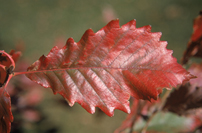
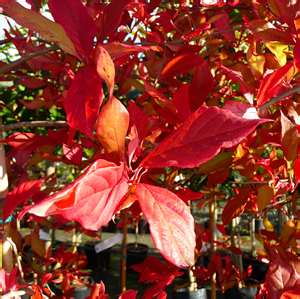
It’s official, Fall is here! Pete thinks I’m a bit premature, but I saw some trees that had leaves that weren’t green. Granted, you had to look hard for them, but there they were: a beautiful reddish-orange maple and a bright scarlet sassafras leaf.  Pete says the color change occurs when the days get shorter. As winter approaches, the trees know that they won’t have enough light or water for photosynthesis. When they stop making food, the green chlorophyll leaves, allowing the other colors to shine through. I’ve lost myself many a time just picking up a colorful leaf, staring at its beauty. Once, it was poison ivy…but still very beautiful!

Autumn is one of my favorite times of the year. I love fall and winter, with their crisp air and woolen clothes. When Pete and I lived in Tallahassee, Florida, there wasn’t much happening in way of fall colors. I remember there was one tree fairly close to us that was a maple of some sort, and it would change to a glorious red. Every year, Pete and I would get in the car, drive to this restaurant and park in the back part of the lot where the tree was. I’d get out, sit on the car hood and just stare – I missed it so much. We’d also head up to Atlanta, Georgia, where there were even more trees that we could look at. It’s funny the things that you take for granted (almost) when you no longer have them around.

Oh, and I missed snow. I’d come home to Ohio each year, hoping to have snow to play in. I’d get back to Florida, and my mom would inevitably tell me when I called to say I was home safe and sound, “It’s snowing here!” Christmas just wasn’t the same decorating a tree in shorts and sweating. I usually lost it when Bing Crosby started to sing “White Christmas.” And the smell of a Christmas tree is one of my favorites. Our first Christmas back in Ohio was spent up in Michigan with my brother and sister-in-law. They had two feet of snow on the ground, and on Christmas Eve, it started to snow again. I had forgotten the quiet that comes with snow, and the blueish beauty of it under street lights.  You somehow feel that there can’t be anything wrong in the world at that moment.

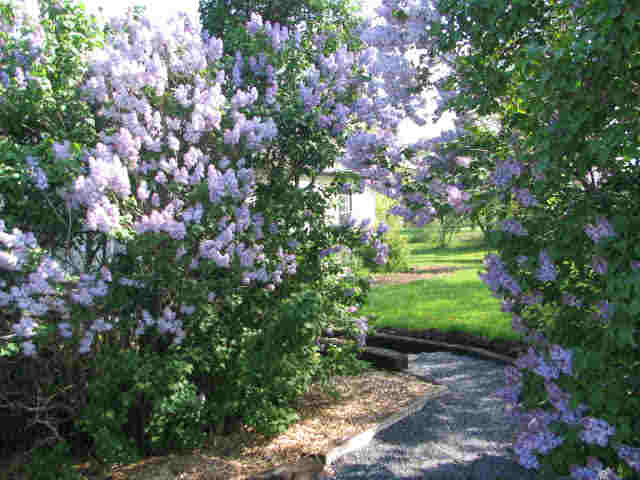
That reminds me of something that Pete did when we were in Florida. He travelled to Chicago and came back, knocking on the door to our apartment. I was a little peeved, thinking,”He should have a key, why do I have to get up and open the door?” But I did, and there he stood, lilac flowers in hand. They don’t grow in Florida (too hot), and lilacs are my favorite flower – such a romantic gesture that brought me to tears. Lilacs grew outside the window by the bedroom at my grandma’s that was always mine when I came to visit. And my grandpa used lilac cologne. They were also the flowers I carried at my renewal of vows ceremony, cut from my back yard.

Another plant aroma related tale: My boss had some sweet grass that she was given by a Native American Indian. I put it to my nose and started to tear up: it smelled exactly like my grandpa’s barn where we played as kids, a memory I hadn’t thought of for many, many years. Smell has such strong recall. I guess that’s why plants and trees are very much mingled with my memories.

Until next time!

Weeds and More Weeds!

I spent a good chunk of Saturday morning removing weeds from my front and side gardens. Because of all the rain as well as the extreme heat, the weeds had grown to giant proportions. I was especially having a rough time with the crab grass, which laughed at the mulch I had put down to keep the weeds at bay, spreading its tentacles like an octopus, sending its roots everywhere. Between that and the sour grass, I filled three garden bags. There’s also some plant I’ve not seen before that was everywhere. But it all looks so much better…for now!

This isn’t my first battle with weeds. One of the previous owners of our home had the misguided idea to plant Canada thistle in our back yard. My mom and I spent half a day ridding the yard of every trace of the weeds. Within a week, they were back as if we had never removed them. We finally got rid of the problem by taking all of the soil they were growing on and putting it into our empty fish pond. Pete and I went through each shovelful, looking for the tiniest root, which would start a new plant.

Another nasty weed we have is nut sedge. It grows everywhere in our yard; it’s only redeeming quality is that it is very easy to pull out – if you could call that a redeeming quality. We’ve also fought morning glories, dandelions, and some viney thing with lobed leaves.

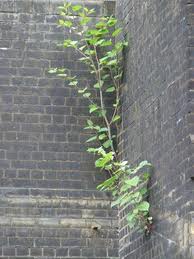
It always surprised me where weeds could grow – and how proficient they were in taking over.  Give them a crack and they’ll take a yard. Some plants are so tenacious that they will grow through anything including man-made materials. I suppose I should count my blessings that we didn’t have any of those plants. Japanese knotweed is capable of growing through pavement, walls and buildings as the picture to the left shows. Granted, it will take a few years to do so, but grow through that weed will.

I wonder how many gallons of salt water (my grandmother’s solution to weeds) would be needed to take down a Japanese knotweed? A Gordian knot indeed… perhaps Alexander’s sword would do the trick.

Until next time!

Stop, Children, What’s That Sound?

With the weather getting cooler in the mornings (Yea, no air conditioner running!), I’ve been able to walk to work again. Because of the Calumet bridge being closed, I’ve only got two routes to walk to OSU: High Street or Neil Avenue. Regardless of how I get to work, I take Olentangy Street along the ravine. A month ago, as I walked along Olentangy about a block east of High, I heard a bird song that I’ve never heard before. It’s a two-note call linked together, ending on the high note. I know it’s not a cardinal because it doesn’t sound the same. In fact, the call sounds like it wasn’t made by a bird at all but by a computer. It’s very hard to describe!

Well, I heard that bird again this week, this time a few houses from my home on Crestview. I spent a few futile minutes looking for the bird with no luck. Pete has no idea what the critter might be – mostly because I can’t reproduce the song very well, and he’s not heard it yet. So if anyone has any thoughts, please let me know!

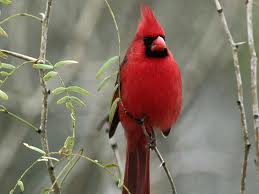
Speaking of cardinals, I read some interesting research on those birds. I love my finches, chickadees and cardinals. We have a pair of cardinals in our yard. Such beautiful birds, and so well-known. Anyway, the research is co-authored by Professor Amanda D. Rodewald of Ohio State. She indicates that cardinals in urban forests don’t lose their bright red color as easily as their rural counterparts. Color is important because females look for brighter colored males who are seen as being more healthy. But in urban areas, it’s argued that the carotenoid-rich foods that give the cardinal its scarlet color are more readily available, even to birds that aren’t in the best of shape. I just know that I love to see cardinals. That pop of color is wonderful! I especially like seeing them against the snow in winter. Pete tells me that cardinals are resident birds that stay all year long, unlike migratory birds that are only passing through on their way to somewhere else; think Canada Geese.

If you’ve any thoughts on my mysterious bird, send me a comment.

Until next time!

Tree Map Mashup and Other Updates

As I’ve mentioned in recent posts, we’ve been working on a few maps for the Arboretum. One map is of the significant trees within the Arboretum. And since we now have the list of addresses from the City of Columbus of where trees can be planted, that, too, has been turned into a map. [Thanks, John!]  So, if you go to the Maps section of the blog, you can see John’s mashup of the maps of the significant trees along with the map of where trees can be planted by the city. Both are interactive with markers that can be clicked on for more information. Sample information for the significant trees would be:

Address:
City: Columbus
State: Ohio
Location: Front yard
Genus: Quercus
Species: alba
Common name: Oak, White (2)
Symbol: w
Notes:
latitude: 40.024318

In this case, the symbol “w” stands for white oak; John’s included a legend to explain the various symbols for the types of trees

Sample information of the city’s addresses for tree planting is:

Number:
Street:
# oFront tree: 1
SideOn: Front
PlantingCode: PSLarge
Comments: OLD STUMP
Assigned:
NEWS: E
MapPageNumber: 19 J-14
latitude: 40.022861

The Planting Code is the size of tree that can be planted.

Another change to the blog is I’ve added a roster of our Steering Committee. Our little group has grown by quite a bit, and I expect it will grow even more as we get additional partnerships going.

Until next time!

Water Conservation

As Pete and I were running some errands yesterday, the usual comment about how hot it was outside (and humid!) came up. I mentioned to Pete that although it has been very hot and humid (with temperatures over the norm for most of July), we weren’t in drought conditions like other parts of the country, that we had received a lot a rain as well. So imagine my surprise when I read “Today’s Weather” in Sunday’s Dispatch (hoping to see something without the words “hot” and “humid” in the forecast) that the Water Report for Central Ohio was “Dry,” meaning: “Use water only as needed.” I was also surprised to read that with the exception of Griggs Reservoir (with a whopping surplus of .017 feet), all the other reservoirs were below normal. Now granted, the amounts weren’t huge, with -1.41 feet below normal being the lowest level at Hoover. But I had been certain that with all this rain, those levels would have been above normal.

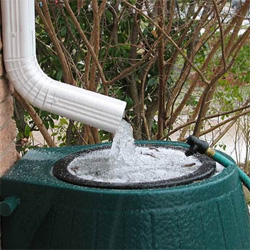
One very simple thing that homeowners can do to conserve water is to collect rain run-off. I’ve mentioned that Pete and I have two rain barrels. They’ve been pretty full for most of the summer and are used to water our vegetable garden, newly-planted greenery and the plants on our porch and inside the house. This water is especially perfect for our indoor plants because it doesn’t contain dissolved solutes like city water does which can’t easily leach out. The other downspouts that we have are directed into several rain gardens, keeping much of our water out of the storm water system.

In addition to rain water, we try and collect other “waste” water from the house: the water from the cat’s water bowl, and the water that runs while we are waiting for the shower to heat up. We use buckets to save this water to add to the rain barrels or water outdoor plants because any solvents in the water will leach out whenever it rains.

All of this adds up to savings for us and the planet. The rain isn’t going over concrete or other impermeable areas, picking up all sorts of chemicals and other bad things, all which end up in the Olentangy River (in our case). Having the water kept on our property helps to have the ground filter out much of the chemicals before the water gets into the water table. According to the EPA, lawn and garden watering accounts for up to 40% of water use during the summer. The EPA also indicated that the average homeowner will save about 1300 gallons of water each year by using a rain barrel. I tried to figure out how much money that would translate into, but the City of Columbus Public Utilities website was beyond me. Their rate chart would confound an accountant…

So I hope by now, all of you reading this are wondering, “Where can I get a rain barrel?” Well, there is a rain barrel workshop scheduled at the Whetstone Library on August 25 at 6.30 PM. [There are others scheduled as well.] You need to be a resident of Columbus and must register along with advanced payment of $45 to the Franklin Soil and Water Conservation District. Here’s the link: http://www.franklinswcd.org/columbus-rain-barrel-program/columbus-rain-barrel-workshops/

Until next time!

8.3.11 LOUA Meeting

We had our monthly LOUA meeting this past Wednesday at our house. It was one packed meeting, and we weren’t even all there, missing a few members who were unable to attend; we may need to find a bigger space in the future! Our merry little band has grown to 14 members. It’s great that so many people are interested in the Arboretum. I won’t bore you with all the bits about the budget and volunteer hours, but there were some other pretty exciting parts of the agenda.

One of the discussions revolved around the amount of trash that is getting into the ravine through the run-off from I-71. The clean-up on Saturday showed just how much trash comes in with heavy, torrential rains. We really need to stop the garbage before it comes into the ravine; picking up trash around Silver Drive and I-71 will only alleviate some of the problem as most of the garbage is washed down from I-71 and therefore, not easily picked up.

We’ve also made good progress on the two walking tours of significant trees within the Arboretum. There will be both a long and short route. All the possible trees have been identified, so it’s now a matter of creating a path from tree to tree for a lovely walk that offers a nice mix of all the types of trees we are lucky enough to have in our neighborhood. The trees highlighted in the walking tours will be the best, easily-viewed examples within the Arboretum. We also received the city’s list of places where trees can be planted in the fall. With an exact number of trees, we can begin to work on figuring out what trees we need to have at hand: how many oaks, how many hickories, etc. This is really coming together. I can’t wait until that first tree is ready to be planted as I know it will be a celebration and culmination of all of our hard work.

The best part of the meeting (at least in my opinion!) was seeing Jake Boswell’s sample of the markers for the trees. The design isn’t quite finalized, so I can’t show you just yet what they will look like. I promise I will as soon as we have the final version. But I must admit that the marker is beautiful, informative and best of all, inexpensive. These are the markers that will be placed by the significant trees on the walking tours, giving those on the walk a little bit of information about the tree: species, common name, the like.

I think that about covers it.

Until next time!

Ravine Clean-up Update and Other Things

I just wanted to let everyone know how the ravine clean-up last Saturday went. I could only stay for about an hour as my allergies would get the best of me had I stayed longer. As it was, I was very stuffy all of Sunday!

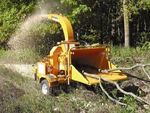
Anyway, the day went better than expected as far as the amount of invasives that were removed.I wasn’t surprised on the number of people who showed up to volunteer. A big thanks to everyone who turned out: members of Friends of the Ravine, Lower Olentangy Urban Arboretum, interested neighbors, Boy Scouts, too many groups to name them all. And a really big shout out to Carl and Tyrone from the City of Columbus. They brought a huge chipper and a chainsaw that made short work of all of the honeysuckle. Carl then went back to paint all the stumps with herbicide so they wouldn’t grow back. Pete took me to see the part of the work that was done at the western edge of the ravine by the Xenos School. Unbelievable. What had once been a forest of invasive honeysuckle was now clear, the way it was meant to be. The squirrels were wondering around, looking as if they didn’t recognize their home anymore. I don’t blame them – the change was nothing short of miraculous!

It was finally nice enough today for me to walk to work again, although I doubt I’ll be able to do so for the rest of the week. As I walked, I found a beautiful cardinal feather, such a vibrant red. It seems odd to me that with all the birds flying about, there wouldn’t be more feathers! I did miss walking through the Oval and the trees, but my walking route doesn’t take me that far.

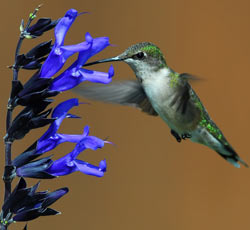
When I came home, Pete had planted our Swamp Oak in the backyard. We’ll be certain to keep it well watered this week with the high temperatures. It’s such a lovely tree, with its bi-colored leaves. The undersides are a beautiful silver color and the tops are a dark, verdant green. As we stood admiring it, a female hummingbird came to sit on the clothesline, just a few feet from where we were standing. I’ve named her Hannah. The funniest thing to hear is the squeaking noise she makes as she moves around. Hannah is very inquisitive and very territorial. Should another hummingbird enter her territory, she’s off in a blur to chase it away. I guess she doesn’t want anyone else sipping from the jewel weed, pineapple sage or other bright red flowers we have in the yard. Such a tiny little bundle of fierceness!

Until next time!

We have a new tree in our backyard

Our newest addition is a Quercus bicolor, or the white swamp oak. It can handle slightly hydromorphic  soils. And no, I had no idea what that word meant (other than something about water) until I looked it up on the Internet: “of or pertaining to soil having characteristics that are developed when there is excess water all or part of the time.” So our new baby will fit in perfectly in our backyard because Pete has made a rain garden back there. The soil tends to stay wetter because of that.

It’s funny that I ended up with this particular tree. There is one a few streets over from our house on the way to the ravine. I always pass under it and comment on how much I loved that tree. The branches are sweeping and have large lobed leaves. It can live 300 years, achieving a height of 65 to 80 feet. The fall color is very nice for an oak, a beautiful scarlet. Pete remembered my love of this tree and got one for me. We will have to keep a careful eye on this little guy as it can form a hybrid with burr oaks, one of which we have in our front yard. I was going to head out to admire and water it, but right now, it is raining cats and dogs. Our rain barrels will be full again! As will our neighbor’s car, whose windows are partially down. I did try knocking on your door, John!

It’s amazing to me that a tree can bring such joy.  I work at Ohio State, and with all of the construction around Bricker Hall, I have to get into the building from the side that faces the Oval. I just love walking under the trees, most of them fairly large, although a few new ones have been added in. There is one, a sycamore (another one of my favorites; I love the bark) that was around in 1776. If only it could talk. There is another special tree that I never knew about after attending OSU for four years and working there for another 11. It’s a lovely oak tree planted in memory of a soldier who was killed in France in 1944. Since I have studied World War II history, I asked the archivist at Ohio State about the tree, and he managed to find me a picture of the young man who was killed. (Sorry, the photo’s on my computer at work.) Neither of us has been able to discover why this particular soldier had a tree planted in his honor. Not that there needs to be a reason; in my mind, they all deserve a tree in their name for everything that they have done.

Well, I am going to sit out on the front porch for a little while; the lightning has let up, and I love hearing the distance rumble of thunder and the rain falling down. I’m certain that the temperature will have dropped with the storm, too. The air will be fresh and sweet smelling.

Don’t forget the clean up in the ravine tomorrow. All this rain should make for easy pulling of the invasive plants! And Pete is famous, having had a front page article in The Booster with his name in it (granted, under the fold) about the clean up. Details are: Saturday, July 30, from 9 – 3. Meet in Glen Echo Park beneath the Indianola Avenue bridge. There’s a map at www.FriendsOfTheRavines.org/

Until next time!