Category Archives: General Information

The First Arboretum Trees are In!

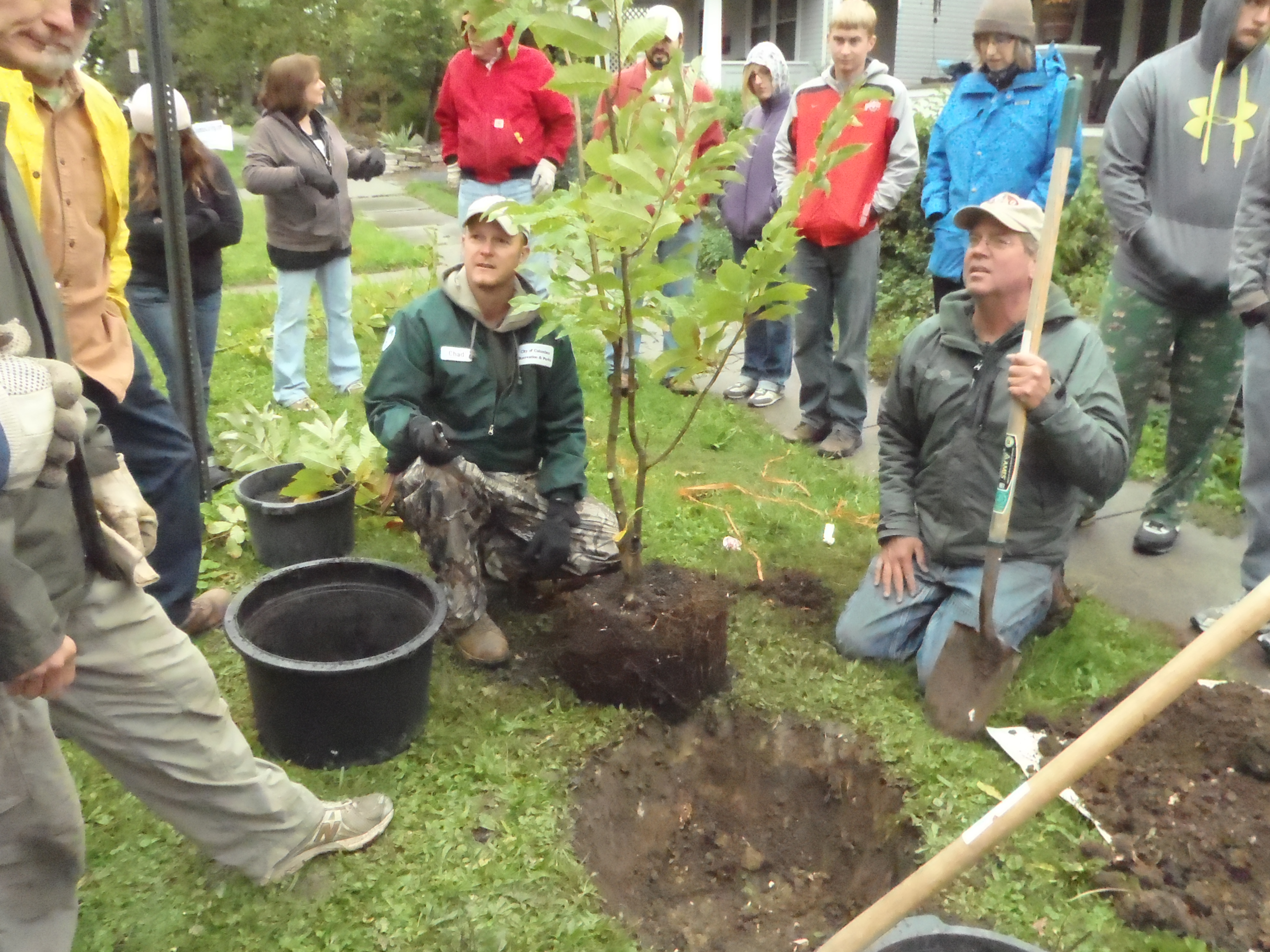
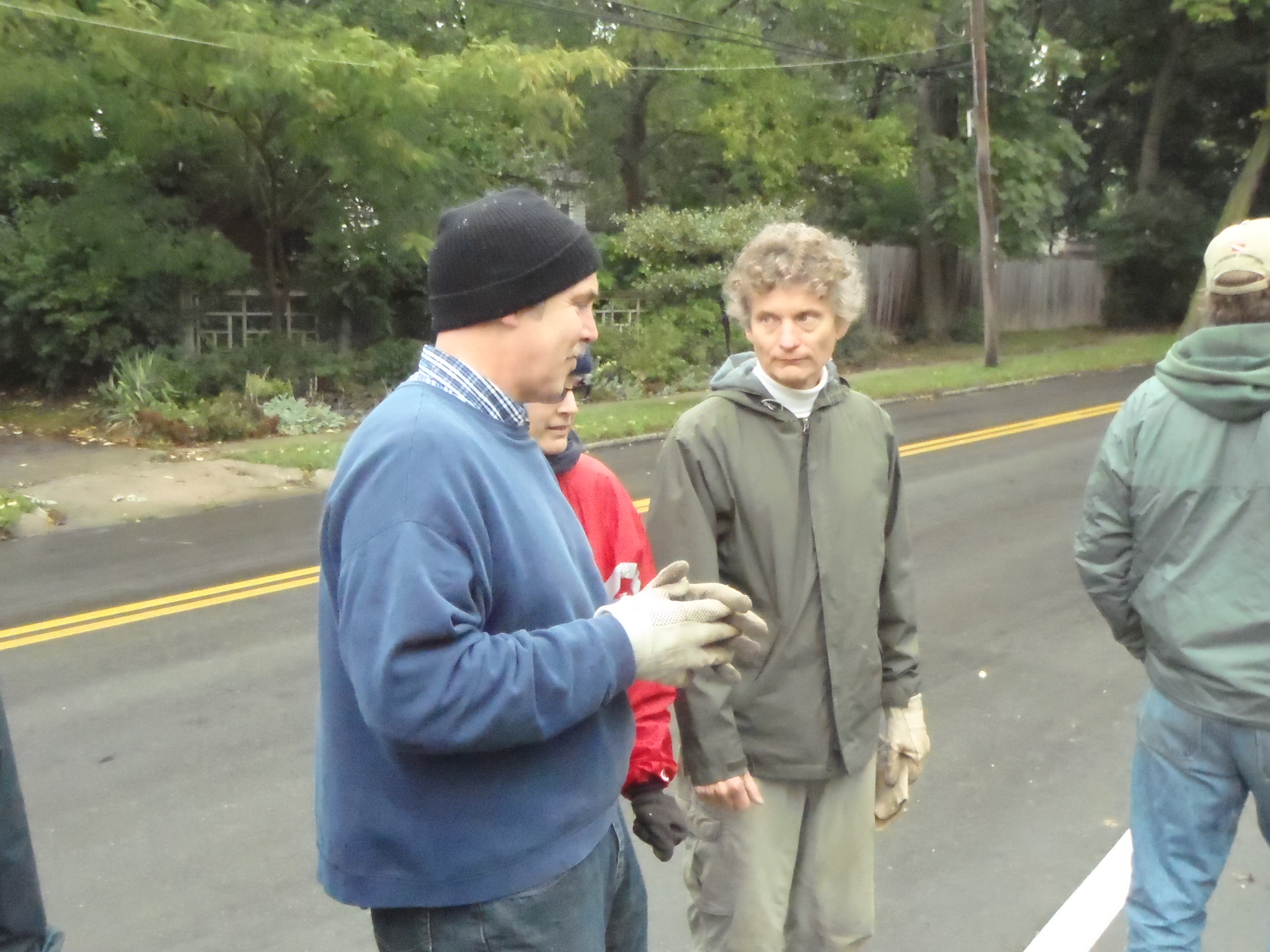
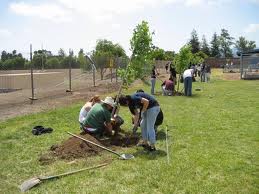
Saturday was a milestone in the Lower Olentangy Urban Arboretum: the first 60 trees we bought with grant money were planted. First, I want to thank everyone who showed up in the less than perfect cold, damp, and rainy weather (that is, if you were a human, not a tree going into the ground…) to help us out. A very special thanks goes out to Chad, from the City of Columbus and the OSU students who came out in great number (and to Laura Fay for finding us all of those students). Chad showed everyone how to plant the trees, and the OSU students, along with the other volunteers, went out and got it done. It was so wonderful the next day to go about in the Arboretum and see all the newly planted trees. Of course, the whole process went so smoothly because of all the pre-planning done by Mike McLaughlin. He made it so we could all be amazing, simply by being so amazing himself. And also, I’d like to thank Mike’s husband, Dan, for allowing us to take up so much of Mike’s time these past few months.
I feel like I am giving a thank-you speech for an Academy Award, fearful that I will leave someone out…like my husband, Pete! There many people to thank who made this possible: all the members of the steering committee, and so many others that have been lending their expertise, ideas, skills and time. This really was a community effort that wouldn’t have made it this far without a lot of effort from everyone. I just can’t describe my feelings on seeing something that was a seed of an idea grow into a reality. This is such a lasting legacy for the Arboretum, for Columbus, and for the planet. My thanks to each and every one of you who have been involved. You are all amazing, and I look forward to working with you in the future. There is so much more we can do!
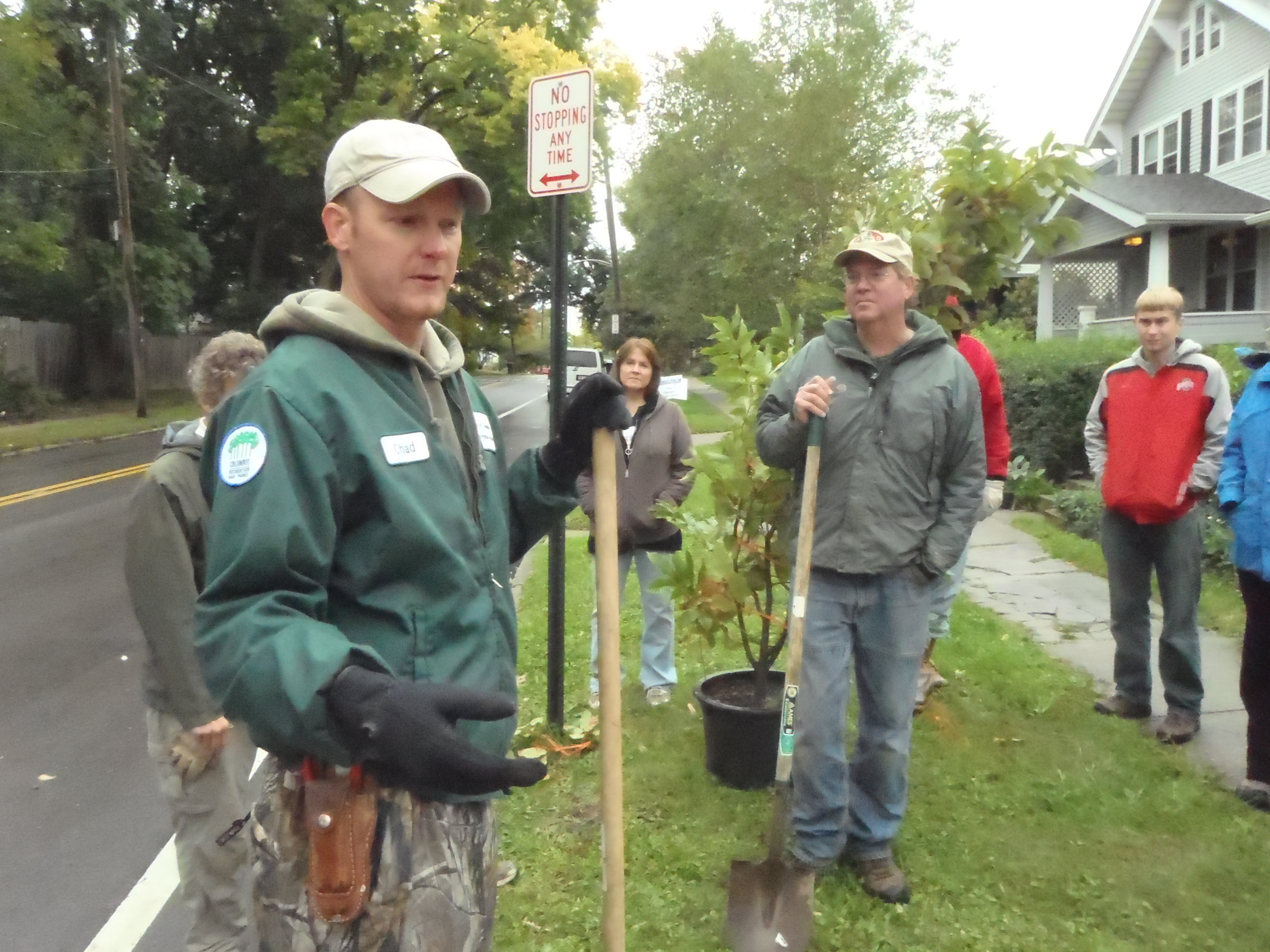
The details of the tree plantings were that the trees were planted all over the Arboretum. We planted a variety of trees, including redbud, hop tree, hop hornbeam, and American chestnut, just to mention a few. Next week, a lot of oak trees (my personal favorites) will be planted. And the weather promises to be much nicer – sunny and warm. Then one more Saturday of planting and we are done. The air feels cleaner already!
Until next time!
We’re Planting Trees – Can You Help?

Lower Olentangy Urban Arboretum (LOUA) partners will begin planting 170 purchased trees this Saturday, October 1st, and then continuing the following two Saturdays for a total of three planting days.

Arboretum partners and volunteers will meet at 9 am on October 1, 2011 at the Indianola Informal K-8 School parking lot on the north side of Weber Road. An Ohio Department of Natural Resources staffer will be on hand to give everyone a quick lesson on how to plant a tree before volunteers are teamed up.

“We expect to plant approximately 60 trees each of the three work days” said Mike McLaughlin, arboretum board member. “Trees range in height from 6’ to 8’, most are in containers, but a few are balled and in burlap.”

Anyone is welcome to volunteer and is encouraged to contact Peter Kovarik at
pkovarik@cscc.edu, or phoning him at 261-0092, so that arboretum workers can make sure to have enough supplies available. Volunteers are encouraged to bring a shovel; arboretum partners will be providing water.

If you are debating about volunteering, please know that even if you help out with only one tree, that would be greatly appreciated! And just to give you an idea of the benefits of any tree you help plant (or have in your yard), you can go to this site: treebenefits.com/calculator to find out. All you need to know is the type of tree and its diameter at chest height.

Hope to see you on Saturday!

Until next time!

Seagulls and Other Ohio Birds

I always laugh whenever I see a seagull in Columbus as there’s not one bit of sea shining anywhere near central Ohio. I am more used to seeing them by Long Island Sound, which although full of salty seawater, is not the sea, as my husband, a native of Connecticut, is so fond of reminding me. Perhaps they should be called soundgulls instead?

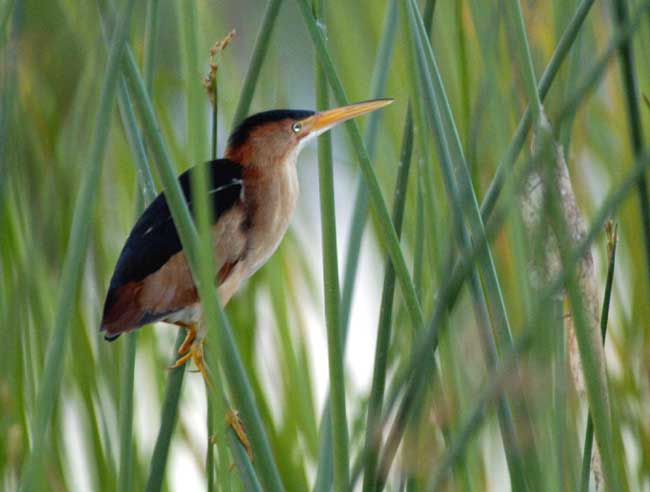
One of the things that the arboretum will do is bring a more diverse bird population into Clintonville. Pete says he’s noticed a lot more birds and insects around and thinks that it’s because, in part, of what we’ve done in the ravine to restore the native plants. I’ve just heard about another place near to Columbus that is also attracting birds, although birds that prefer open wetlands to closed woodlands: Glacier Ridge Metro Park, near I-270 and Route 33 in Dublin. The area was once part of the Darby Plains, lands that used to have a plethora of flora and fauna. By allowing water to come back into the park, a wetland was created that now has some fairly rare wetland birds visiting it. Some of the birds sighted include: the endangered king rail, the Virginia rail and sora, pied-billed grebes, American coots and least bitterns, the smallest heron in North American, pictured at the right. To be honest, all of the birds are not familiar to me. But it’s great that they have found a place to live and prosper.

In other arboretum news, the plantings in the ravine on Saturday, September 24 went very well. Friends of the Ravines and the Lower Olentangy Urban Arboretum planted native trees and shrubs in areas where there were successful honeysuckle-removal events. Volunteers carried plants, dug holes, and installed and watered plants. These plants will now fill in the empty areas that were created when all of the honeysuckle plants were removed, providing appropriate food and cover for native wildlife. Thanks to everyone who participated; we would be lost without our many volunteers.

The big news is that our first trees will be planted in tree lawns next week. More details as they become available – I am so excited!

Until next time!

We’re Planting Trees – Can You Help?

To kick off the project for the restoration of native trees, Lower Olentangy Urban Arboretum (LOUA) partners will begin planting 170 purchased trees on Saturday, October 1st, and then continuing the following two Saturdays for a total of three planting days.

Arboretum partners and volunteers will meet at 9 am at the Indianola Informal K-8 School parking lot on the north side of Weber Road. An Ohio Department of Natural Resources staffer will be on hand to give everyone a quick lesson on how to plant a tree before volunteers are teamed up.

“We expect to plant approximately 60 trees each of the three work days” said Mike McLaughlin, arboretum board member. “Trees range in height from 6’ to 8’, most are in containers, but a few are balled and in burlap.”

Anyone is welcome to volunteer and is encouraged to contact Peter Kovarik at
pkovarik@cscc.edu, or phoning him at 261-0092, so that arboretum workers can make sure to have enough supplies available. Volunteers are encouraged to bring a shovel; arboretum partners will be providing water.

In other arboretum news, two preliminary arboretum walks have been drawn; a short and a long. Both walks begin at the Indianola Informal K-8 School at 251 West Weber Road where the school administration has generously agreed to allow future visitors to the arboretum space to park in the north parking lot.
The short walk, which is expecting to take less than an hour, will highlight 34 native Franklin County deciduous trees while the long walk highlights 43.

Although the long walk hasn’t been measured yet, it takes visitors past other neighborhood jewels including two churches, two schools, an organic grocery store, a tavern, a Dairy Queen, and through a Columbus City park.

Work on the arboretum will continue into the winter as arboretum partners will be working on making the tree markers for those identified on the walks, working with city administration to advise regarding signs for the two routes and safety improvements, and printing the walk brochures.

LOUA will also continue to work with the city’s department of recs and parks whose support for the arboretum project has really been above and beyond, for a possible supplementary tree planting in the spring.

Arboretum board members are envisioning a spring ribbon-cutting event while the dogwoods are in bloom.

Until next time!

The Trip Northeast

I apologize for the long lapse between posts. Pete and I went on a week-long trip back to Pete’s home in Connecticut. Between the preparations for the trip and the trip itself, time just got away from me!

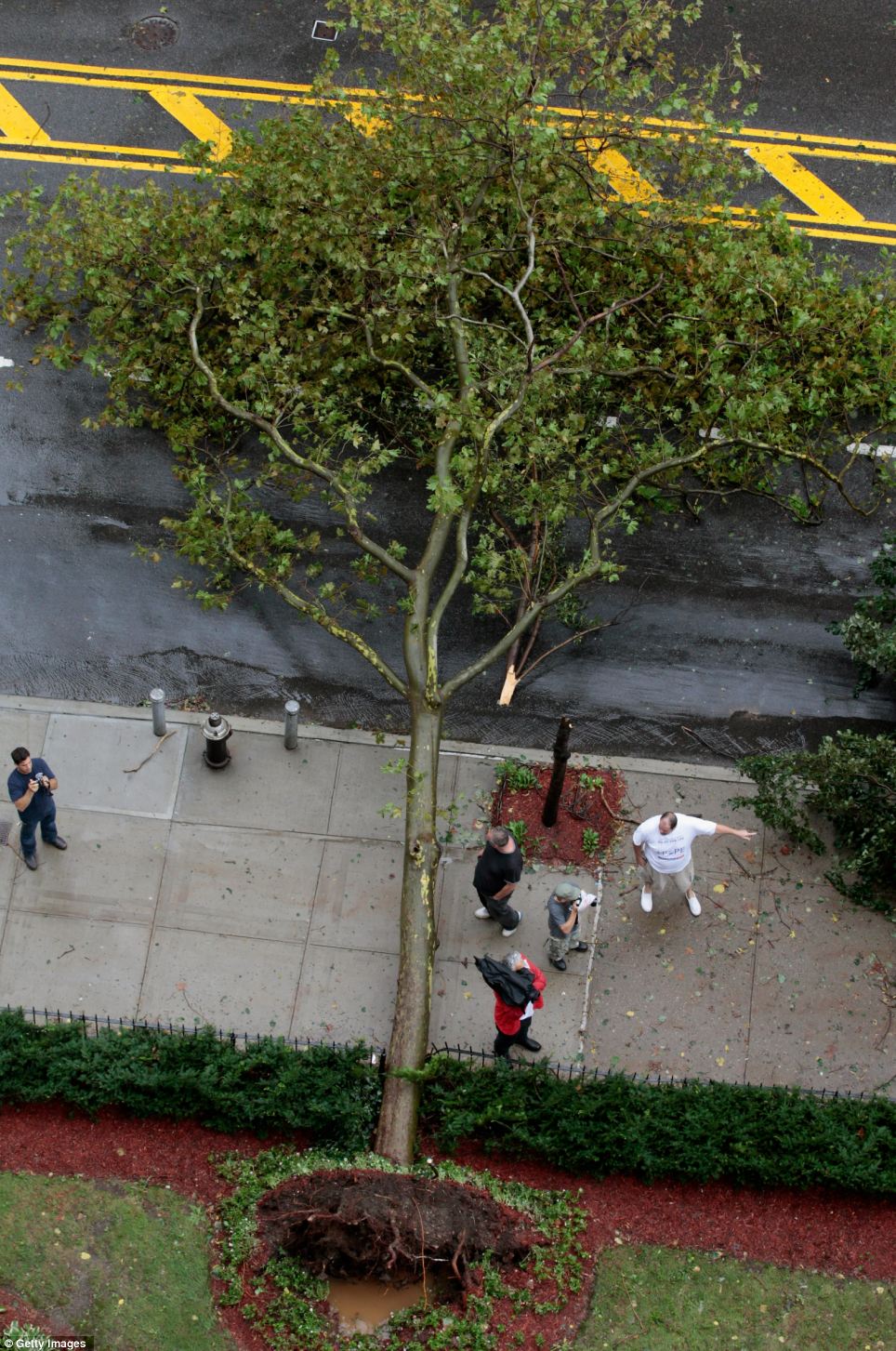
When Pete and I headed off in our car, we both wondered what the trip would show in terms of damage from Tropical Storm Irene and the additional rains that followed. We first noticed the effects in crossing the Susquehanna River. Normally a wide, placid river, the waters had expanded even more. One island was nothing more than the crowns of the trees that were on it. As we got closer to the coast, we saw more damage, mostly to trees. One river had hundreds of trees that had fallen over into the water from their soil being washed away at the roots. Then we rode past a flood plain for the same river and saw many smaller trees that had been pushed over by the sheer force of the water. Within New York City, there were many trees including a group of oaks that were uprooted. Along the Merritt Parkway in Connecticut, more trees were down. In fact, everywhere we went, trees were down. So very sad.

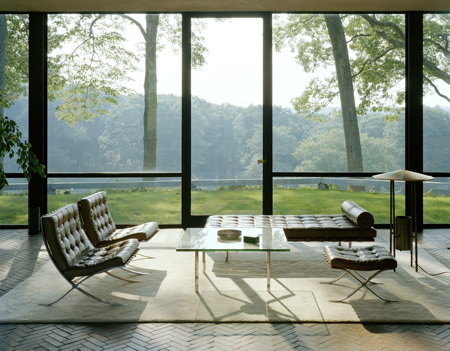
But we also got to see the glory of trees in the Pennsylvania woods. all green and lush with an occasional burst of color – much too soon to see the full beauty of autumn just yet. But the most amazing trees were in Philip Johnson’s Glass House and the Rockefeller’s summer home near Sleepy Hollow, New York. Mr. Johnson was originally from Ohio and when planning his home in 1948, he made sure that every detail was just perfect. Trees were used as extensions of the art of his home, with branches trimmed just so to provide the best view and effect.

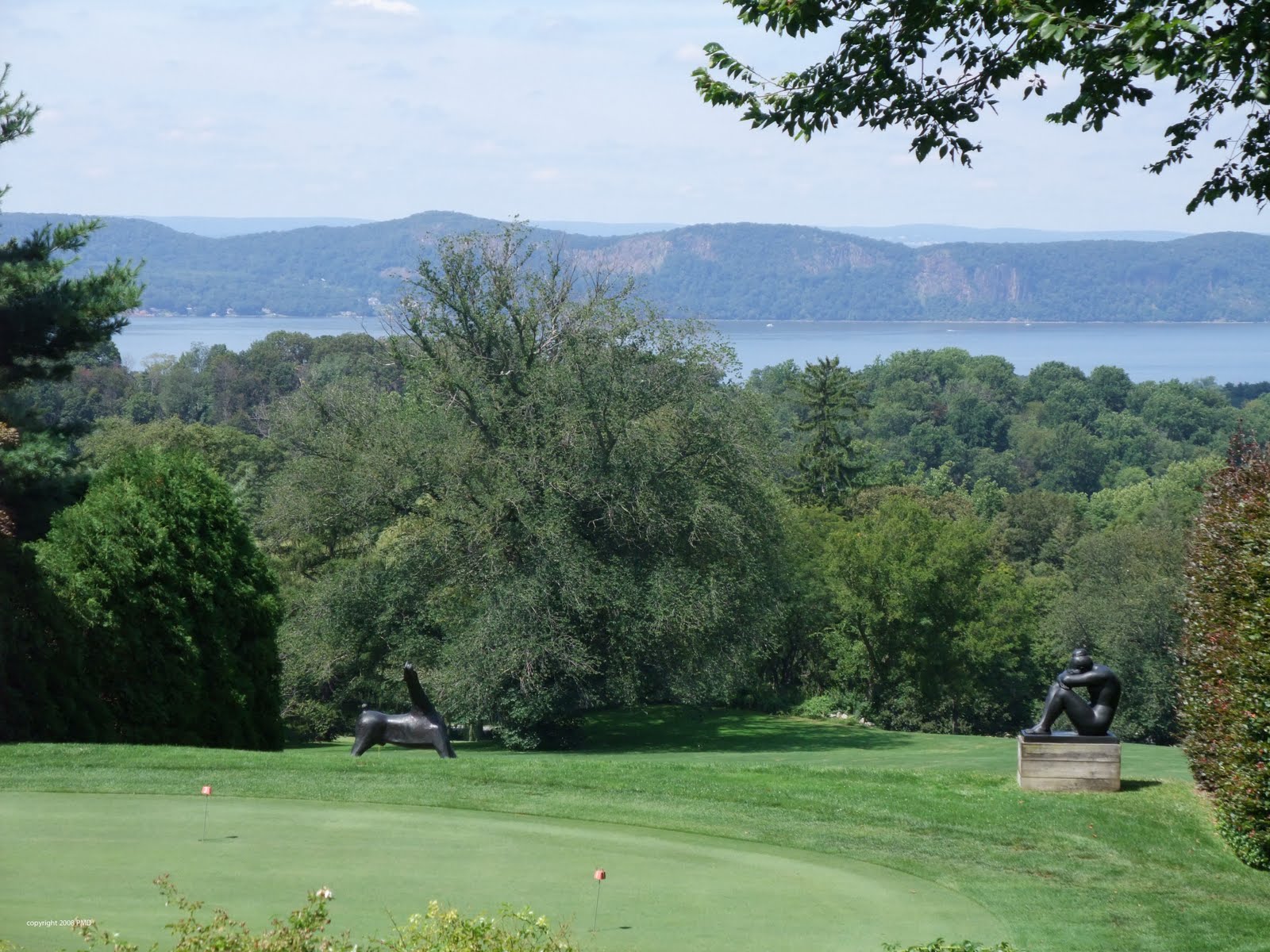
The Rockefeller’s summer home is situated on the highest hill in Sleeping Hallow, Kykuit. In order to create a place for the home, the hill, which was mostly rocks, had to be flattened to create a space for the house to sit. There were also many trees planted and beautiful gardens created. But the best part of the home was the view from the veranda. The home was 500 feet above sea level with stunning views of the trees along the Hudson River and the Palisades. It truly was breathtaking; I could have grabbed a stack of books and never moved.

Until next time!

Back to School

School started last week for Indianola K-8, one of LOUA’s partners, and the teachers there are looking for ways to get involved with the arboretum. One teacher has volunteered her class to help with the leaf drawings for the tree markers in the arboretum.  She plans to take her class on a walking tour, collect leaves from the canopy trees and then begin sketches.  Two of the 2nd grade teachers are interested in beginning the swallowtail habitat.  Other teachers will be introducing seeds and movement into their classes next week. It was a very exciting beginning to the school year, and all of the teachers have come back ready to explore the ecology and environment that surrounds their school.

Nineteen of the teachers at Indianola will be using the Outdoor Learning Environment this fall to enrich their classrooms.  Students from kindergarten through eighth grade will be building butterfly habitats, writing poetry, building sculptures, composting, studying weather, leaf identification, along with movement through the garden.

It’s really great that these students are going to be instilled with a love of nature!

Until next time!

Calumet Bridge

I’ve just come back from looking at the Calumet Bridge over the ravine, the one by the North High School. For those of you who aren’t from the neighborhood, the bridge has been removed because it was falling apart more rapidly than expected. Pete and Mike McLaughlin said that they had cut down many of the trees, and I had to go see for myself.

So many trees were now gone, including a beautiful black gum that Pete thought was over 300 years old. Such a magnificent tree, having been here since 1710 or thereabouts. The fall color on that tree was so beautiful. The nice thing about crossing the Calumet Bridge was that Nyssa’s crown was right at eye level, making it a unique perspective from a human’s point of view. (The scientific name for the black gum is Nyssa sylvatica which I somehow turned into Nyssa, a lovely name for a lovely tree.) Along with Nyssa some oaks were taken down. I know that sometimes these things can’t be helped, but I am very sad to see my lovely Nyssa gone. Although what’s done is done, we are working with city officials to make sure the restoration efforts are sufficient for the amount of damage that occurred.

Until next time.

Fall Color

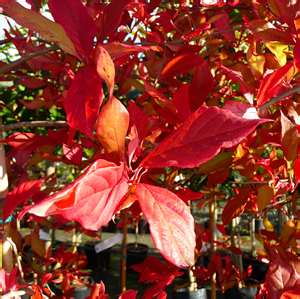
It’s official, Fall is here! Pete thinks I’m a bit premature, but I saw some trees that had leaves that weren’t green. Granted, you had to look hard for them, but there they were: a beautiful reddish-orange maple and a bright scarlet sassafras leaf.  Pete says the color change occurs when the days get shorter. As winter approaches, the trees know that they won’t have enough light or water for photosynthesis. When they stop making food, the green chlorophyll leaves, allowing the other colors to shine through. I’ve lost myself many a time just picking up a colorful leaf, staring at its beauty. Once, it was poison ivy…but still very beautiful!

Autumn is one of my favorite times of the year. I love fall and winter, with their crisp air and woolen clothes. When Pete and I lived in Tallahassee, Florida, there wasn’t much happening in way of fall colors. I remember there was one tree fairly close to us that was a maple of some sort, and it would change to a glorious red. Every year, Pete and I would get in the car, drive to this restaurant and park in the back part of the lot where the tree was. I’d get out, sit on the car hood and just stare – I missed it so much. We’d also head up to Atlanta, Georgia, where there were even more trees that we could look at. It’s funny the things that you take for granted (almost) when you no longer have them around.

Oh, and I missed snow. I’d come home to Ohio each year, hoping to have snow to play in. I’d get back to Florida, and my mom would inevitably tell me when I called to say I was home safe and sound, “It’s snowing here!” Christmas just wasn’t the same decorating a tree in shorts and sweating. I usually lost it when Bing Crosby started to sing “White Christmas.” And the smell of a Christmas tree is one of my favorites. Our first Christmas back in Ohio was spent up in Michigan with my brother and sister-in-law. They had two feet of snow on the ground, and on Christmas Eve, it started to snow again. I had forgotten the quiet that comes with snow, and the blueish beauty of it under street lights.  You somehow feel that there can’t be anything wrong in the world at that moment.

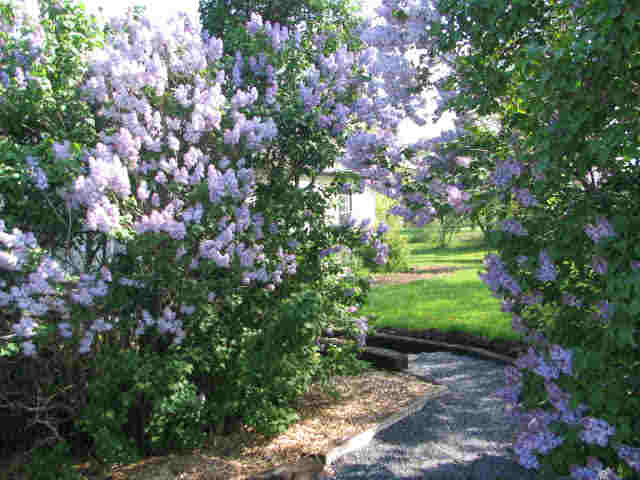
That reminds me of something that Pete did when we were in Florida. He travelled to Chicago and came back, knocking on the door to our apartment. I was a little peeved, thinking,”He should have a key, why do I have to get up and open the door?” But I did, and there he stood, lilac flowers in hand. They don’t grow in Florida (too hot), and lilacs are my favorite flower – such a romantic gesture that brought me to tears. Lilacs grew outside the window by the bedroom at my grandma’s that was always mine when I came to visit. And my grandpa used lilac cologne. They were also the flowers I carried at my renewal of vows ceremony, cut from my back yard.

Another plant aroma related tale: My boss had some sweet grass that she was given by a Native American Indian. I put it to my nose and started to tear up: it smelled exactly like my grandpa’s barn where we played as kids, a memory I hadn’t thought of for many, many years. Smell has such strong recall. I guess that’s why plants and trees are very much mingled with my memories.

Until next time!

Weeds and More Weeds!

I spent a good chunk of Saturday morning removing weeds from my front and side gardens. Because of all the rain as well as the extreme heat, the weeds had grown to giant proportions. I was especially having a rough time with the crab grass, which laughed at the mulch I had put down to keep the weeds at bay, spreading its tentacles like an octopus, sending its roots everywhere. Between that and the sour grass, I filled three garden bags. There’s also some plant I’ve not seen before that was everywhere. But it all looks so much better…for now!

This isn’t my first battle with weeds. One of the previous owners of our home had the misguided idea to plant Canada thistle in our back yard. My mom and I spent half a day ridding the yard of every trace of the weeds. Within a week, they were back as if we had never removed them. We finally got rid of the problem by taking all of the soil they were growing on and putting it into our empty fish pond. Pete and I went through each shovelful, looking for the tiniest root, which would start a new plant.

Another nasty weed we have is nut sedge. It grows everywhere in our yard; it’s only redeeming quality is that it is very easy to pull out – if you could call that a redeeming quality. We’ve also fought morning glories, dandelions, and some viney thing with lobed leaves.

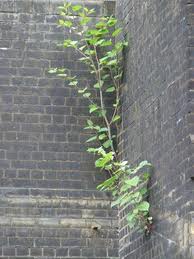
It always surprised me where weeds could grow – and how proficient they were in taking over.  Give them a crack and they’ll take a yard. Some plants are so tenacious that they will grow through anything including man-made materials. I suppose I should count my blessings that we didn’t have any of those plants. Japanese knotweed is capable of growing through pavement, walls and buildings as the picture to the left shows. Granted, it will take a few years to do so, but grow through that weed will.

I wonder how many gallons of salt water (my grandmother’s solution to weeds) would be needed to take down a Japanese knotweed? A Gordian knot indeed… perhaps Alexander’s sword would do the trick.

Until next time!

Tree Map Mashup and Other Updates

As I’ve mentioned in recent posts, we’ve been working on a few maps for the Arboretum. One map is of the significant trees within the Arboretum. And since we now have the list of addresses from the City of Columbus of where trees can be planted, that, too, has been turned into a map. [Thanks, John!]  So, if you go to the Maps section of the blog, you can see John’s mashup of the maps of the significant trees along with the map of where trees can be planted by the city. Both are interactive with markers that can be clicked on for more information. Sample information for the significant trees would be:

Address:
City: Columbus
State: Ohio
Location: Front yard
Genus: Quercus
Species: alba
Common name: Oak, White (2)
Symbol: w
Notes:
latitude: 40.024318

In this case, the symbol “w” stands for white oak; John’s included a legend to explain the various symbols for the types of trees

Sample information of the city’s addresses for tree planting is:

Number:
Street:
# oFront tree: 1
SideOn: Front
PlantingCode: PSLarge
Comments: OLD STUMP
Assigned:
NEWS: E
MapPageNumber: 19 J-14
latitude: 40.022861

The Planting Code is the size of tree that can be planted.

Another change to the blog is I’ve added a roster of our Steering Committee. Our little group has grown by quite a bit, and I expect it will grow even more as we get additional partnerships going.

Until next time!