Category Archives: General Information

Native Americans in Columbus

This past weekend, Pete and I were working in our respective gardens. His garden is in the back and is full of native woodland and prairie plants. My front garden is a more traditional garden, with some natives but mostly non-native plants. My philosophy on gardening is this: I buy a plant that I like; any plant that comes back the next year and lives through the whole growing season is a good plant, one that I will buy more of. Of course, remembering what the name of the plant is is another story.

I had been expanding the front garden a little bit, taking out the grass. In working the soil, I came across the usual insect larvae (not doing so well with all the rain) and bits of clinker coal from our house’s original furnace. The occasional odd stone would turn up, too. I found one that looked like flint, and put it aside to look at later. Of course, I immediately forgot that I had it.

After we had finished working, Pete came in with something to show me. Turns out, it was a piece of flint that he thinks was used as a scraper. It fit so perfectlyNative American flint scraper in between his thumb and forefinger, so it might have been used for delicate work. That reminded me of my stone, which I brought in and washed off. It too, was flint. We think it was also used as a scraper, but more to burnish the hides. It has one side that is perfectly flat. I remembered as  a kid hunting for arrowheads in my uncle’s fields near Canal Fulton, Ohio. I only found a few, but it was very exciting when one turned up.

Finding the flint made me curious about the Native Americans that would have lived in Central Ohio. I did a little research on the Internet and found out that the Olentangy River (the closest river to our house) was originally called keenhongsheconsepung, a Delaware Indian word translated as “stone for your knife stream.”It was named this because of the shale along its banks. Further investigating showed me that Mingo Indians had settled along the Scioto River in downtown Columbus. So at this point, I am unsure what tribe might have made the scrapers. If anyone has more definitive information, please post a comment to let me know.

I wonder what Ohio would have been like for these Native Americans, before the land was settled, how the trees and plains would have looked. Pete and I haveHueston Woods old growth tree traveled to some of the remnants of prairie still left in Ohio. The plants are very amazing to see  with roots that went very deep to survive fires and droughts. Many were taller than I was. We’ve also gone to a few of the old growth forests in Ohio with trees so big that Pete couldn’t even get his arms around them. You look up, and the branches seem to go on forever. And the stories those branches could tell us if we knew how to listen…
Until next time.
Partnership with Indianola Informal School

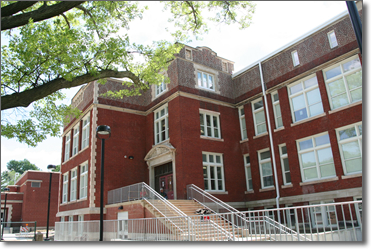
At our first public meeting on May 24th, we had so many great ideas presented to us and so many possibilities for partnerships. One such partnership has Indianola Informal Schoolstarted with the Indianola Informal School, at the corner of Calumet and Weber.  At Indianola, students are exposed to an integrated, informal learning program that encompasses art, dance, music (orchestra, band and choir) along with writing, math, science and reading.  Students learn beyond the classroom how to become involved in the community through local partnerships with businesses, universities, non-profits and neighbors. This school really embodies the mission statement of Columbus City Schools: “Each student is highly educated, prepared for leadership and service, and empowered for success as a citizen in a global community.”

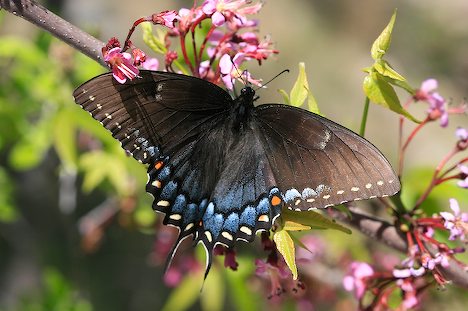
We hope to involve these students with various projects such as butterfly way stationsSpicebush Swallowtail butterfly (Monarchs or Swallowtails!) and any thing else that we can come up with. It’s great to pass along our love of nature to this next generation. And since these students come from all over Columbus, they carry all they learn back throughout our city. A big thanks to Cindy Gunn for being the liaison between Indianola Informal and the arboretum!

Until next time!

The Beauty of Trees

I’ve always appreciated trees, although I must admit that as a child, my appreciation extended more toward how I could use the trees at my grandma’s house while playing. (I did enjoy the shade that the trees provided; sitting under a tree with a glass of my grandma’s heady iced tea was a wonderful way to cool down after a day of playing in the sun. Then again, I was just as appreciative of the warmth that came from her coal furnace after a day of playing in the snow…)

I remember the tree fort that we grandchildren made. No mere tree house for us; our job as grandchildren was to protect Grandma and Grandpa from all sorts of intruders, mostly monsters and space aliens. The tree fort was a ramshackle affair of mismatched boards and other materials, the steps nailed into the tree, barely room for two small kids to sit. But it was ours. We felt so secure up within the branches of the tree, believing that nothing could find us there.

There was also a weeping willow at my grandma’s, whose graceful branches swept to the ground, creating the perfect place for our imaginations to grow. Depending on our mood, it was somewhere in the jungles of the Amazon, a place near the river weeping willowin The Wind in the Willows, or an elf dwelling from Lord of the Rings. The possibilities were as endless as our imaginations. One time, we took it upon ourselves to braid as many of the branches together that we could. As four children who had nothing better to do, we managed to braid most of the branches we could reach. I don’t believe that Grandma was pleased with the results, asking us immediately to undo what we’d done!

Now, of course, with my work for the arboretum, I have a greater appreciation of trees and all that they do, all of the shapes and sizes they come in, the patterns of their growth. Some, like the sweetgum, are pyramidal, their branches reaching toward the sky like a happy child in the rain. Some, like the swamp white oak, send their branches down to try and touch the earth. The shapes of the leaves, the shadows they cast, the way the branches move in the breeze, all are different and beautiful.

Until next time!

Comprehensive Neighborhood Stormwater Solution

This is a guest blog by Clintonville resident Andrew Overbeck, an urban and regional planner for MSI Design who has worked on several sustainable stormwater improvement plans and projects in Central Ohio and across the region.

The Lower Olentangy Urban Arboretum tree planting initiative, various rain barrel programs and the revegetation of the ravines will all go a long way toward enhancing Clintonville’s neighborhood aesthetic and benefitting the environment. However, more can be done to effectively treat the stormwater that is generated by our neighborhood roads, sidewalks, homes, parking lots and other impervious surfaces. While some homeowners and neighborhood organizations have installed rain gardens, a more comprehensive approach could be taken to effectively manage, treat, and infiltrate stormwater in our neighborhood before it enters the combined storm sewer and ravines.

There are numerous approaches to sustainable stormwater management, but one of the most effective solutions could be the addition of curb extension stormwater planters. What is a curb extension? It is a stormwater planter that extends the curb into the parking or travel lane of the street and transforms it into a landscaped area that treats stormwater and provides temporary retention and some infiltration.

Along with tree planting and traditional engineering solutions, these so-called “green streets” are being used effectively across the country, most notably in Portland, Oregon. Locally, the Village of New Albany recently unveiled a comprehensive stormwater strategy that includes these and other green infrastructure solutions, including pervious paver streets

What could these look like in Clintonville? Placed at the bottom of every block heading west toward High Street, the curb extensions could capture all of the water running off the street, including the any water directed toward the street from sump pumps and gutter outlets. Given that our streets are “yield streets” these would have to be designed and located to allow for clear turn movements. Designed correctly, these could result in minimal parking loss and maximum environmental gain.

As the Lower Olentangy Urban Arboretum continues to evolve, this could be part of the long-term vision for the environmental sustainability of our neighborhood.


Keepin’ Cool

It’s on days like today – sunny, hot and humid – that make me very thankful for the shade that trees provide. I’ve got it down to a science how best to navigate the trip from the bus stop to my home. I know exactly which route has the most shade, when I need to cross the street, when I know I’ll be in the hot sun for a few minutes. The difference in temperature between shade and sun is amazing. By shading surfaces like asphalt, roofs, and concrete sidewalks, those surfaces don’t heat up and trap the heat, keeping temperatures lower.

I read about an experiment that NASA did in Huntsville, Alabama, recording the difference in temperature around a mall parking lot. The experiment showed that wherever trees were planted, temperatures were reduced by 17.2° C . Pretty amazing. There’s also a web site that has a slide show showing the changes in temperature over a period of nearly 20 years for Atlanta, Georgia, as trees were removed. It’s a very telling story.

I only know that I feel much cooler in the shade than in the sun!

Until next time!

Results of Our First Public Meeting

Our first meeting went so well! Around 30 people were in attendance, a wonderful turnout. We covered the history of the arboretum and the timing for the tree planting this fall. Then the real magic started with comments and suggestions from the attendees. So many great ideas were given, some we had thought about but many that we hadn’t. That’s the power of brainstorming. Here’s just a few of the amazing suggestions we got:

  • Partner with local schools
  • Reduce storm water run-off through catches at the end of streets
  • Go back to brick streets
  • Encourage backyard gardens; link when possible
  • Have education / workshops for arboretum residents; gardens, herbs, rain barrels, etc.
  • Have a bird survey completed; make the arboretum a bird sanctuary
  • Bury electrical, cable, and phone lines, or beautify utility poles
  •  Install planted medians on High and Indianola
  •  Have a plant share / trade day
  •  Provide educational information on newly planted trees, especially for rentals
  •  Create neighborhood stewards for areas with large number of rentals
  •  Create and install signage to delineate area
  •  Plantings to attract bees / pollinators ; butterfly way-station
  •  Beautification projects – little green spaces /plants, businesses, etc.

These are all fantastic ideas for things that we can do within the arboretum in addition to planting trees, all of which will make the arboretum even better than we had envisioned. So thanks to everyone who came and participated; we can do so much more together.

Until next time!

Portal Park Clean-up

This past Saturday morning, May 14th, Sue Wightman led ten volunteers in sprucing up the plantings in the Welcome to Clintonville Park at the arboretum’s southwest corner, High and Arcadia. Dead plants were removed, others were pruned, many hostas were planted, and new petunias were placed in front of the park’s sign.

Sue and her volunteers have been instrumental in turning this park around and improving its look ever since the United Crestview Area Neighbors, the civic association north of Glen Echo Ravine, officially adopted the park five years ago by signing a maintenance agreement with the City of Columbus’ Department of Recreation and Parks.

Currently, Sue is working with both the Univeristy and Clintonville Area Commissions, as well as city government, to improve the seating, signage, and other hard scapes within the park.

Many area residents have come to know this area as the Portal Park because it is an entryway into both commission areas, as well as the arboretum and Glen Echo Ravine.

If you are interested in joining Sue and her volunteers in improving this park, please write her at Susannewightman@ymail.com

Earth Day Follow-up Work Session: May 21

We’ll be having another session in Glen Echo Ravine to remove invasive species, especially honeysuckle. We are now the proud owner (at least temporarily!) of a honeysuckle popper, guaranteed to remove honeysuckle in one “pop.” Pete’s not tried it, so we aren’t sure how it will work, although others who have used it say it does the trick.

The session will be from 9 AM – 1PM on Saturday, May 21, 2011. The area of the ravine where we will be working is located near the Indianola Bridge in between Cliffside Drive and Olentangy Street. You can park along Indianola or one of the side streets near the ravine. There is a stairway on the Northeast side of the bridge that leads down into the ravine. At the bottom of the stairs, head west (to your right), go under the bridge and follow the trail west through the cleared area. We will be working in the woods just beyond. If you have work gloves, please bring them. There is some poison ivy present so dress accordingly.

Please RSVP to 614.261.0092.

See you there!

Upcoming Public Meeting: May 24

The Lower Olentangy Urban Arboretum will have a public meeting on:

Tuesday, May 24, 2011
7-9 PM
Crestview Presbyterian Church
350 E Tulane Road

The meeting will be in the church’s basement; please use the Esmond Street entrance.

Agenda

  1. present a brief history of the arboretum
  2. outline future plans for this fall: reforestation of tree lawns and right-of-way areas with native species canopy trees
  3. discuss what other items arboretum residents might want to see as part of the overall arboretum plan

For more information:    614.261.0092

Hope to see you there!

Earth Day 2011

Well, we finally have a tally on the results of our Earth Day 2011 weekend. It took a little longer to get everything done as Pete ended up planting nearly 300 whips – small trees about 16 inches tall – in Glen Echo ravine.  He still has a few left…

So, for the two days, April 16 & 17, we:

  • had 12 volunteers
  • removed 28 30-gallon bags of invasive plants
  • cut down 110 honeysuckle bushes
  • dug 30 honeysuckle stumps
  • collected4 bags of trash

All in all, a very good effort. The difference in the ravine is noticeable,  especially in the amount of native wildflowers that are showing up. Without all that competition for resources, they really are shining through: blood root and dog-tooth violets in particular. Pete also heard a wood thrush, a bird that he’s never before found in Glen Echo. Eventually, we’ll get some photos up of these flowers and birds that can be found in the ravine.

The other big news is that we planted a scarlet oak as our 2011 Earth Day Tree. The tree is beautiful and large, with a 4-inch caliber. I reckon it’s about 20 feet tall. It’s planted off the alley that runs parallel to the ravine, next to the condominiums off Indianola. It will be a lovely specimen tree in just a few decades.

Our next big meeting will be this Thursday, May 12th. We are planning for our first public meeting on Tuesday, May 23 at the  Crestview Presbyterian Church. We’ll have more details on that meeting as they come available. We want to introduce ourselves, let everyone know what we’ve done so far, what we want to do in the future, and invite comments and suggestions from the people who will be living in the arboretum.

Until next time!