Author Archives: kkovarik

Arboretum Work Update

Things are progressing on getting trees planted within the Arboretum. The City of Columbus has completed its work of  identifying the locations where trees can be planted within the Arboretum boundaries. The trees on this list will be of mixed sizes, including canopy, medium, and small trees. Homeowners who do not opt out of having a tree should see trees planted this fall.

We are also working on the finishing touches for our brochure. This is such an important piece because it will represent what we do and inform so many people. Our group is very excited to see the final product. Much thanks to John Kyrgier  for all of his work on designing the brochure!

And finally, we have made a decision on tree markers for the significant trees that will be highlighted on the walking tours within the Arboretum. We’ve decided on flat native (indigenous?) rocks – no non-native rocks for this group! – that will be spray painted with pertinent information about each tree. We’re still deciding how much information will be on these rocks, but at the least, there will be a number that corresponds with the same number on a map. The map will contain information about the tree itself. Once I get a design, I’ll be certain to post it up on the blog.

As I said, it is really exciting to see something that was just a dream become reality. This will be a lasting legacy for Clintonville, something that will bring joy for generations to come.

Stay cool…Until next time!

Volunteers needed for invasive species removal

There will be another work session in Glen Echo Ravine to remove invasive plants, especially honeysuckle and all of the details are given below. This time the City of Columbus will be lending a helping hand. If you can make it to the event, please let Pete know by phoning him at 261-0092; Maureen of Friends Of The Ravines (FOR) would like to know how many people to expect. Thanks and hope to see you there!

When: On Saturday, July 30, FOR is partnering with the Columbus Recreation & Parks Department, http://parks.columbus.gov/HoneysuckleRemoval.aspx , and neighborhood groups to remove invasives, primarily bush honeysuckle within the Lower Olentangy Urban Arboretum. Volunteers are needed from 9 – 3.

Where: Meet in Glen Echo Park beneath the Indianola Avenue bridge.
There’s a map at www.FriendsOfTheRavines.org/

What to wear/bring: long pants, boots or shoes with good traction, work gloves, hat, and snack/lunch. Recreation & Parks will provide some saws and loppers. If you have tools, feel free to bring them.

Tasks: Volunteers can haul cut plants to the shredder truck, others can remove different types of invasives. Crew leaders will be available for questions and direction. The two person Rec & Parks team will cut honeysuckle and operate the chipper/shredder. There is poison ivy, slopes and uneven ground in the ravine.

FOR will provide: water, sunscreen, insect repellent, poison ivy wash (like Tecnu), rest room facilities (courtesy of Xenos Christian School, Calumet Campus).

Hope to see you there!

Baby Finch Update

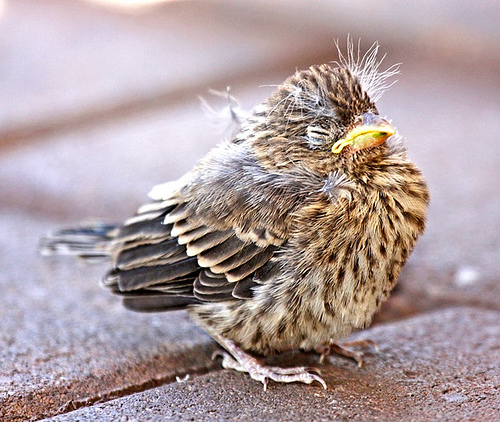
We got good news on the baby finch today! I don’t know if you remember, but my friends Dan and Mike Came to my house, took a baby finch (still in its egg but poking his head out) up to the Ohio Wildlife Center. I hadn’t heard from the Center about the little guy (or girl) and feared the worse, that the little baby didn’t make it, even though when Mike and Dan left the Center, the little tyke was eating whatever it is that baby finches eat.

Well, today, the Center called to say that they had released my little baby finchnestling out into the big, wide world. I can’t tell you how happy that made me feel. After having three of the finch’s nests destroyed by who knows what and another hatchling that died, I was so sad for Mama and Papa Finch, who I still see in our yard. I thought that not one of their children would make it. So this news really made my day. Again, I can’t thank Mike and Dan enough for doing what they did. They saved that little guy.

Until next time!

Bird Sightings

I hope everyone had a great Fourth of July. Pete and I spent the holiday weekend (along with my mom) in Saginaw, Michigan, visiting with my brother, Mike, and his wife, MaryJo. We had a great time: good food, good company, and great bird watching. Mike’s house is located near a golf course that has lots of tall trees, and his backyard has several mature trees including a towering walnut tree. There are also a lot of shrubs that offer sanctuary for many kinds of birds along with several different kinds of bird feeders.

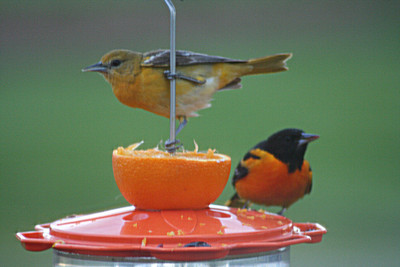
As we sat at the dinner table, MaryJo noticed a yellow bird on the backyard patio that she assumed to be one of the goldfinches that we had seen earlier in the day. But when Pete looked at the bird, he realized to his wonderment that this Baltimore or Northern Oriole pairbird was a female Baltimore oriole. This was really exciting, mainly because none of us (except for Pete), had never seen one in the wild. With the aid of binoculars we each got the chance to see this most beautiful bird. Imagine our surprise, then, when a male oriole came flying in, too! The male is a different color than the female, a bright orange, and very hard to miss. (Note: there are several names for this oriole, including the Baltimore Oriole and the Northern Oriole. Cornell University’s Ornithology Lab calls it a Baltimore Oriole, so I am using that name.)

So with both a male and female Baltimore oriole in the yard, we went to the Internet to see what we could do to provide food. I went to my favorite Cornell University site for some basic information about habitat and food (mostly insects), and that the birds overwinter in tropical areas including Mexico, Central America and northern South America. They come up north to spend the summers to breed. Also, they aren’t true orioles (called such because they resembled similar-looking birds in the Old World) and are more closely related to meadowlarks and blackbirds. A little more digging informed us that these lovely birds are attracted by oranges and grape jelly. Yes, grape jelly. So I got an orange, cut it in half, and stuck it to Mike’s fence, having no grape jelly in the house. Of course, neither bird noticed this treat. The squirrels in Mike’s yard, on the other hand, easily found the sweet oranges.

I’ll have to talk to my brother to see if the orioles have come back and whether they’ve started eating oranges or grape jelly. The one orange that wasn’t devoured by the Caterpillarsquirrels had peck marks in it. Having never seen these amazing birds, it was so special to see them on the wing. Pete said that the habitat in that part of Saginaw was favorable as these orioles need large, mature trees in which to search for insects. Pete also says that we can attract these birds to our arboretum, too, because we want to plant a lot of oak trees, which harbor many caterpillars that are great food for orioles.

Until next time!

Ohio and Alternative Energy

Two cities in Ohio, Coshocton and Newark, are working with two very different forms of alternative energy and fuels. Niama-Reisser, based in Coshocton, Ohio, is working on a high-mileage car that  is capable of 200 miles per gallon. Yes, you read that right: 200 miles per gallon. I don’t pretend to be an engineer, but from what I understood, the engine runs on some sort of centrifugal force.

Now, what I know about centrifugal force wouldn’t fill a thimble. My only experience was a mad scientist experiment that I did in elementary school which involved placing a plant on a record player (that shows my age!) and sending it spinning around. Since the turntable was on its side (I’ve no idea why that was), the whole rotation took on a rather lop-sided turn.  I think the whole idea was to see how the plant would be affected by spinning on its side. However, the length of the experiment didn’t allow much time for the plant to grow, and I think the poor plant was traumatized by constantly falling off the turntable; there’s only so much hold to duct tape.  I think I got an “A,” most likely because the teacher felt sorry for me! But I digress.

The car itself is cute, although I admit, that probably isn’t an adjective that will make all the car-crazy men go rushing out to buy one. But 200 miles per gallon from a diesel engine is pretty darn amazing. I hope this car is on the market soon. Our Toyota gets pretty good gas mileage but no-where near 200 mpg!

The other city, Newark, had put out a request in April for bids for companies to use solar power to run the city’s waste-water treatment plant.  The best part (besides how happy the Earth will be with this clean energy) is that much of the products and work done will come from Ohio companies, creating Ohio jobs.  This is such a wonderful idea. No matter how you feel about global warming (something I believe in), solar energy is better than coal. Coal burning plants place so many chemicals into the air (mercury, sulfur dioxide) that aren’t healthy for anyone to breath in.

And the trees that we will be planting in the arboretum will also help the planet by cleaning up our air and water. It’s all good.

Until next time…and have a happy Fourth of July!

A Shout Out…

We will now have additional help in the ravine through a Boy Scout, Dominic Jannazo, who is working on becoming an Eagle Scout. An Eagle is the highest rank attainable  in the Scouts. Since being introduced in 1911, over 2 million boys have achieved this honor. In order to become an Eagle Scout, a Boy Scout as to have at least 21 merit badges and finish a service project that he plans, organizes, leads, and manages. Dominic has chosen the Glen Echo Ravine as his service project and will be working on removing concrete and  invasive honeysuckle, as well as planting native plants. We are very happy to have Dominic working in the ravine; every set of hands really helps.

Finally, I’d like to wish a very happy birthday to Mike McLaughlin, who has been so instrumental in moving our arboretum forward. He keeps us organized and focused on what we need to do. We’d be lost without his help (and that of all the other members of the steering committee!). Mike had a birthday party last Saturday that was a total blast. He had a dance floor with disco lights and a non-stop dance track playing for several hours. Which begs the question: why is it that I can dance for several hours straight, burning up calories without a thought, and riding the stationary bike for 20 minutes is pure torture? I sweated more on the dance floor!

On top of that, we couldn’t ask for a nicer neighbor, or a better friend. Mike and his husband Dan where the ones who took the baby finch (still struggling to get sout of its shell) to the Ohio Wildlife Center. They both have hearts of gold.

Happy birthday, Mike!

Until next time!

The World Outside

One of the things that Pete and I both enjoy is sitting on our porch, watching

Maeve and Seamus

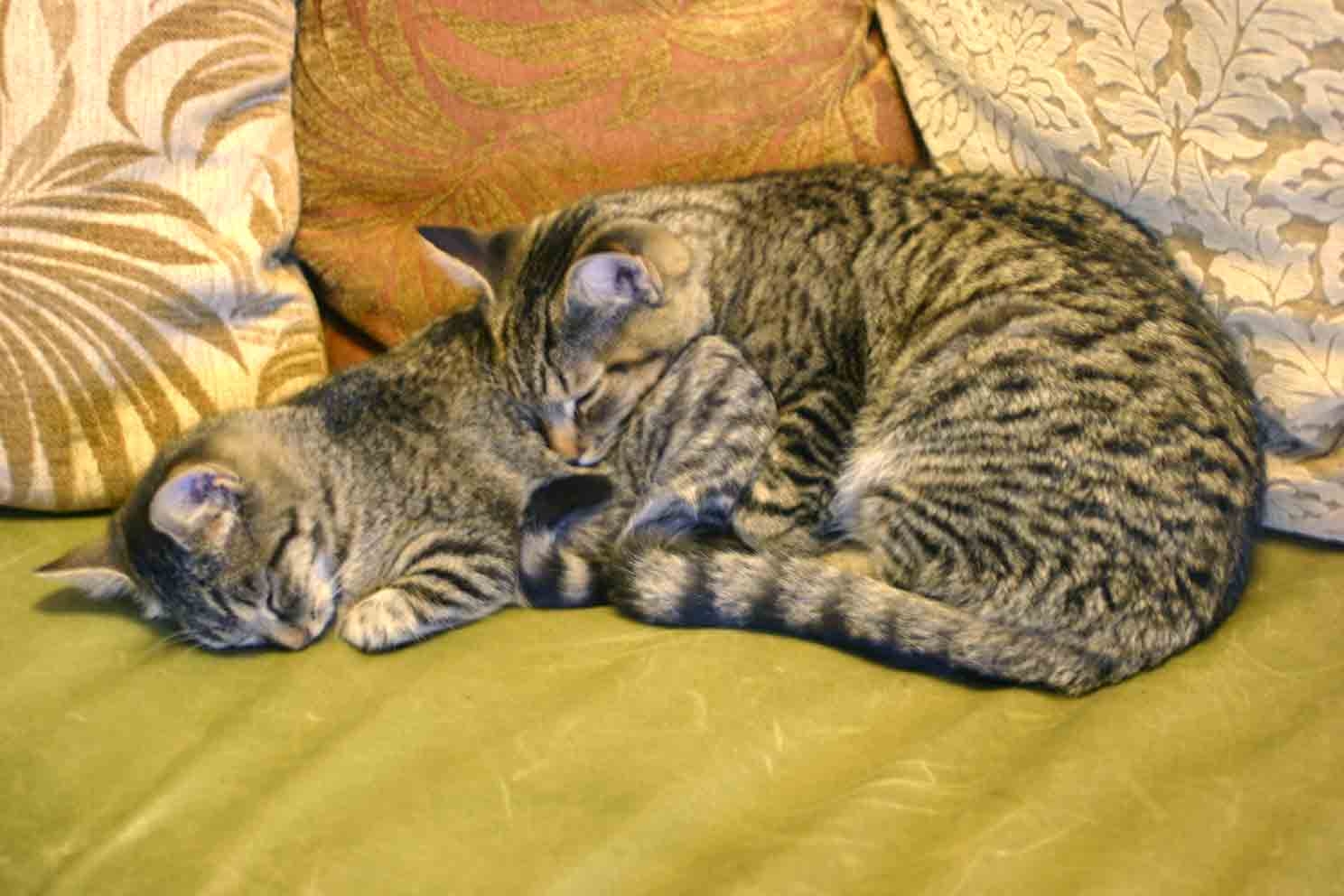
the world that is Clintonville stroll by our front door. If the weather’s nice, we let our cats outside, too, to watch the birds, squirrels and bumble bees flutter around. We have four cats: Fionula, Seamus, Maeve, and Ciara. Got a Celtic thing going on with the names. That’s Maeve and Seamus in the picture.

I know what you are thinking: four cats?! Yes, they are a handful, especially when you consider both Pete and I are allergic to the wee creatures. Pete knew he was allergic before we had cats, and I found out after four were already living in our house. Removing them was not an option!

Fionula is the matriarch of the bunch, being 14 years old. She still holds her own against all the youngsters. Seamus and Maeve are both five years old. Seamus was rescued from my dad’s tree farm, and Maeve, another rescue, came to keep Seamus company. Finally, we have Ciara, who is three, whose previous home was the airport. All of them get along (for the most part – they have been known to hiss at one another on occasion!) and really enjoy being out on our porch as there are always things to see. Or not see, as often, finding a comfortable place to take a nap seems to be a top priority. For the most part, everyone stays on the porch as we don’t allow our cats to go anywhere else.

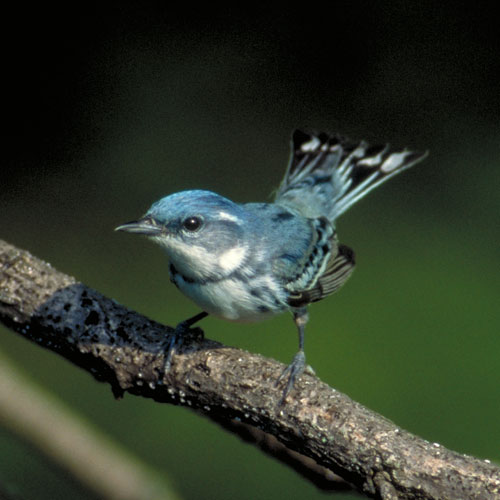
I read a June 12, 2011 article in the Dispatch that indicated that as many as 1 billion birds are killed by feral and domestic cats each year. The article continued to say that some of the birds being killed were migratory birds who winter in South and Cerulean Warbler Central America. These birds are facing loss of their natural habitat and are slowly losing numbers. The same problem is happening here in Ohio, with habitat loss and fragmentation decreasing the numbers of certain birds such as the Cerulean Warbler, whose population has declined by over 80% in the last 40 years. This particular bird lives in deciduous forests, something that the arboretum in trying to increase. More trees will mean more birds.

Until next time!

Native Americans in Columbus

This past weekend, Pete and I were working in our respective gardens. His garden is in the back and is full of native woodland and prairie plants. My front garden is a more traditional garden, with some natives but mostly non-native plants. My philosophy on gardening is this: I buy a plant that I like; any plant that comes back the next year and lives through the whole growing season is a good plant, one that I will buy more of. Of course, remembering what the name of the plant is is another story.

I had been expanding the front garden a little bit, taking out the grass. In working the soil, I came across the usual insect larvae (not doing so well with all the rain) and bits of clinker coal from our house’s original furnace. The occasional odd stone would turn up, too. I found one that looked like flint, and put it aside to look at later. Of course, I immediately forgot that I had it.

After we had finished working, Pete came in with something to show me. Turns out, it was a piece of flint that he thinks was used as a scraper. It fit so perfectlyNative American flint scraper in between his thumb and forefinger, so it might have been used for delicate work. That reminded me of my stone, which I brought in and washed off. It too, was flint. We think it was also used as a scraper, but more to burnish the hides. It has one side that is perfectly flat. I remembered as  a kid hunting for arrowheads in my uncle’s fields near Canal Fulton, Ohio. I only found a few, but it was very exciting when one turned up.

Finding the flint made me curious about the Native Americans that would have lived in Central Ohio. I did a little research on the Internet and found out that the Olentangy River (the closest river to our house) was originally called keenhongsheconsepung, a Delaware Indian word translated as “stone for your knife stream.”It was named this because of the shale along its banks. Further investigating showed me that Mingo Indians had settled along the Scioto River in downtown Columbus. So at this point, I am unsure what tribe might have made the scrapers. If anyone has more definitive information, please post a comment to let me know.

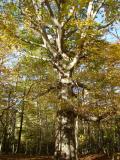
I wonder what Ohio would have been like for these Native Americans, before the land was settled, how the trees and plains would have looked. Pete and I haveHueston Woods old growth tree traveled to some of the remnants of prairie still left in Ohio. The plants are very amazing to see  with roots that went very deep to survive fires and droughts. Many were taller than I was. We’ve also gone to a few of the old growth forests in Ohio with trees so big that Pete couldn’t even get his arms around them. You look up, and the branches seem to go on forever. And the stories those branches could tell us if we knew how to listen…

Until next time.

Partnership with Indianola Informal School

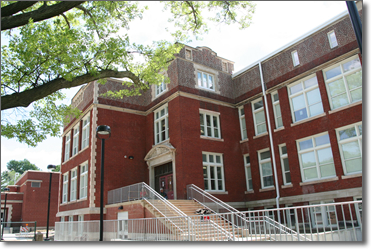
At our first public meeting on May 24th, we had so many great ideas presented to us and so many possibilities for partnerships. One such partnership has Indianola Informal Schoolstarted with the Indianola Informal School, at the corner of Calumet and Weber.  At Indianola, students are exposed to an integrated, informal learning program that encompasses art, dance, music (orchestra, band and choir) along with writing, math, science and reading.  Students learn beyond the classroom how to become involved in the community through local partnerships with businesses, universities, non-profits and neighbors. This school really embodies the mission statement of Columbus City Schools: “Each student is highly educated, prepared for leadership and service, and empowered for success as a citizen in a global community.”

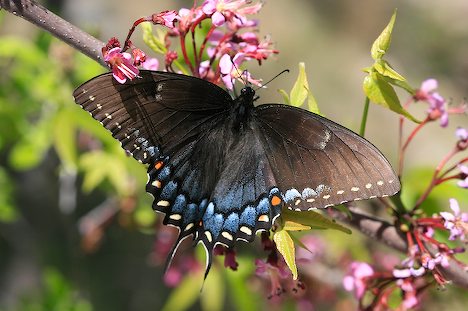
We hope to involve these students with various projects such as butterfly way stationsSpicebush Swallowtail butterfly (Monarchs or Swallowtails!) and any thing else that we can come up with. It’s great to pass along our love of nature to this next generation. And since these students come from all over Columbus, they carry all they learn back throughout our city. A big thanks to Cindy Gunn for being the liaison between Indianola Informal and the arboretum!

Until next time!

The Beauty of Trees

I’ve always appreciated trees, although I must admit that as a child, my appreciation extended more toward how I could use the trees at my grandma’s house while playing. (I did enjoy the shade that the trees provided; sitting under a tree with a glass of my grandma’s heady iced tea was a wonderful way to cool down after a day of playing in the sun. Then again, I was just as appreciative of the warmth that came from her coal furnace after a day of playing in the snow…)

I remember the tree fort that we grandchildren made. No mere tree house for us; our job as grandchildren was to protect Grandma and Grandpa from all sorts of intruders, mostly monsters and space aliens. The tree fort was a ramshackle affair of mismatched boards and other materials, the steps nailed into the tree, barely room for two small kids to sit. But it was ours. We felt so secure up within the branches of the tree, believing that nothing could find us there.

There was also a weeping willow at my grandma’s, whose graceful branches swept to the ground, creating the perfect place for our imaginations to grow. Depending on our mood, it was somewhere in the jungles of the Amazon, a place near the river weeping willowin The Wind in the Willows, or an elf dwelling from Lord of the Rings. The possibilities were as endless as our imaginations. One time, we took it upon ourselves to braid as many of the branches together that we could. As four children who had nothing better to do, we managed to braid most of the branches we could reach. I don’t believe that Grandma was pleased with the results, asking us immediately to undo what we’d done!

Now, of course, with my work for the arboretum, I have a greater appreciation of trees and all that they do, all of the shapes and sizes they come in, the patterns of their growth. Some, like the sweetgum, are pyramidal, their branches reaching toward the sky like a happy child in the rain. Some, like the swamp white oak, send their branches down to try and touch the earth. The shapes of the leaves, the shadows they cast, the way the branches move in the breeze, all are different and beautiful.

Until next time!