Author Archives: kkovarik

Help FLOW with The Big Give Matching Donation!

Here is a wonderful opportunity to lend a helping hand (that will turn into two helping hands) for FLOW, our Friends of the Olentangy Watershed. Their work (and efforts) are so beneficial to LOUA and to Columbus’ waterways.

SAVE THE DATE!  MARK YOUR CALENDER!   On November 10, 2011, the Columbus Foundation will once again open up $1,000,000 in a 24-hour matching donation effort to help non-profit organizations throughout central Ohio.  FLOW is a part of this fantastic opportunity.  Here are the details:

Beginning Thursday, November 10th at 11am and concluding Friday, November 11th at 11am – all donations during the 24-hour period will receive a pro-rated portion of the matching pool.  The minimum donation is $20 and MUST BE DONE via CREDIT CARD through the secure website at the Foundation. A credit card fee of 3.3% will be charged.  It has to be done during this 11am-11am time-frame in order to be doubled – so it is time critical!

Once the event has concluded, all donations made and matched will be provided to the organization by December 31, 2011.

Please mark your calendar, tell your family and friends and consider giving to the FLOW during this event.  All monies donated during this event will go to their educational and outreach efforts.  So please consider helping FLOW out during this event and increase their capabilities greatly!  Also – these gifts are tax deductible.

To donate, follow this link to the Columbus Foundation!

Until next time!

Bird Sightings and Other Things

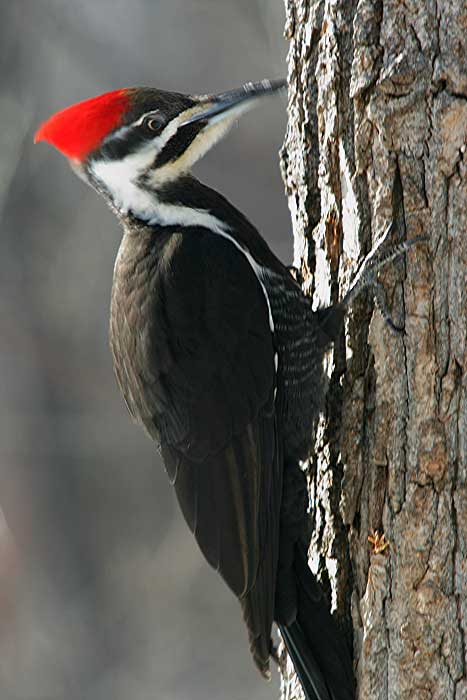
There were two sightings of some rather rare birds in Clintonville. Pete told me that a pileated woodpecker was spotted in Glen Echo Ravine by Tom Kessel. Apparently, this bird isn’t very common in urban areas, so this is quite the event. Also, I think I saw an eagle in Clintonville. At first I thought I had to be seeing things as this bird was huge compared to the red tailed hawk next to it. But the feathers covering the eagle’s legs were very prominent. After doing a search on the Internet, I found a site for the Ohio Department of Natural Resources that indicated eagles were nesting in Central Ohio. So it’s possible that I did see an eagle sitting on a telephone pole on High Street just north of East North Broadway…Amazing! But to be honest, in looking at pictures, I don’t know what it was I saw. Has anyone else seen an eagle in Clintonville? Please let me know if you have.

Eagles are just beautiful birds. When I was in Connecticut, I saw an bald eagle flying below me, we were so high up. I learned (in not a nice way!) that I am extremely scared of heights. I could barely look out over the edge as Pete exclaimed that I needed to get much closer to best see the bird. I preferred to stay several yards away from the edge, which even that seemed too close! I’ve also seen an eagle up north on State Route 23 in Delaware County.

The latest clean-up in Glen Echo last week brought us about ten volunteers. Efforts were concentrated on removing honeysuckle from the walking tract and an alley off of Medary; the chipper truck was completely filled. Then on October 29th, Mike McLaughlin and Pete helped out at another FLOW honeysuckle removal event at Clinton-Como Park. The Columbus Dispatch was there to take it all in. Pete said they discovered a hop tree (Ptelea trifoliata), the host of the giant swallowtail, that was completely covered by honeysuckle.

Until next time!

Last Tree Standing

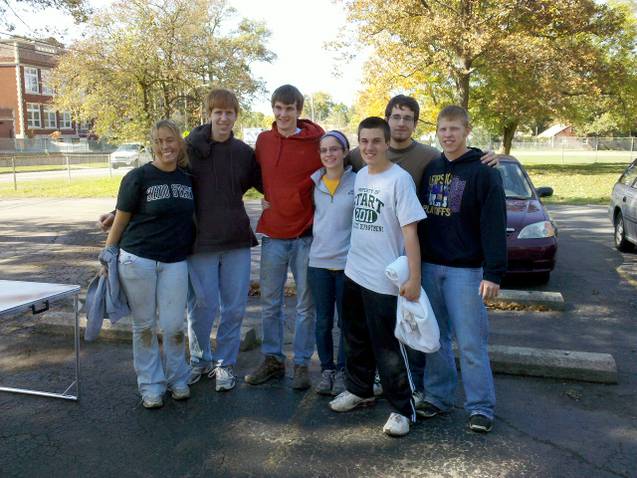
Well, we’ve placed the last trees in the arboretum, at least for this year! We had another amazing turnout of volunteers. Again, thanks to all the OSU students who showed up over the past three weeks (and all the other volunteers) because we couldn’t have done it without you. (And the Buckeyes won to cap off the day!) I’m not certain on the exact count, but  it’s over 150 trees that have been planted to date. Now, we will need to go back to check on all the trees to make sure they are being watered and trimmed and staked. I can’t wait to see how they take off next year. The oak planted in our tree lawn about three years ago has doubled in size, so I know that these trees will grow up fast, too. (I feel like these trees are all my children!)

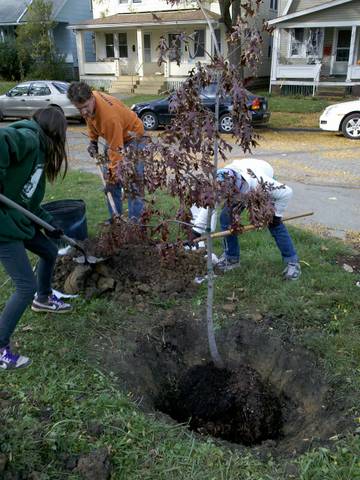
I still can’t get over all of the new trees that I can now see in our Arboretum. And the size, too. (If you look at the photo to the right, you can see how big many of the trees that were planted.) It really is amazing that this all started with a simple, “Wouldn’t it be nice if we could get some native trees planted?” And we’ve come so far and have many more things in store.

Speaking of trees, Ohio State University did a BioBlitz on Saturday, counting all of the trees on campus. They hope to become a Tree Campus USA by meeting standards set by the National Arbor Day Foundation. One tree, a sycamore, is estimated to be 250 years old. I think I know which tree they are talking about as it’s close to Bricker Hall, just behind the Department of Art on 17th Avenue. Mary Maloney, of Chadwick Arboretum, estimated that the tree is providing about $450 worth of value from reducing storm runoff and carbon, and lowering heating and cooling costs. With over 1000 trees on campus, that value the trees provide really adds up.

Our little trees are adding value, too!

Until next time.

Fall Color

We had another great planting on Saturday. One more this Saturday, and we are done! Again, we will be meeting at the Indianola Normal School at 9 AM on Saturday, October 15.

This Saturday was the first chance I had to participate in the tree planting. The previous Saturday, my mom came down, and with the weather as awful as it was, I didn’t want Mom being outside in the cold and damp. But this past planting, I was able to see first-hand all the planning that went into getting the trees in the ground. So my hats off to Mike McLaughlin for all of his hard work and also to Laura Fey for all of the OSU students she found us to volunteer.

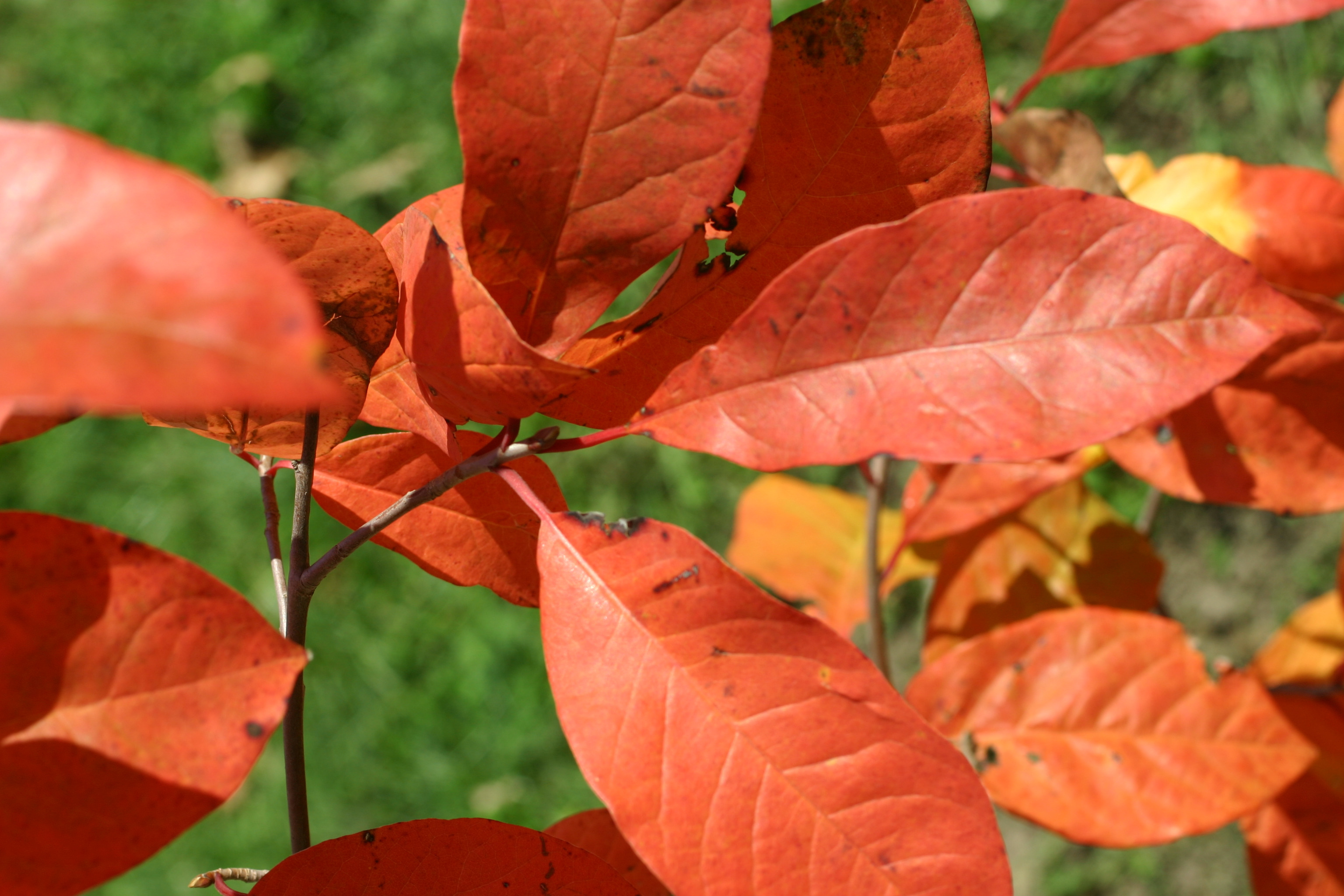
So after planting our group’s trees, I went out to see all the other handiwork around the neighborhood. Since the day was so gorgeous, I took some photos of the fall colors as well. So here are some pictures of the glorious trees in the Arboretum.

This one is a scarlet oak.

And this is a blackgum.

Both of these types of trees were planted in the Arboretum, adding habitat for birds and fall color for us!

Until next time!

Trees and the Things They Leaf Behind

Once again, LOUA will be planting trees this Saturday. Arboretum partners and volunteers will meet at 9 am on October 8, 2011 at the Indianola Informal K-8 School parking lot on the north side of Weber Road. An Ohio Department of Natural Resources staffer will be on hand to give everyone a quick lesson on how to plant a tree before volunteers are teamed up. If you’ve already seen the demonstration, you can head straight into planting trees.  This time around, we’ll be planting about 65 trees. and the weather’s meant to be beautiful!

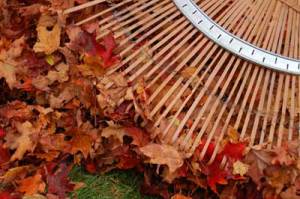
Speaking of trees, those leaves are falling down. One of the things that I really missed while in Florida was the crunching, shuffling noise that leaves piled on the ground made. To this day, I love to walk through leaves, just to hear the sound. But once those leaves are all on the ground, they can be raked up, another activity that I truly enjoy.
The weekly yard waste pick-up service for Columbus is provided to 227,000 single-family homes, including households that  use 90 and 300-gallon regular trash containers (NOTE:  Yard waste should never be mixed with regular trash)

Since Fall is the peak yard waste season each year, the city has some friendly reminders on proper ways to dispose of leaves, branches, twigs and grass clippings:

  • Yard waste must be put in biodegradable bags or rigid containers with the words “YARD WASTE” on the container’s side. Bags are generally available for purchase at home improvement or grocery retail stores
  • Yard waste should never be placed in plastic bags and plastic bags should never be used to line paper bags or rigid containers
  • Do not rake leaves into the street, gutters and storm sewer catch basins.  Leaves can clog storm sewers and cause flooding on streets when it rains.
  • Cut branches should be no more than four feet in length and bundled with string or twine.  Each bundle should be no more than two feet wide.
  • Yard waste includes organic waste generated during regular household gardening and landscaping activities, including:
    • Grass clippings
    • Leaves
    • Twigs
    • Branches
    • Shrubbery

Items that will not be collected with yard waste:

  • Rocks
  • Dirt
  • Plastic bags
  • Food waste

(Please call Rumpke at 1-888-786-7531 if you have questions about what materials are acceptable)

There is no restriction on the number of bags a household can put out for pickup. Each container, bag or bundle must weigh less than 50 pounds (Containers meeting this requirement will likely have a 30-35 gallon capacity)

Why should you recycle?

      • Recycling yard waste saves tax dollars and is green
      • It saves tax dollars that would have otherwise been needed to dump yard waste at the landfill (NOTE:  Solid Waste Authority of Central Ohio rules prohibit the City of Columbus or others from knowingly dumping yard waste at the Franklin County Landfill)
      • It extends the life of the County landfill
      • It increases weekly refuse container capacity for residents
      • Recycled yard waste can be composted and used in home gardens and landscaping to beautify our homes and neighborhoods

Due to the heavy demand for yard waste pickup in the fall, crews sometimes may need to work Saturdays to catch up on pickups.  Residents’ patience in these cases is appreciated.

Residents can contact the city’s 311 Customer Service Center at 311 or 645-3111 to find out which day of the week is their yard waste collection day

City of Columbus residents may still drop-off their yard waste, free-of-charge, at any of nine locations if they wish to do so.  Please call ahead for hours of operation.

Com-Til, the City’s compost facility (no grass clippings):  7000 Jackson Pike, Columbus (614) 645-3152
Kurtz Bros. and Mulch Manufacturing Inc. (leaves, small branches, grass clippings):

      • 2850 Rohr Road, Groveport (Kurtz Bros.); (614) 491-0868
      • 6055-C Westerville Road, Westerville (Kurtz Bros.);  (614) 882-0200
      • 6279 Houchard Road, Dublin (Kurtz Bros.); (614) 873-2000
      • 6747 Taylor Road S.W. (Mulch Manufacturing, Inc.); (614) 864-4004

Ohio Mulch:

      • 4120 Roberts Road, Columbus (Ohio Mulch); (614) 921-9330
      • 4665 Westerville Rd. (Ohio Mulch); (614) 891-3242
      • 1600 Universal Rd. (Ohio Mulch); (614) 445-4455
      • 537 Reynoldsburg-New Albany Rd. (Ohio Mulch); (614) 863-0445

Until next time!

The First Arboretum Trees are In!

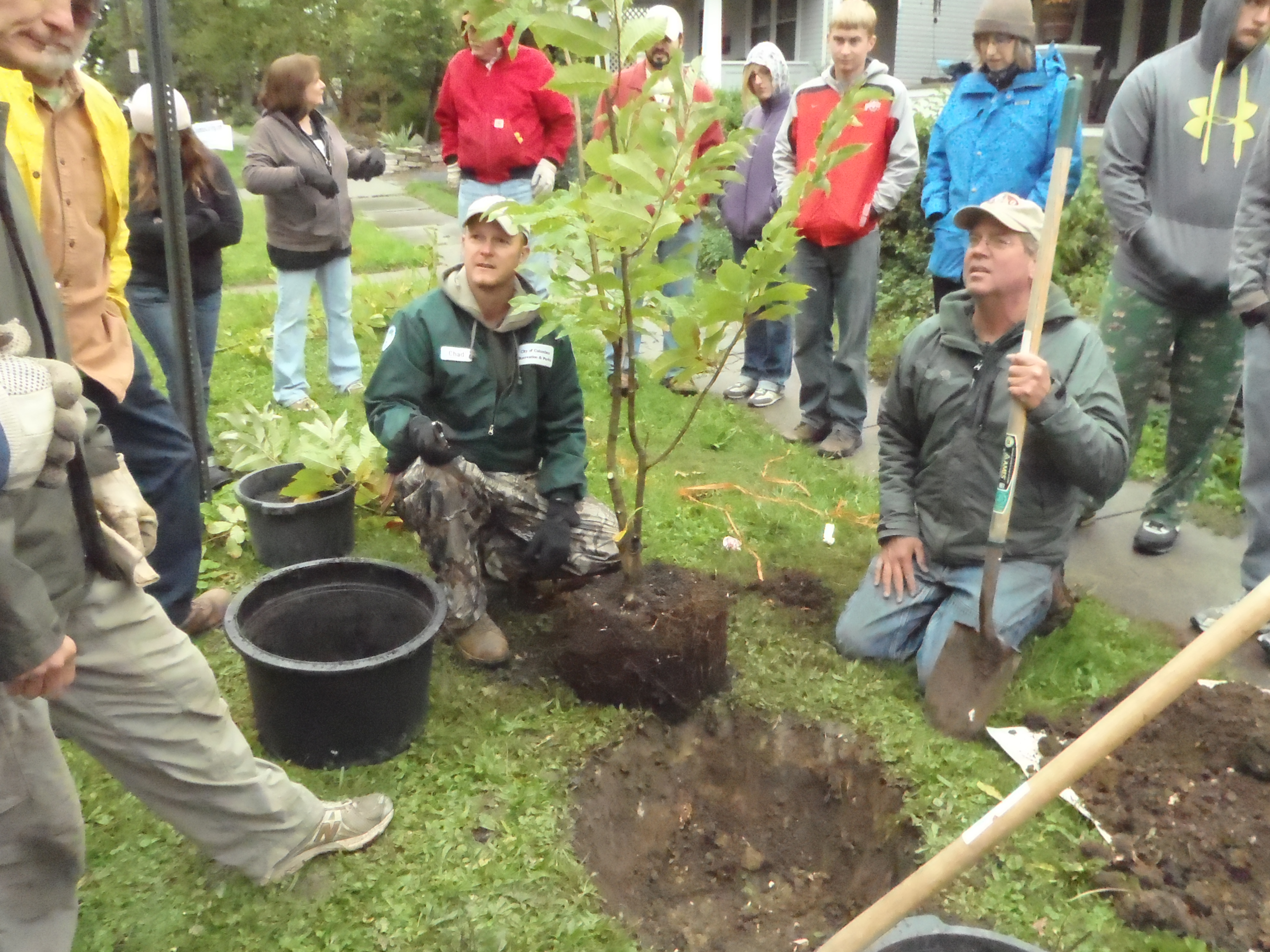
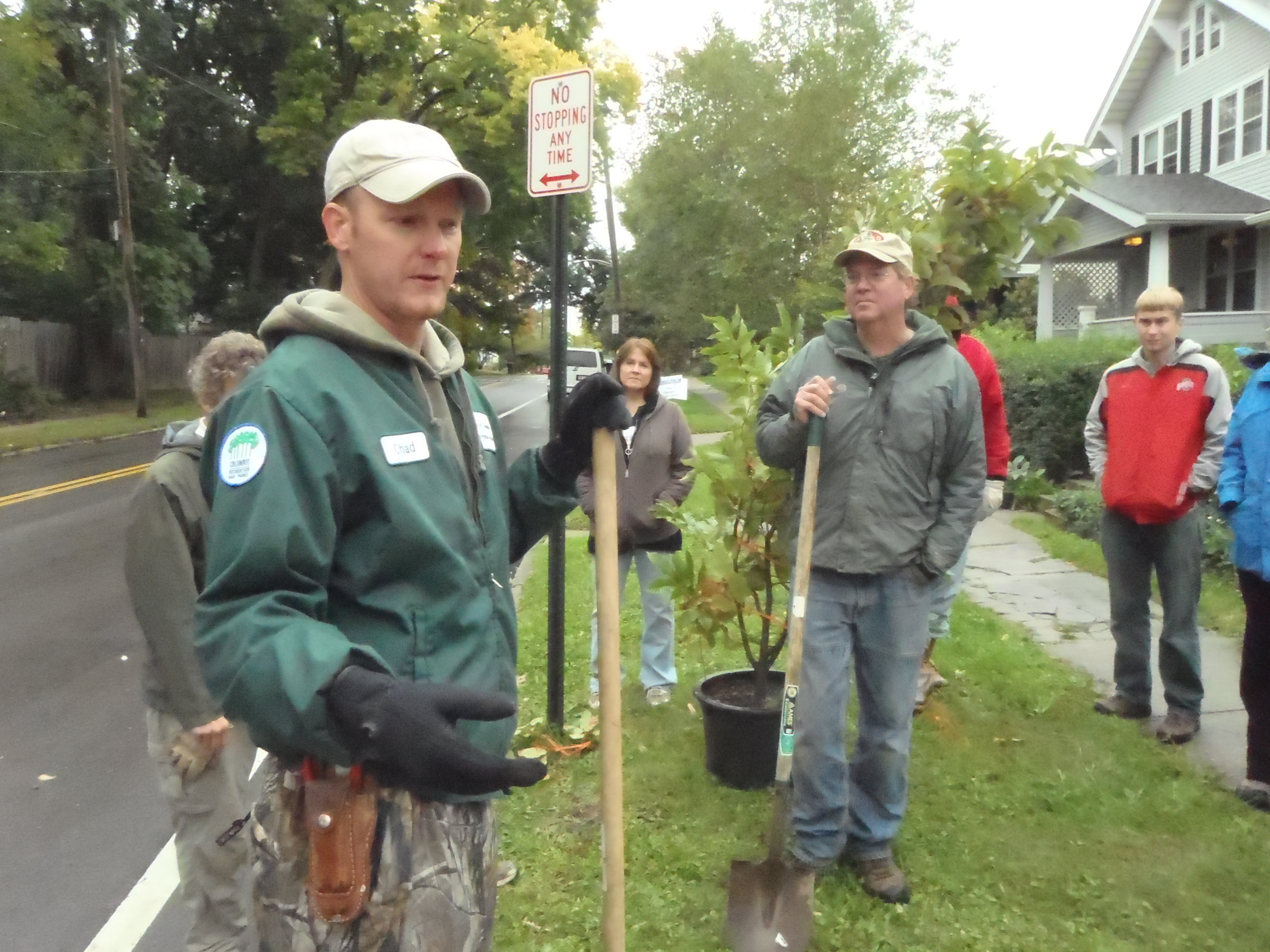
Saturday was a milestone in the Lower Olentangy Urban Arboretum: the first 60 trees we bought with grant money were planted. First, I want to thank everyone who showed up in the less than perfect cold, damp, and rainy weather (that is, if you were a human, not a tree going into the ground…) to help us out. A very special thanks goes out to Chad, from the City of Columbus and the OSU students who came out in great number (and to Laura Fay for finding us all of those students). Chad showed everyone how to plant the trees, and the OSU students, along with the other volunteers, went out and got it done. It was so wonderful the next day to go about in the Arboretum and see all the newly planted trees. Of course, the whole process went so smoothly because of all the pre-planning done by Mike McLaughlin. He made it so we could all be amazing, simply by being so amazing himself. And also, I’d like to thank Mike’s husband, Dan, for allowing us to take up so much of Mike’s time these past few months.

I feel like I am giving a thank-you speech for an Academy Award, fearful that I will leave someone out…like my husband, Pete! There many people to thank who made this possible: all the members of the steering committee, and so many others that have been lending their expertise, ideas, skills and time. This really was a community effort that wouldn’t have made it this far without a lot of effort from everyone. I just can’t describe my feelings on seeing something that was a seed of an idea grow into a reality. This is such a lasting legacy for the Arboretum, for Columbus, and for the planet. My thanks to each and every one of you who have been involved. You are all amazing, and I look forward to working with you in the future. There is so much more we can do!

The details of the tree plantings were that the trees were planted all over the Arboretum. We planted a variety of trees, including redbud, hop tree, hop hornbeam, and American chestnut, just to mention a few. Next week, a lot of oak trees (my personal favorites) will be planted. And the weather promises to be much nicer – sunny and warm. Then one more Saturday of planting and we are done. The air feels cleaner already!

Until next time!

We’re Planting Trees – Can You Help?

Lower Olentangy Urban Arboretum (LOUA) partners will begin planting 170 purchased trees this Saturday, October 1st, and then continuing the following two Saturdays for a total of three planting days.

Arboretum partners and volunteers will meet at 9 am on October 1, 2011 at the Indianola Informal K-8 School parking lot on the north side of Weber Road. An Ohio Department of Natural Resources staffer will be on hand to give everyone a quick lesson on how to plant a tree before volunteers are teamed up.

“We expect to plant approximately 60 trees each of the three work days” said Mike McLaughlin, arboretum board member. “Trees range in height from 6’ to 8’, most are in containers, but a few are balled and in burlap.”

Anyone is welcome to volunteer and is encouraged to contact Peter Kovarik at
pkovarik@cscc.edu, or phoning him at 261-0092, so that arboretum workers can make sure to have enough supplies available. Volunteers are encouraged to bring a shovel; arboretum partners will be providing water.

If you are debating about volunteering, please know that even if you help out with only one tree, that would be greatly appreciated! And just to give you an idea of the benefits of any tree you help plant (or have in your yard), you can go to this site: treebenefits.com/calculator to find out. All you need to know is the type of tree and its diameter at chest height.

Hope to see you on Saturday!

Until next time!

Seagulls and Other Ohio Birds

I always laugh whenever I see a seagull in Columbus as there’s not one bit of sea shining anywhere near central Ohio. I am more used to seeing them by Long Island Sound, which although full of salty seawater, is not the sea, as my husband, a native of Connecticut, is so fond of reminding me. Perhaps they should be called soundgulls instead?

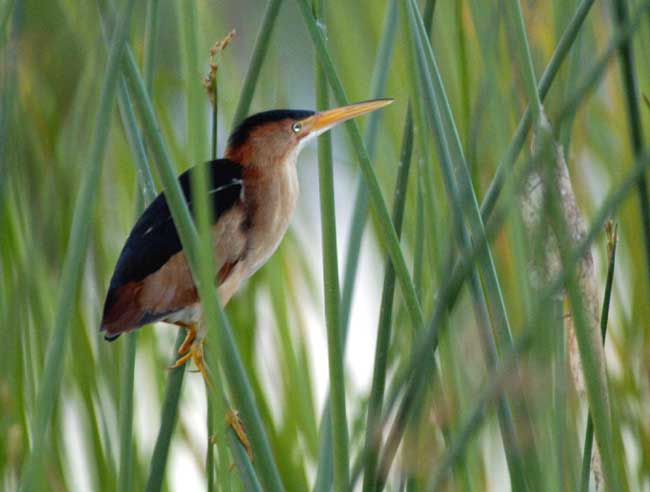
One of the things that the arboretum will do is bring a more diverse bird population into Clintonville. Pete says he’s noticed a lot more birds and insects around and thinks that it’s because, in part, of what we’ve done in the ravine to restore the native plants. I’ve just heard about another place near to Columbus that is also attracting birds, although birds that prefer open wetlands to closed woodlands: Glacier Ridge Metro Park, near I-270 and Route 33 in Dublin. The area was once part of the Darby Plains, lands that used to have a plethora of flora and fauna. By allowing water to come back into the park, a wetland was created that now has some fairly rare wetland birds visiting it. Some of the birds sighted include: the endangered king rail, the Virginia rail and sora, pied-billed grebes, American coots and least bitterns, the smallest heron in North American, pictured at the right. To be honest, all of the birds are not familiar to me. But it’s great that they have found a place to live and prosper.

In other arboretum news, the plantings in the ravine on Saturday, September 24 went very well. Friends of the Ravines and the Lower Olentangy Urban Arboretum planted native trees and shrubs in areas where there were successful honeysuckle-removal events. Volunteers carried plants, dug holes, and installed and watered plants. These plants will now fill in the empty areas that were created when all of the honeysuckle plants were removed, providing appropriate food and cover for native wildlife. Thanks to everyone who participated; we would be lost without our many volunteers.

The big news is that our first trees will be planted in tree lawns next week. More details as they become available – I am so excited!

Until next time!

We’re Planting Trees – Can You Help?

To kick off the project for the restoration of native trees, Lower Olentangy Urban Arboretum (LOUA) partners will begin planting 170 purchased trees on Saturday, October 1st, and then continuing the following two Saturdays for a total of three planting days.

Arboretum partners and volunteers will meet at 9 am at the Indianola Informal K-8 School parking lot on the north side of Weber Road. An Ohio Department of Natural Resources staffer will be on hand to give everyone a quick lesson on how to plant a tree before volunteers are teamed up.

“We expect to plant approximately 60 trees each of the three work days” said Mike McLaughlin, arboretum board member. “Trees range in height from 6’ to 8’, most are in containers, but a few are balled and in burlap.”

Anyone is welcome to volunteer and is encouraged to contact Peter Kovarik at
pkovarik@cscc.edu, or phoning him at 261-0092, so that arboretum workers can make sure to have enough supplies available. Volunteers are encouraged to bring a shovel; arboretum partners will be providing water.

In other arboretum news, two preliminary arboretum walks have been drawn; a short and a long. Both walks begin at the Indianola Informal K-8 School at 251 West Weber Road where the school administration has generously agreed to allow future visitors to the arboretum space to park in the north parking lot.
The short walk, which is expecting to take less than an hour, will highlight 34 native Franklin County deciduous trees while the long walk highlights 43.

Although the long walk hasn’t been measured yet, it takes visitors past other neighborhood jewels including two churches, two schools, an organic grocery store, a tavern, a Dairy Queen, and through a Columbus City park.

Work on the arboretum will continue into the winter as arboretum partners will be working on making the tree markers for those identified on the walks, working with city administration to advise regarding signs for the two routes and safety improvements, and printing the walk brochures.

LOUA will also continue to work with the city’s department of recs and parks whose support for the arboretum project has really been above and beyond, for a possible supplementary tree planting in the spring.

Arboretum board members are envisioning a spring ribbon-cutting event while the dogwoods are in bloom.

Until next time!

The Trip Northeast

I apologize for the long lapse between posts. Pete and I went on a week-long trip back to Pete’s home in Connecticut. Between the preparations for the trip and the trip itself, time just got away from me!

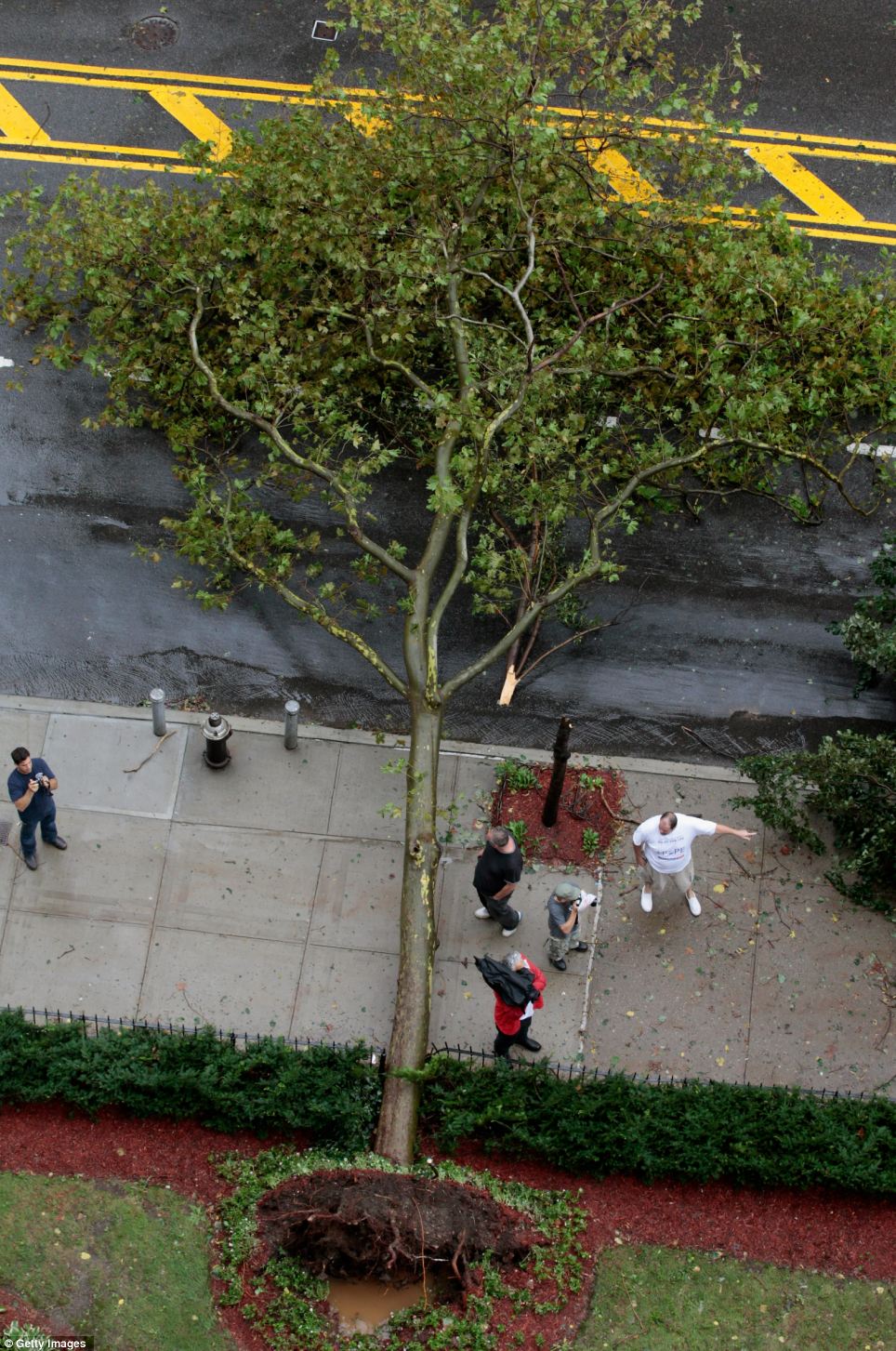
When Pete and I headed off in our car, we both wondered what the trip would show in terms of damage from Tropical Storm Irene and the additional rains that followed. We first noticed the effects in crossing the Susquehanna River. Normally a wide, placid river, the waters had expanded even more. One island was nothing more than the crowns of the trees that were on it. As we got closer to the coast, we saw more damage, mostly to trees. One river had hundreds of trees that had fallen over into the water from their soil being washed away at the roots. Then we rode past a flood plain for the same river and saw many smaller trees that had been pushed over by the sheer force of the water. Within New York City, there were many trees including a group of oaks that were uprooted. Along the Merritt Parkway in Connecticut, more trees were down. In fact, everywhere we went, trees were down. So very sad.

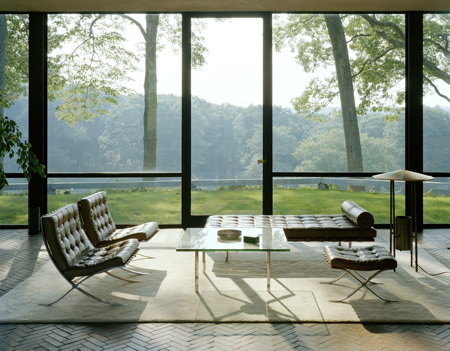
But we also got to see the glory of trees in the Pennsylvania woods. all green and lush with an occasional burst of color – much too soon to see the full beauty of autumn just yet. But the most amazing trees were in Philip Johnson’s Glass House and the Rockefeller’s summer home near Sleepy Hollow, New York. Mr. Johnson was originally from Ohio and when planning his home in 1948, he made sure that every detail was just perfect. Trees were used as extensions of the art of his home, with branches trimmed just so to provide the best view and effect.

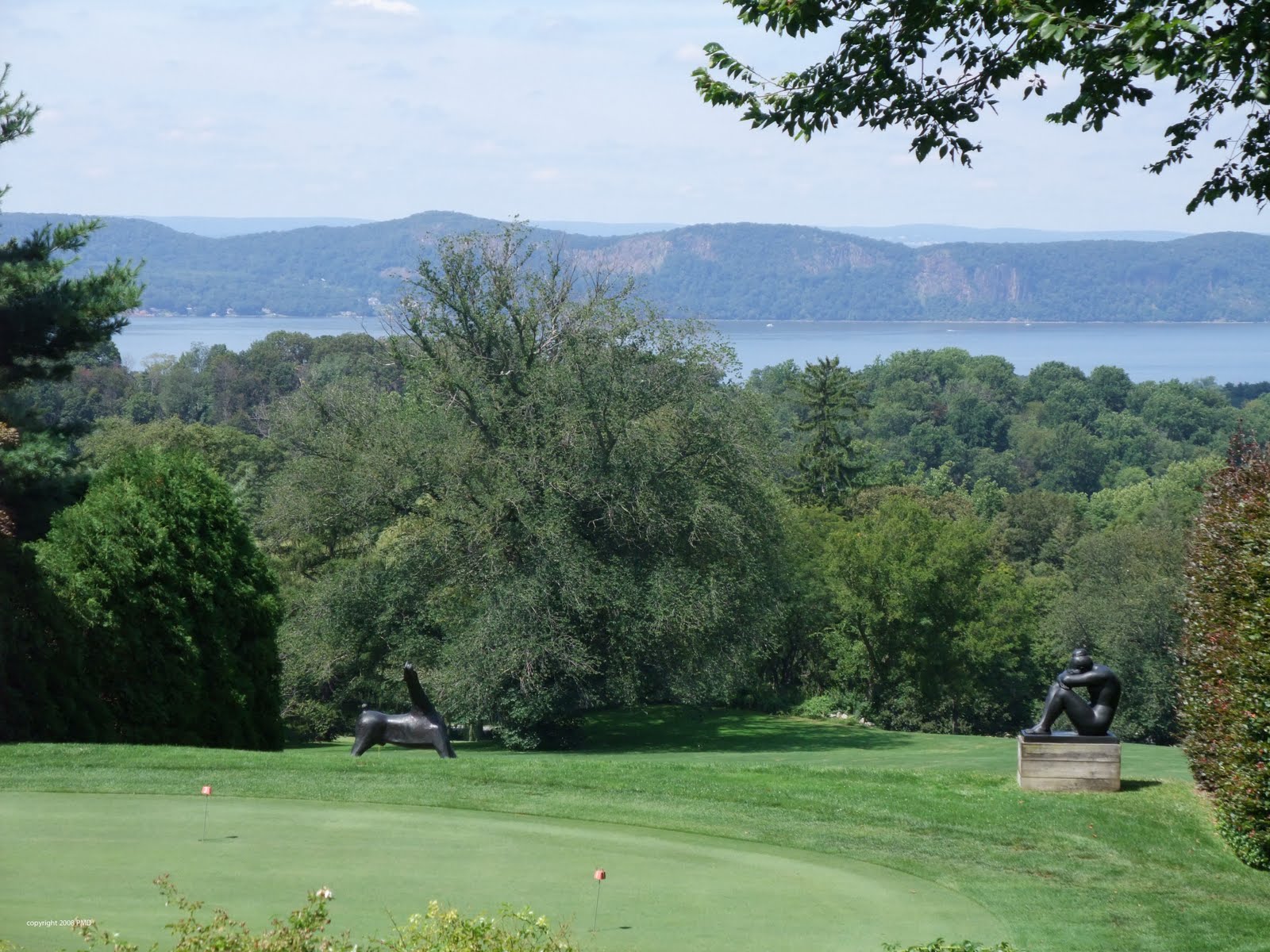
The Rockefeller’s summer home is situated on the highest hill in Sleeping Hallow, Kykuit. In order to create a place for the home, the hill, which was mostly rocks, had to be flattened to create a space for the house to sit. There were also many trees planted and beautiful gardens created. But the best part of the home was the view from the veranda. The home was 500 feet above sea level with stunning views of the trees along the Hudson River and the Palisades. It truly was breathtaking; I could have grabbed a stack of books and never moved.

Until next time!