Category Archives: General Information

Glen Echo Barred Owls

One of our Glen Echo neighbors, Chris O’Leary, reported that a pair of barred owls have been permanent residents in the ravine for the past three or four years. I’ve not had the privilege of seeing or hearing these amazing birds, although our neighbor, John, indicated that he has heard them from his backyard. I did listen a few times for them, but no luck. However, here’s what information I have about the owls, courtesy of Chris:

  • They roost in the large pines in the neighborhoods surrounding the ravine by day.
  • The best chance to see them during the day is when the crows find them and chase them through the neighborhood.
  • Occasionally the owls will call to one another in the middle of the afternoon.
  • They have been seen flying over the bridges at Indianola and Arcadia at dusk. (This isn’t good, as being hit by a car is the biggest threat to urban owls.)
  • The owls leave the pine trees at dusk and can be seen heading towards the ravine to hunt.
  • One evening Chris watched the male perched over his neighbor’s pond watching the koi. (Which reminds me of the blue heron that we had in our backyard that ate a few of the goldfish in our pond.)
  • The  female has not been seen since December, which may mean she’s nesting in  a tree cavity.  Wouldn’t that be wonderful to see the little ones!
  • Their call has been described as sounding like “who cooks for you, who cooks for youuuuu”. Sometimes their call is an otherworldly cackle. You can listen at the birdjam website  http://www.birdjam.com/birdsong.php?id=47

Chris also stated that screech owls nested in the ravine for years, but with the recent arrival of the barred owls, the screech owls have disappeared. One evening in May, neighbors on Cliffside Drive were able to watch screech owlets (see the photo to the left) practicing their flying skills, landing awkwardly on the stone fence and in low tree branches. You can listen the screech owl call here. They are quite different sounding from the barred owls. I don’t hear a “screech,” so if anyone can tell me why they are called screech owls, I’d love to know.

Thanks to David Brown for the wonderful photos of the Glen Echo owls.

Until next time!
Spring is in the Air

It’s hard to believe with the temperatures the last couple of days that spring will soon be upon us. Sunday’s snow showers were a reminder that winter isn’t quite done with us and that bringing out the summer wardrobe will have to wait a few more days. Or weeks! But there is that certain smell in the air that only comes when it starts to get warmer outside. Or when it is at least thinking about getting warmer outside.

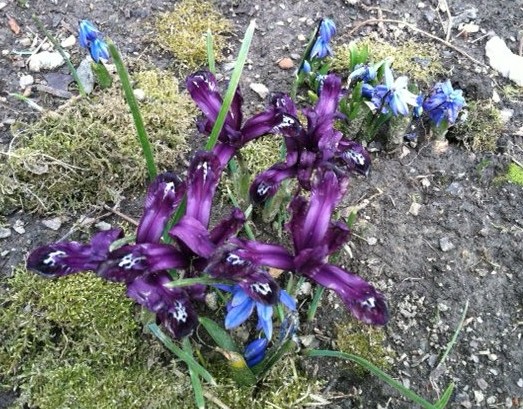
But there are signs that something underground is waking up. There are buds on a few of our trees. And we have beautiful irises in the back yard along with another bulb flower that I can never remember the name. It looks a bit like a miniature hyacinth. (You can see both in the picture to the left.) Those two are some of the first to bloom, right behind the lenten roses. I wasn’t sure the hellebores would come out this year, but they finally did.  I’ve been buying them for a few years and am now up to four plants, a pale green, a light pink, and a yellow one. The latest one I planted is a deep burgundy color. I really love the flowers as they last so long, like orchids, and they seem to do very well in my side garden, with its odd mix of full shade then full sun, then full shade. By the way, if anyone has any plants that can take full shade mixed in with three hours of sun, please let me know; I am always looking for new plants!

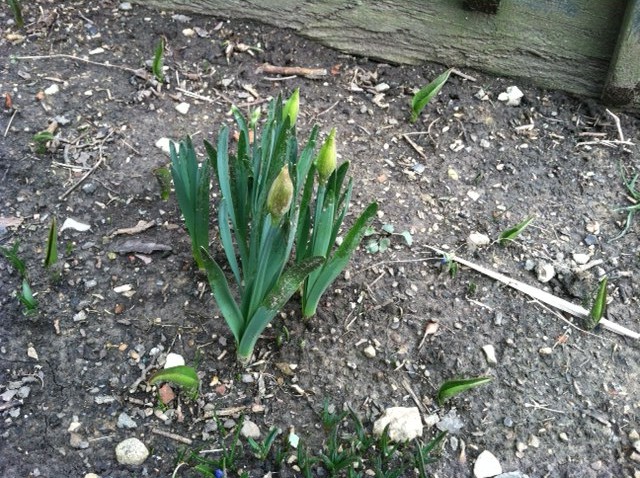
I also saw that some of our daffodils have buds on them while there are little green wedges pushing up from the tulips I planted last fall. My grandfather always had daffodils, tulips, hyacinths, and peonies growing in his backyard. In spring, we’d always come home after visiting with a large bouquet of sweet-smelling flowers. He’d carefully cut them, wrapping the ends in wet newspaper covered in tinfoil for the trip home. The car smelled wonderful as did our house. Daffodils, in particular, remind me of my grandfather, especially the little white ones with the orange edges.

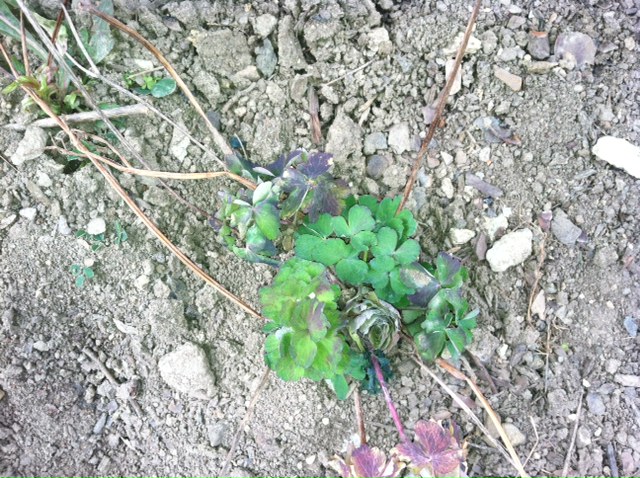
A few other plants that I’ve spotted coming up are some columbine and another plant that I can’t remember what it is without seeing the actual leaves. I think it might be an Indian pink, but who knows! One of these days, I will diagram my garden to remember what’s where. It would be more helpful than my “I’ll buy this and if it lives I should get more” attitude that I currently have which only goes so far when you can’t remember just what it was you planted that did so well… Pete says that the Jacob’s Latter is blooming (very early for that!) as well as seeing some flower buds on our wood poppies.

So, since it is springtime, I’d like to leave you with a poem by Robert Frost. I love reading poetry because it always amazes me how so few words can convey such feeling. Frost does rather well in capturing the process of winter retreating and spring arriving.

Spring Pools
These pools that, though in forests, still reflect
The total sky almost without defect,
And like the flowers beside them, chill and shiver,
Will like the flowers beside them soon be gone,
And yet not out by any brook or river,
But up by roots to bring dark foliage on.
The trees that have it in their pent-up buds
To darken nature and be summer woods —
Let them think twice before they use their powers
To blot out and drink up and sweep away
These flowery waters and these watery flowers
From snow that melted only yesterday.
Until next time!

There’s a Moose Loose Aboot the Hoose*

I’ve mentioned in the past that I live with four cats: Fionula, Seamus, Maeve and Ciara. (You’d think I was half Irish, wouldn’t you, with those names!) Seamus is mostly Pete’s boy, whilst Maeve and Ciara fight over my attention. Pete has told me numerous times that Maeve and Ciara get along fine until I come home. So the occasional hiss or growl by Ciara (Maevie is mostly blissfully ignorant of the trouble she creates) isn’t cause for too much alarm.

A few nights ago, the situation got a bit out of hand with Ciara’s growling. Normally, I tell her to hush, and she slinks away. This time, she just kept growling, so I went and picked her up to place her under the covers, a special treat. She just kept growling. I couldn’t figure out what was wrong with her, especially when she jumped up from under the covers and ran out into the hall. Again, more growling. After about an hour, I had had enough, what with it being 4am. I got up, turned on the hall light, intending to ask Ciara just what her problem was. I saw she had something white in her mouth and thought it was a cotton ball, a favorite toy of hers. Then I realized that the little cotton ball had a tail. And whiskers. And very wide, very frightened eyes. I yelled at Pete that Ciara HAD A MOUSE and he needed to come here RIGHT NOW!!! Or as Robert Burns would have put it, Ciara had a “wee, sleekit, cow’rin, tim’rous beastie.”

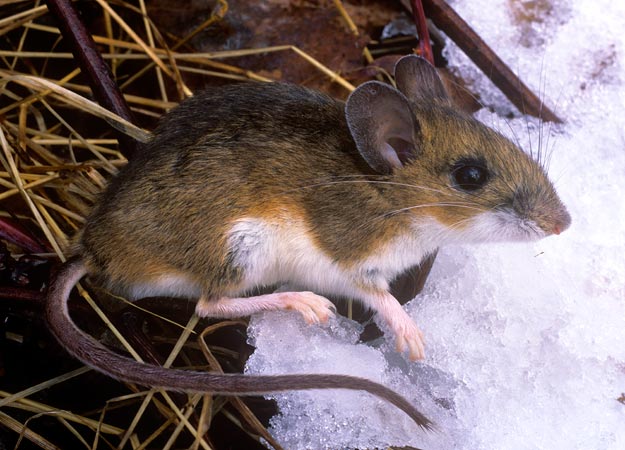
Grabbing Ciara by her scruff, the mouse was let free to run to the steps downstairs. I was tossing cats (not literally!) into bedrooms and bathrooms to keep them away from the poor creature. (Seamus and Fionula had no interest whatsoever in getting up from their warm beds; only Maeve and Ciara were running around.) Cats secured, I looked for a container to put the mouse. Found a shoe box, gave it to Pete, who managed to get the mouse into the box. Except it was one of those shoe boxes with a finger hole to grab it from the shelf. Mr. (or Mrs.) Mouse promptly found the hole and jumped out. New box found, without a hole. Mouse caught once again. Then what to do with the little cutie-pie? Of course, he/she needed some bedding to feel safe in his/her temporary home. That meant opening the lid and yes, you guessed it, the mouse jumped out. We’d managed to get it into a room with a screen and spent the next 45 minutes trying, in vain, to recapture one very soggy mouse. (Ciara seemed only interested in carrying the mouse around, thus the saliva-covered fur…)

This mouse lead us on a merry chase, jumping on the walls, on me, and finally, discovering a hole in between the flooring and wall (we only have lathe on the walls right now) and was gone like a shot. We want to think that the mouse has found his way back outside. But through all of this, I just thought how sweet that little mouse was, and, how relatively calm, considering!

Isn’t nature grand?

Until next time!

*”There’s a mouse loose about the house.” (Listen to Burns’ poem, “To a Mouse” and it will make more sense! Read the original and English translation here.)

ALTernative Answers

On Friday night, Jason, Corinne, and Pete and I went to a presentation at Whetstone Library by Tim Lai and Eliza Ho, of Tim Lai ArchitecT and founders of the nonprofit organization ALTernative. The presentation described the power of design as a solution to a problem; how to use art to improve the community; and how education can help to create a better community.

One of the projects that Tim and Eliza worked on is the tree mural on Hudson near Summit. The building walls there were getting tagged, and the solution of a mural was presented. With community help, trees were painted on the wall. It’s really quite an accomplishment and looks very nice when I drive by – much better than graffiti! You can read more about the project on this FaceBook page.

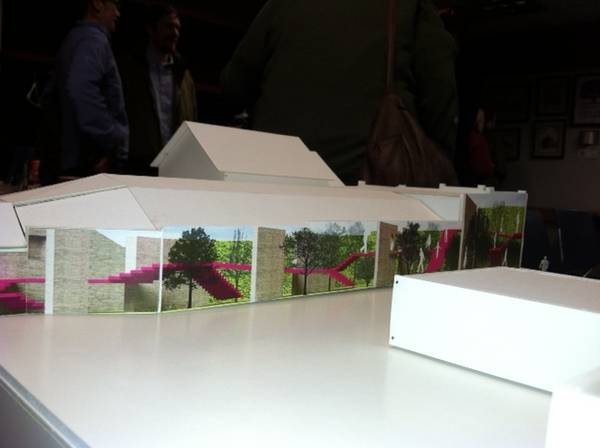
The team hopes to expand the current tree mural by adding another mural on the building next door, showing what the inside of the building might look like, sort of trompe-l’œil with staircases and people walking on them. It’s really interesting to look at and something that one could look at for quite a while, seeing new things each time.

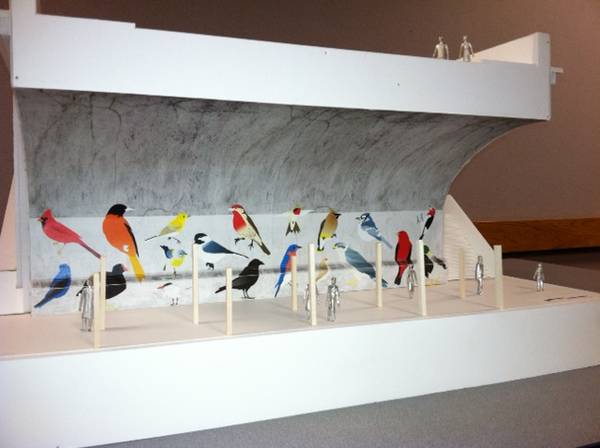
Another project in the works is a mural under the Indianola bridge in Glen Echo Ravine. This bridge has been tagged numerous times, costing Columbus money each time it has to be repainted. ALTternative has presented the idea of a bird mural with birds found in Ohio. There would also be an education element to the mural, with information about each bird presented. Additionally, there would be birdhouses throughout Glen Echo Ravine to provide a place for some of these birds to nest. That would be wonderful to increase the number of birds that call the ravine home!

Finally, Tim and Eliza are coming up with possible solutions for the many dining trucks around Columbus and the lack of seating for these diners. Simple solution of mobile seating, too!

Until next time!

There’s Money in Them Thar Birds

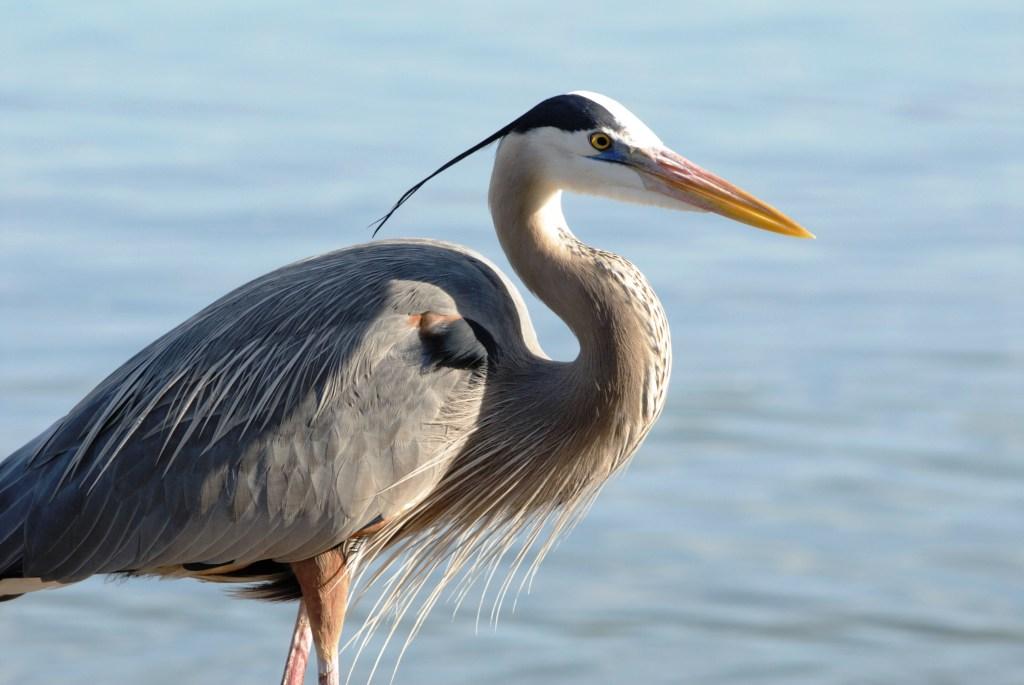
When I think of Ohio, I don’t necessarily think of tourism. At least not like Florida and Disney or Arizona and the Grand Canyon or New York and the Big Apple. Granted, we have The Wilds and Cedar Point, which personally was the highlight of my summer as a kid. We would head there each June, always, it seemed, ending up with a flat tire somewhere along the way. Besides the flat tires, the one thing that I remember most about driving to Cedar Point was the Great Blue Herons that we would always see. Mike and I would make my dad stop the car so that we could get out and watch these amazing birds. What I didn’t know at the time was that bird watching, as we were doing, is a big part of the tourism dollars that come into Northern Ohio.

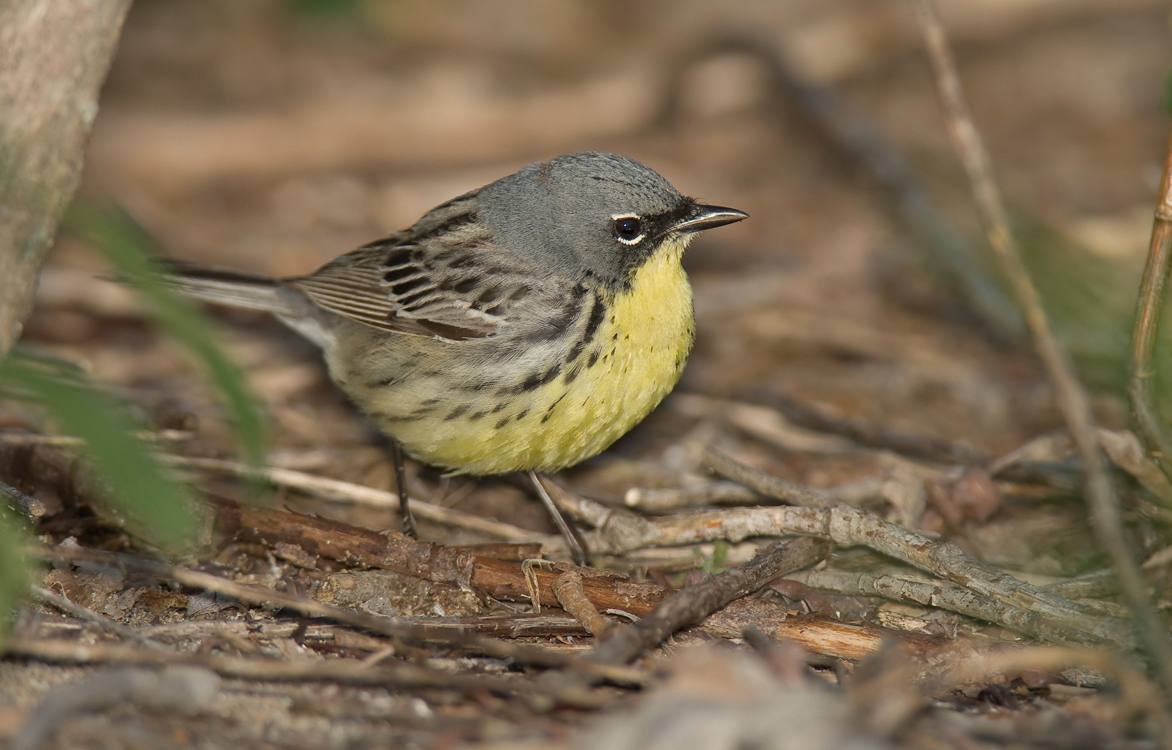
I recently read an article in Twineline, a publication put out by the Ohio Sea Grant and The Ohio State University. In the 2012 Winter/Spring edition, “The Benefits of Birding,” written by Matthew Forte, states that about 2.4 millions birders come to Ohio each year, adding around $30 million and nearly 300 jobs to northern Ohio’s economy. Before Dr. Philip Xie of Bowling Green State University did his research, no one was certain just how many birders were coming into the state each year or how  much money those birders were generating for our economy. (Click here to see Professor Xie’s full report.)  Something else I didn’t know was that one of North America’s best birding sites is located in Ottawa County’s Magee Marsh. They have a birding festival in early May that attracts thousands of attendees looking for rare birds. Warblers seem to be the most popular attraction, although many other kinds of birds show up. There is also a new website, lakeerieohiobirding.info that shows birding sites along a 312-mile trail along Lake Erie’s coastline.

Can you imagine if our arboretum became a birding destination? First of all, that would be wonderful because it would mean that we have the kind of habitat that made birds want to come to our area. And how wonderful having more birders visiting our arboretum would be for local restaurants, hotels and other shops. It would be a win-win situation for everyone involved – and we are on our way to making it happen. Pete’s already noted some birds in the area that he hasn’t seen before, many now feeling more comfortable in the ravines that are getting back to their origins, without so many invasive plants growing in them. I can’t wait to see what shows up this spring in Glen Echo.

Until next time!

Trees in the News

After one week of being sick followed by another week of ending up in bed by 8.30pm at the latest, I feel that I am back on the road to recovery. Milestones in that road are measured by the number of cough drops or tissues needed to get me through the day. I’ve hardly a use for any, which is much better than my box per day average a few weeks ago.

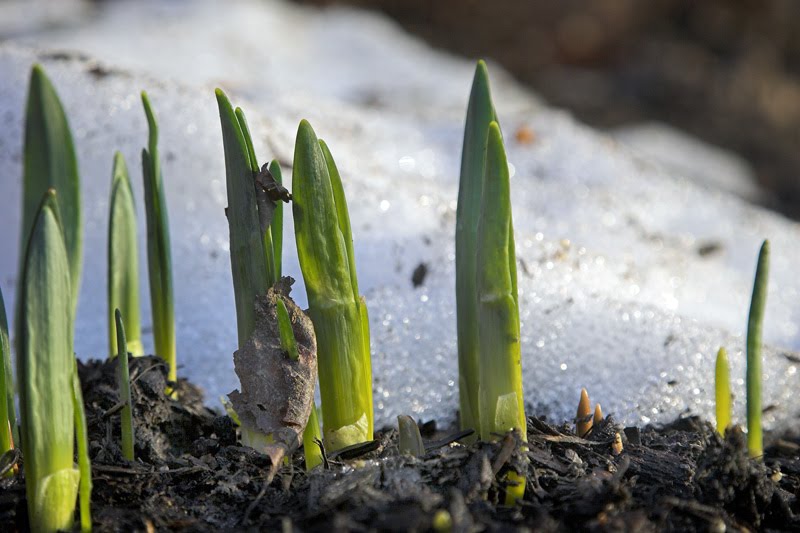
This cold weather does much to show all the outside air making its way in to our house through various means. Pete has done a lot to insulate the house, but our windows are the kind with weight pockets, which just seem to be an invitation for chilly air to enter our home at will. A while ago, when it was much warmer, I went outside to look at the garden to see if anything was popping from the many flower bulbs we have around. There were some sprouts, but I am thinking that the little bulbs that have stuck their tiny green fingers through the soil were wishing for some mittens! I hope they haven’t been damaged too much by the snow and freezing temperatures.

I read an article in the January-February 2012 edition of Ohio State’s alumni magazine about our aging forests in the Upper Great Lakes region. These forests remove tons of carbon from the air. But as these forests get older, Ohio State scientists are studying how the new trees are doing at handling the job of removing carbon. Seems these new additions are doing a great job, being more diverse and complex. You can read more here about the forests.

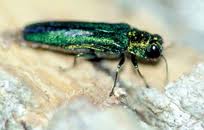
Speaking of Ohio State, the Ohio Agricultural Research and Development Center (OARDC) in Wooster has been working on creating a hybrid ash tree that isn’t as tasty to the emerald ash borer. If I got the science down right, there are proteins in some Asian ash trees that aren’t tolerated by the emerald ash borer. Scientists are trying to pull out the DNA from those proteins to find the toxins that are repellent to ash borers. From there, a hybrid tree could possibly be created that has that specific DNA and toxins. Hopefully, a tree that looks like our North American ash tree and can also withstand the emerald ash borer is in the works. I’m not certain how I feel about a hybrid ash tree, but if that seems to be the only way to keep ash trees in Ohio, then so be it.

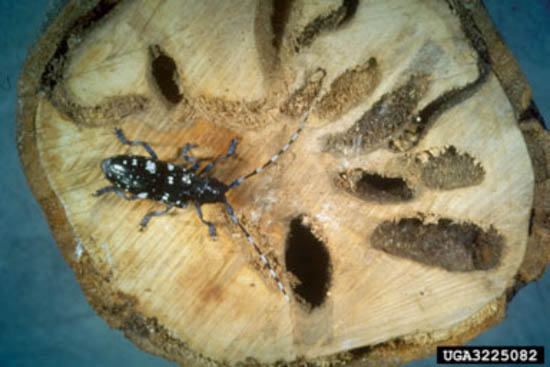
Another insect that is now in Ohio is the Asian longhorned beetle. This little creature in not picky at all about which trees it likes to attack. It will eat ash, birch, elm, hackberry, poplar and willow, to name a few. The worst part about this insect is it attacks healthy trees, unlike native beetles that feed on dead and dying trees.  Maples seem to be this beetles’ favorite snack. Look for deep exit holes in healthy trees about the size of a dime. The Ohio Department of Agriculture has a number homeowners can call is they suspect an infected tree: 513/381-7180. There is also information on ODA’s website.

Until next time!

In the Grand Scheme of Things

This past week, both Pete and I have been sick. Pete’s got bronchitis and has had to teach even though he’s not felt his best. I’ve got some sort of viral infection and haven’t felt like I wanted someone to put me out of my misery, but I felt bad enough that I took most of the week off from work. I just would have felt awful if I gave what I had to someone I worked with.

I’ve found out a few things in the past week: my hair doesn’t really need to be washed every day; if you use a whole box of tissues in one day,  you’ve blown your nose once every 7.8 minutes; and Vick’s VaboRub smells as medicinal as I remember and still works so well in opening up blocked nasal passages. Overall, I was feeling pretty sorry for myself, at least until I read an email about a co-worker at Ohio State who lost her baby boy on Wednesday. All of a sudden, everything fell into a different perspective.

I just couldn’t stop thinking about my friend and that I have no idea how one gets through something like that. And that got me to thinking about what really matters. Pay it forward. Make a difference. Live each day like it might be your last, and treat everyone as you would like to be treated. Each day, do something good for yourself, for someone you love (and let them know you love them), and for this planet. Because in the end, all we have is each other and this place we call home. And that’s all that really matters.

Until next time.

There’s Something Happening Here…

In reading my latest mystery book, I came across a word that caught my eye: “vagaries”. I had a vague notion of its meaning, but went on-line to be sure. According to Merriam-Webster, it means “an erratic, unpredictable, or extravagant manifestation, action, or notion.” What a perfect word to describe this winter weather we’ve been having. My poor rose bush has sent out shoots of green, only to have them turn to black from the cold. The spring bulb garden has sprung, with one lonely flower already wilted and spent. The Helleborus Orientalis (Lenten Roses) in my side garden haven’t bloomed at all, most likely wondering if winter will ever arrive for good. Snow blowing sideways on Sunday, and tomorrow the high will be 57. The vagaries of weather indeed!

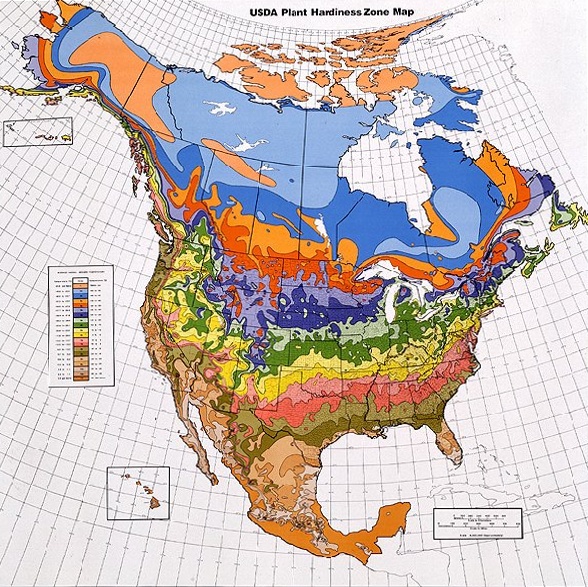
Last week, the USDA set forth the revised planting zones for the United States. These are the 13 zones that help gardeners decide what plants should survive in their yards. The previous 1990 map (see picture below) used temperatures from the period 1974 to 1986 while the new map uses temperature from between 1976 to 2005. Ohio, which was split between zones 5 and 6, now is mostly in zone 6. The USDA is distancing itself between the changes to the map (where everything seems to be shifting northward) and global warming. Granted, the latest map uses temperature extremes and better weather information such as acknowledging cities are warmer than rural areas and large bodies of water can affect temperatures, making the data used in 1990 less sophisticated than what was used in 2012. Personally, I think it’s just another indication that our planet is changing. That’s why it’s so important to do whatever we can to reverse the trends.

So, what do you think about the revised USDA planting zones?

Until next time!

A Grey and Rainy Night

As I sit here in my dining room, typing away, I can hear the frozen precipitation hitting my window. My cat, Mouse, is sitting on my lap, offering a warm blanket of love. My hands are a bit cold (we tend to keep the thermostat low), and Mouse doesn’t seem to mind when I use her as a hand warmer. In my case, another layer of clothes would do the trick, but to be honest, I don’t want to disturb my little kitty as she dozes on my lap. We are both fortunate in being inside on such a miserable night as tonight. I’ve often wondered how all of the creatures outside manage to keep warm and dry in this weather – or if it even matters to them that they are! I remember our horse, Trixie, sitting outside in the rain, head down, tail facing the wind. Now, she had a nice barn she could have been in, out of the chilling wind, with a thick layer of straw to keep her warm. But she preferred to stay outside. Maybe the cold and rain just didn’t bother her; the fur she carried throughout the winter was thick enough. Or maybe she just was trying to enjoy her time outside; my grandpa would always pen her up in the barn for the winter.

Another animal that doesn’t seem to mind getting wet are squirrels. I wonder if they use their tails as umbrellas to keep the rain off of them. The large fox squirrels in my brother’s yard in Saginaw are so fuzzy in the winter, and often hold their tails over their heads. Mike has been able to have the squirrels come up to him to take peanuts out of his hand. We’ve given Mike the name of “The Squirrel Whisperer” for his patience with the little guys. He’s got names for some of them, and after a few days, I’ve seen them often enough to recognize many of them. It’s amazing that creatures we assume look the same are, in fact, different and unique.

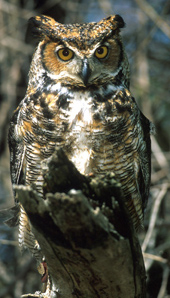
My neighbor, John, has been hearing what he thinks is a great horned owl in our backyard. For some reason, I don’t see owls as birds that would be bothered by a little cold rain. I’ve no idea what a great horned owl sounds like, but I know I’ll be sticking my head out the back door in hopes of hearing one. I also read that there were some snowy owls in Ohio, just like in the Harry Potter movies. Hedwick, I think was the name of Harry’s owl. If I remember correctly, snowy owls aren’t commonly seen in Ohio, although they do occasionally show up. I’ve always thought owls were so fascinating to watch, with their great big eyes and heads that seemed to swivel around endlessly. When I was a kid in school, we took apart owl pellets in my science class to see just what the owls ate. I just remember thinking how tiny mice bones were! Poor Mickey and Minnie!

Until next time!

A River (or Stream) Runs Through It

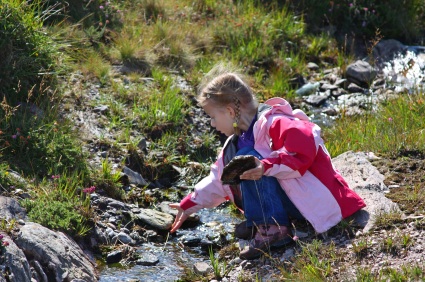
All my life, water has played an important role. I remember as a child splashing in the streams at my grandma’s and my Aunt Helen’s house. Grandma’s stream didn’t have much in the way of water, just a little trickle after it rained. But Aunt Helen’s stream (or creek, as we called it) was something else. It had rocks that we could use to cross it, a culvert (large enough to walk upright through) and best of all, crawdads and small fish. My favorite part was “rearranging” the flow of water. I always hated when the water got trapped behind debris, making it all foamy and, to use my childish word, “yucky.” I’d spend hours pulling out branches and weeds, moving rocks and digging out channels for the water to run through. My brother and I were always at odds, him wanting to block the water with dams, me wanting it to flow freely.

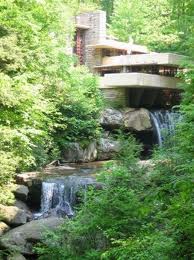
I’d do the same thing in the rain water rushing down the street, too, removing leaves that blocked its flow. And by Pete’s home, there was another stream that got more of the same treatment. So I’ve always been fascinated by how water flows. Seeing Frank Lloyd Wright’s “Fallingwater” house in Pennsylvania’s Laurel Highlands in person was something I will never forget. Had it been within my powers, I would have taken a stack of my favorite books and pulled up a chair on one of the balconies outside a bedroom, never wanting to move for love nor money. The sound of the water was that hypnotic.

As much as I love water, too much of it can be a problem, overwhelming our sewer systems and causing overflows into our rivers. The trees that we have planted are a good start to help cut down on the amount of run-off, as would the swales I’ve talked about previously in this blog. And a researcher at Ohio State, Professor Karen Mancl, is looking into a solution that has been used since the 1800s to help with the problem. If I understand the process correctly, the excess storm water goes into sand bioreactor that has bacterias in it. This bacteria eats all of the bad stuff and cleaner, treated water is what ends up in the rivers. The bacteria can survive for months between storms. Pretty cool! And a pretty simple solution, too.

Until next time!