Author Archives: kkovarik

A Grey and Rainy Night

As I sit here in my dining room, typing away, I can hear the frozen precipitation hitting my window. My cat, Mouse, is sitting on my lap, offering a warm blanket of love. My hands are a bit cold (we tend to keep the thermostat low), and Mouse doesn’t seem to mind when I use her as a hand warmer. In my case, another layer of clothes would do the trick, but to be honest, I don’t want to disturb my little kitty as she dozes on my lap. We are both fortunate in being inside on such a miserable night as tonight. I’ve often wondered how all of the creatures outside manage to keep warm and dry in this weather – or if it even matters to them that they are! I remember our horse, Trixie, sitting outside in the rain, head down, tail facing the wind. Now, she had a nice barn she could have been in, out of the chilling wind, with a thick layer of straw to keep her warm. But she preferred to stay outside. Maybe the cold and rain just didn’t bother her; the fur she carried throughout the winter was thick enough. Or maybe she just was trying to enjoy her time outside; my grandpa would always pen her up in the barn for the winter.
Another animal that doesn’t seem to mind getting wet are squirrels. I wonder if they use their tails as umbrellas to keep the rain off of them. The large fox squirrels in my brother’s yard in Saginaw are so fuzzy in the winter, and often hold their tails over their heads. Mike has been able to have the squirrels come up to him to take peanuts out of his hand. We’ve given Mike the name of “The Squirrel Whisperer” for his patience with the little guys. He’s got names for some of them, and after a few days, I’ve seen them often enough to recognize many of them. It’s amazing that creatures we assume look the same are, in fact, different and unique.

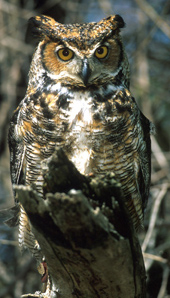
My neighbor, John, has been hearing what he thinks is a great horned owl in our backyard. For some reason, I don’t see owls as birds that would be bothered by a little cold rain. I’ve no idea what a great horned owl sounds like, but I know I’ll be sticking my head out the back door in hopes of hearing one. I also read that there were some snowy owls in Ohio, just like in the Harry Potter movies. Hedwick, I think was the name of Harry’s owl. If I remember correctly, snowy owls aren’t commonly seen in Ohio, although they do occasionally show up. I’ve always thought owls were so fascinating to watch, with their great big eyes and heads that seemed to swivel around endlessly. When I was a kid in school, we took apart owl pellets in my science class to see just what the owls ate. I just remember thinking how tiny mice bones were! Poor Mickey and Minnie!
Until next time!

Wintry Weather

I don’t know about you, but I like cold and snow; I always have. I even  like shoveling snow. I guess there’s something about bundling up in layers to keep warm – a “me vs. the cold” sort of thing – and all the other things I did keep the cold at bay. I still remember the snow pants that I had as a child, the ones with the elastic band that went under my foot to keep the pants tucked into my boots. And wearing so many other layers that my arms couldn’t move easily. I also remember as a child sitting outside in the fall, making a nest out of blankets and such, trying my best to see if I could stay warm. My grandma’s house was always very cold upstairs in the winter, and we all just piled on the blankets to stay toasty.  Many a night I woke up in the same position I went to sleep in because the weight of the blankets kept me from moving! All of us would fight to stand on the heating vent in the kitchen once we came in from the cold. And my cats have been know to lay (or should that be lie – I never can remember!) directly on our heating vents. I’m not sure how they manage, as placing my hand on the metal for more than a few seconds is uncomfortable.

Other creatures in our neighborhood are doing things to keep warm. The squirrels are bushy with extra fur. The birds (cardinals, Carolina wrens) that come to our back yard will sun themselves or fluff up their feathers. Yesterday, I saw a red-tailed hawk in the tree across from our house. He seemed to be all fluffy to keep warm. By the way, Pete was very happy to hear that I saw that particular hawk; it seems they don’t always hang about near homes, unlike the Cooper’s hawk that is a more frequent visitor to urban areas. The woodpeckers and nuthatches that come into our yard must keep warm by hopping about on the trees. It still amazes me how they can do that without falling off.

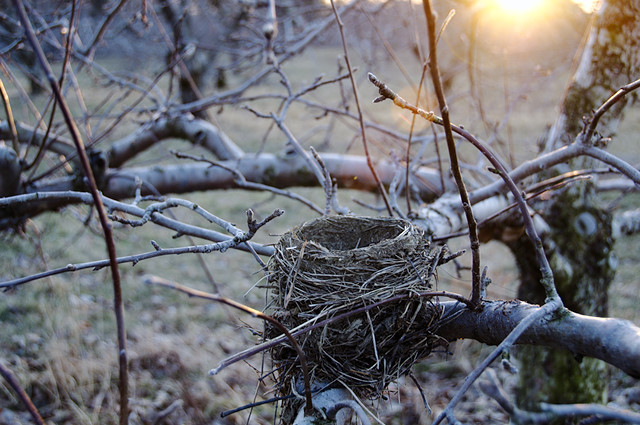
Speaking of birds, Pete and I went for a walk on Thursday as the snow was falling. We went down through Wahalla Ravine, one of our favorite places to walk. The little stream that travels along the road is so musical to hear, and the snow covering the shale on its banks is lovely. I had wanted to take my phone to take pictures, but the snow was falling hard enough that I worried about it getting too wet. Anyhow, on our walk we went by a smaller tree planted in the tree lawn, about six or seven feet tall. It didn’t have too many branches, but yet, near the top, was a bird’s nest. Pete remarked that it takes so little to make the birds happy, that even the smaller trees can immediately make a difference in their habitat. Every little thing makes a difference, so image what all of the trees we planted in the Arboretum will do this year.

Until next time!

A River (or Stream) Runs Through It

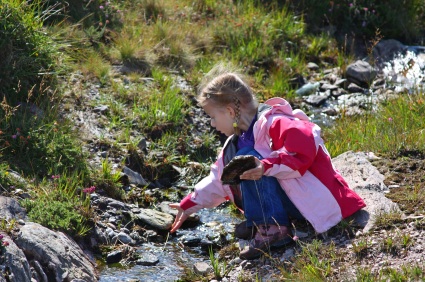
All my life, water has played an important role. I remember as a child splashing in the streams at my grandma’s and my Aunt Helen’s house. Grandma’s stream didn’t have much in the way of water, just a little trickle after it rained. But Aunt Helen’s stream (or creek, as we called it) was something else. It had rocks that we could use to cross it, a culvert (large enough to walk upright through) and best of all, crawdads and small fish. My favorite part was “rearranging” the flow of water. I always hated when the water got trapped behind debris, making it all foamy and, to use my childish word, “yucky.” I’d spend hours pulling out branches and weeds, moving rocks and digging out channels for the water to run through. My brother and I were always at odds, him wanting to block the water with dams, me wanting it to flow freely.

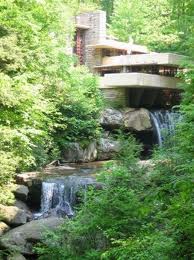
I’d do the same thing in the rain water rushing down the street, too, removing leaves that blocked its flow. And by Pete’s home, there was another stream that got more of the same treatment. So I’ve always been fascinated by how water flows. Seeing Frank Lloyd Wright’s “Fallingwater” house in Pennsylvania’s Laurel Highlands in person was something I will never forget. Had it been within my powers, I would have taken a stack of my favorite books and pulled up a chair on one of the balconies outside a bedroom, never wanting to move for love nor money. The sound of the water was that hypnotic.

As much as I love water, too much of it can be a problem, overwhelming our sewer systems and causing overflows into our rivers. The trees that we have planted are a good start to help cut down on the amount of run-off, as would the swales I’ve talked about previously in this blog. And a researcher at Ohio State, Professor Karen Mancl, is looking into a solution that has been used since the 1800s to help with the problem. If I understand the process correctly, the excess storm water goes into sand bioreactor that has bacterias in it. This bacteria eats all of the bad stuff and cleaner, treated water is what ends up in the rivers. The bacteria can survive for months between storms. Pretty cool! And a pretty simple solution, too.

Until next time!

Your Morning Cup of Joe and Our Fine Feathered Friends

Americans love their coffee. In fact, 45% of all coffee grown ends up being consumed by Americans. Strangely enough, though, we aren’t the highest consumer of coffee; that honor goes to Denmark, which drinks about three times more per person than the United States. That translates into 12 kilograms of coffee, or (if I’ve managed the calculation right!) slightly more than 26 pounds of coffee. Americans drink about nine pounds, making us about 27th in the world for coffee consumption. Based on how much coffee my husband drinks, that sounds about right!

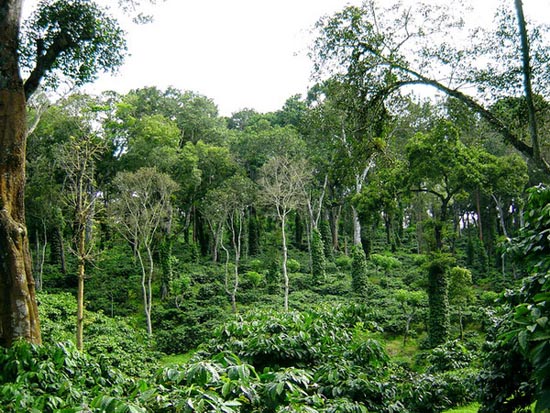
I imagine right about now, you are wondering just what all these interesting facts about coffee have to do with birds. Well, coffee actually has to do a lot with birds, especially seasonal migrants. When coffee was first discovered in the tropical forests of Africa, it was a  shade-loving plant, growing under large canopy trees. Subsequently, coffee spread to other tropical forested areas of the world, including our hemisphere. These forests provide migratory and resident birds a wonderful place to live. The trees, as we all know, also help the soil to remain healthy, control watersheds, and  preserve biodiversity. But as the popularity of coffee grew, new sun-loving coffee plants were developed that had an increased yield. However, the sun-grown coffee plants had some negative effects on the environment. These plants require full sun, so the canopy trees were cut down to create growing fields. The plants also need chemical fertilizers and pesticides that combine with rain runoff to endanger humans and wildlife. And finally, these sun-grown coffee plantations have about 90% less bird species in them compared to shade-grown coffee plantations. In the two pictures, you can really see the difference in how shade-grown and sun-grown coffee are being produced.

So, that cup of coffee you drink has a big impact on the birds in our neighborhood; so many of the birds we see in our ravines over-winter or migrate through shade-grown coffee plantations in Latin America. Here’s a list of  these birds that have been sighted in Glen Echo Ravine (and the list below constitutes 52% of all such migratory birds, so it’s quite a lot):

  • Sharp-shinned Hawk
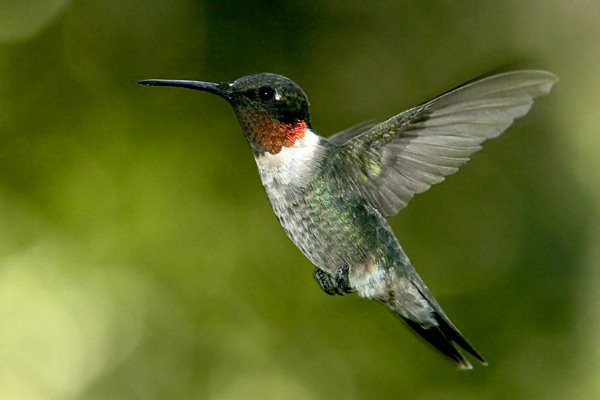
  • Ruby-throated Hummingbird
  • Yellow-bellied Flycatcher
  • Traill’s (Willow and Alder) Flycatcher
  • Least Flycatcher
  • Warbling Vireo
  • Red-eyed Vireo
  • Blue-gray Gnatcatcher
  • Swainson’s Thrush
  • Wood Thrush
  • Tennessee Warbler
  • Nashville Warbler
  • Yellow Warbler
  • Magnolia Warbler
  • Black-throated Green Warbler
  • Blackburnian Warbler
  • Black-and-white Warbler
  • American Redstart
  • Ovenbird
  • Kentucky Warblers
  • Hooded Warbler
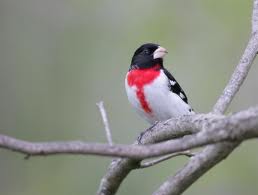
  • Rose-breasted Grosbeak
  • Indigo Bunting
  • Baltimore Oriole

So what can you do to help? Spread the word and simply buy certified shade-grown coffee (or certified organic which is also shade-grown). It is available in many stores around Columbus as well as on-line. Some stores that Pete and I shop at that have shade-grown/organic coffee are the Clintonville Community Market, Giant Eagle, Global Gallery and Starbucks. I’m sure there are other stores as well that we just don’t know about; please let us know of any to add to our list.

And finally, shade-grown coffees will also likely be fair-trade, which helps promote healthier working conditions and greater economic incentives for the growers. And some of the stores have coffee that is even carbon neutral. Even better! Buying these kinds of coffees not only benefit our feathered friends, but all of those who depend on the rain forest as a place to live and work. So it’s a win-win situation for everyone.

Until next time.

A Blantant Request

I hope that all of you have had a wonderful first part to your holiday season. Pete, my mom and I went up to Saginaw, Michigan to visit my brother and sister-in-law. Tuesday night saw some snow coming down, about an inch. Great packing snow. So we managed a white day after Christmas…but on the way back to Ohio, via the turnpike, we went through some areas that had more snow. It was rather beautiful, with the snow on the trees and the sun shining on the branches. I wish I could have managed a picture, but I was the one driving and no-one else in the car could figure out how to work my iPhone….But it was an amazing scene, the kind that I really love to see during the winter.

I’ve always been rather fond of snow. I remember as a kid dressing up in snow pants (do they still make those?) and having so many layers on that my arms stuck out. We’d make snow angels and snow forts. One of the best things to do was to entice my brother under a snow-covered tree, then shake the branch, causing snow to come cascading down, hopefully sending some of the cold white stuff down Mike’s collar. So many uses for trees!

Now for the blatant request: As the year ends, I hope that you might consider a tax-deductible donation to our growing arboretum. We are constantly looking for additional funds through grants for some of the larger projects, but every single dollar makes a difference. While grant dollars help to pay for big ticket items such as trees, research studies, etc., smaller donations can help us renew our domain name, pay for our business name registration with the Ohio Secretary of State, and assist us with other incidental costs for expenditures required for an official organization. Currently these costs come out of our board members’ pockets; this might work for now, but won’t work well for the future!

Here’s hoping that the New Year brings you all the joy, peace and happiness that you deserve.

Until next time!

New Year, New Beginnings

It’s hard to believe this weather today. It feels more like the Ides of March than the middle of December. I know the robins are very appreciative of all the rain forcing worms out of the ground as lovely snacks. I must have seen seven or eight robins on my way to the car at work, all pulling at big, fat worms.

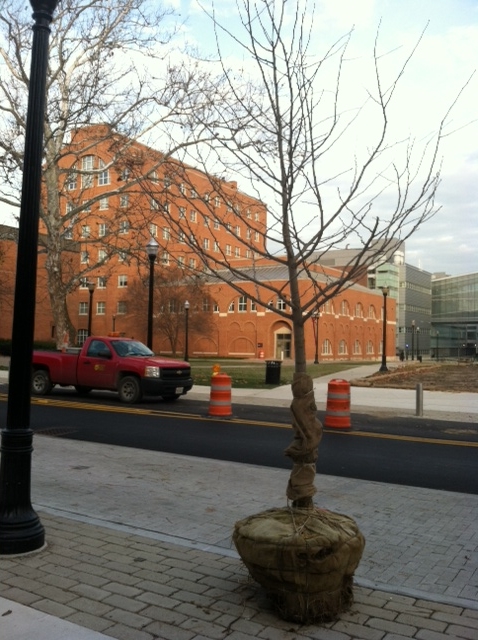
Speaking of work, Ohio State has planted over 20 trees on 17th Avenue between Neil and College. I ran into the landscape architect, who kindly introduced himself and whose name I promptly forgot…it’s hard growing old, but that’s another blog entirely! Anyway, I was trying my best to read the tag on one of the trees in front of Bricker Hall when this nice young man walked up. “It’s a hackberry,” he says.

“You’re kidding! My husband loves hackberry trees! They are native to Franklin County! He will be so pleased!” says me. And the rest of the trees that were being planted were white, red and burr oaks, and Kentucky coffee trees. It seemed a little late to have them going into the ground, but they are lovely, large trees as you can see by the photo (taken with my new i-phone!). I can’t wait to see how they do this spring. Ohio State has planted quite a few trees on the streets that they have worked on, which is wonderful to see. I mentioned our little arboretum, and hopefully, the nice young man has a better memory that I do, and can find our blog or Facebook page.

Well, presents are waiting to be wrapped, so I must make this short.

Until next time!

‘Tis the Season

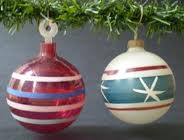
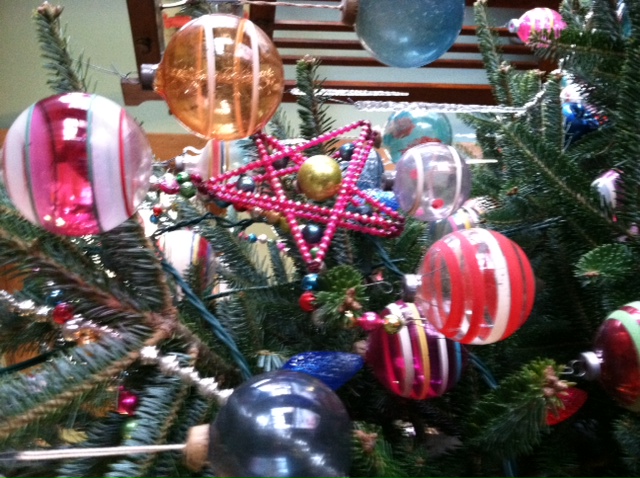
Pete and I got our Christmas tree on Friday, and I’ve managed to decorate it today. It only took me four hours! By my best guess, I have nearly 300 ornaments on the tree, mostly ornaments made during World War II.

A little history is in order. Once the war started, ornaments that were made in Germany,Czechoslovakia, and Japan were no longer available to the Allies. In order to keep up morale, companies started making their own ornaments. From 1939 to 1941, these ornaments looked pretty much like what Americans were used to seeing. However, once the United States entered the war, shortages and rationing started to kick in. Silver nitrate, which was used to make the ornaments shiny, disappeared in 1942 when it became “non-essential” and was no longer made. To make the ornaments look bright, bits of tinsel were stuck inside – at least until that ran out as well. Then in 1943, the metal that was used to make the caps was declared essential for the war effort. Paper was then used to allow the ornaments be hung.

I love decorating my Christmas tree with these ornaments. I’ve also have many ornaments made by family members or given to me by loved ones over the years. No matter who gave me the ornament, or how I acquired it, what I love best is the memories attached to it. In the case of the WWII ornaments, I don’t know what those memories are, but I can imagine someone decorating a tree, thinking about a loved one far away or no longer with them. And the ornaments given to me all bring back memories: my grandmother sewing cardinals and crocheting snowflakes, my Aunt Dorothy painting a felt barn, my mom’s old first ornaments from the 1950s (very mauve!), my mother-in-law’s love, my Aunt Jane’s flare with color, or my grandmother’s knitting skates with paperclips for the blades. More than anything else, that’s what my tree means to me: memories.

Whatever the season means to you, I hope it brings you joy and happiness, peace and love.

Until next time!

I’m Thankful

With tomorrow being Thanksgiving, I’m of a mind to list some of the things that I’m thankful for. First, my family and friends. I don’t know what I would do without either. My family (both by blood and by marriage!) are wonderful. I love the way that we always pull together whenever there is a problem or crisis. My Shoemaker family is so strong in its ties. And my friends – where to start? Many a time I’ve been down and found cheer from a friend. You are all the best.

And, of course, I’m thankful for everyone who has worked so hard to make this urban arboretum go from a “Wouldn’t it be wonderful if” conversation to a “Wow! We did it” one. And I’m thankful for all of the new trees that have been planted. It does my heart good to see them as I wander the streets of Clintonville.

I read in a book that trees have meanings, which led me to the all-knowing Internet. Some trees I knew about, being of Irish descent and mindful of my Celtic ancestors. The oak, my favorite, represents power, protection, strength, endurance, triumph, prosperity, success and stability. This tree was held in high esteem by both the Celts and Norse. So I think that this is a great tree for our little Arboretum, which will grow even stronger and more successful as the years go by.

I hope that you all have a wonderful Thanksgiving.

Until next time!

Feeding Our Fine-Feathered Friends

It’s hard to believe with the temperatures outside in the 60s that very soon, winter will be here, and our little bird friends who are overwintering in Ohio would appreciate some assistance to get by. Today, in our backyard, we had several juncos, a pair of cardinals, and a Carolina wren feeding away in the leaf litter under our spice bushes. I’ve compiled a list of some of the birds that will be staying in Ohio and what we can do to give them a hand to make it through until spring arrives.

Woodpeckers (Pileated, red-bellied and downy): The pileated and downy woodpeckers love suet while the red-bellied loves sunflower seed, peanuts or corn.

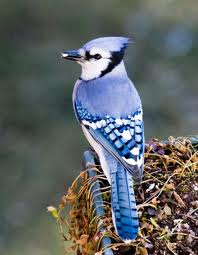
Bluejays and juncos: These birds love sunflower seeds.

Chickadees, nuthatches, and tufted titmice: These little guys love suet and sunflower seeds.

Cardinals: Sunflower seeds

So, to attract birds, black oil sunflower seeds and suet seem to be the most popular forms of feed. Others include peanuts, corn, thistle, even fruit. Another important item is water, which can be hard to come by once the temperatures drop. A heater in your birdbath will solve that problem.

It’s also important to provide different types of feeders – platforms, hoppers, etc. I don’t know if birds begin to recognize my voice, but they always seem to appear when I called, “Bird bird bird!” as I fill the various feeders.

Until next time!

Blustery Fall Day

Today is the kind of autumn day that I love: windy and grey, with the clouds scuttling across the sky . There’s something about seeing the trees swaying in the wind and the leaves blowing around that I enjoy, especially when the leaves are rushing across the road. Most of the leaves in our neighborhood have fallen to the ground; it seemed like one day, our maple and sour wood had every gloriously red leaf, and then they didn’t. People are out trimming back dead vegetation and roses for the winter, and raking leaves into piles. (By the way, if you have any oak leaves that you have gathered, they can be used in the ravine. We (meaning Pete!) is willing to come get them, or you can drop them off at our home. Just leave a comment in this blog if you’ve any to spare.)

I also wanted to let you know about a workshop this Thursday, November 17, 2011, on the important role that native shrubs and small trees play in urban landscaping. The program will be presented by OSU horticulturist Pete Lowe at 7pm at the Griswold Center, 777 High Street in Worthington. We have quite a few different small trees and shrubs in our own backyard, and all come together to give food and shelter to birds and other small creatures. Especially beneficial are the spicebushes that fill out much of our side yard. The bush is the host for spicebush swallowtail and the Eastern Tiger swallowtail butterflies, and robins, wood thrushes, bobwhites, catbirds, racoons and opossums like to eat the berries, which are called drupes.

Finally, I don’t know if you’ve noticed that we now have a “How To Help” button at the top of the page. We are now able to accept donations for the Arboretum with credit cards. So if you are looking for a good cause to give to, here’s your chance!

Until next time!