
Scientific name: Ulmus rubra
Family: Ulmaceae (Elm family)
Also known as red elm, this tree is similar in many ways to American elm but differs in its branching habit, leaf texture, and wood color. While its geographic distribution is almost the same as American elm, slippery elm is more commonly found in the slightly drier soils of uplands, although it may be found near American elm in areas with sufficient moisture. This fast-growing native tree is named after its slick, gummy inner bark, which was chewed by the Native Americans and pioneers to
quench thirst. It is used today as an ingredient in cough drops and teas for treating sore throats. Its strong reddish-brown wood is used for furniture, boxes, and construction materials. It prefers moist, deep soils of variable pH but can be found on dry soils of average composition.
Slippery elm is subject to numerous pests and pathogens, including Dutch elm disease and elm phloem necrosis, though not as severely as American elm.
Identification

LEAF: Alternate, simple, 4-6 inches long, rough, sandpaper-like surface on both sides, with asymmetrical bases and doubly-serrated margins. Ovate or elliptical in shape, yellow color in the fall.

TWIGS AND BUDS: Twigs are stout, grayish, hairy, rather rough, and slightly zigzag. Floral and vegetative buds occur at the base and tops of twigs, respectively. Dark buds contrast the light gray twigs.
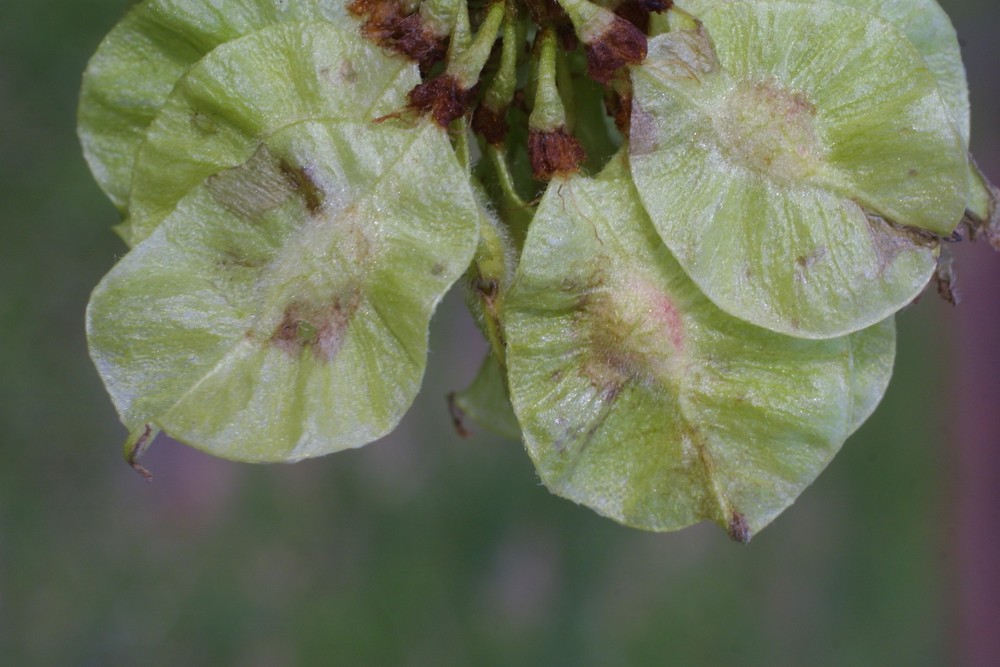
FRUIT OR SEED: Round, papery winged fruits up to 1 inch across with small hairs on both sides where the central seed is located, but not on the edges. Fruits fall off soon after maturation in mid-spring.
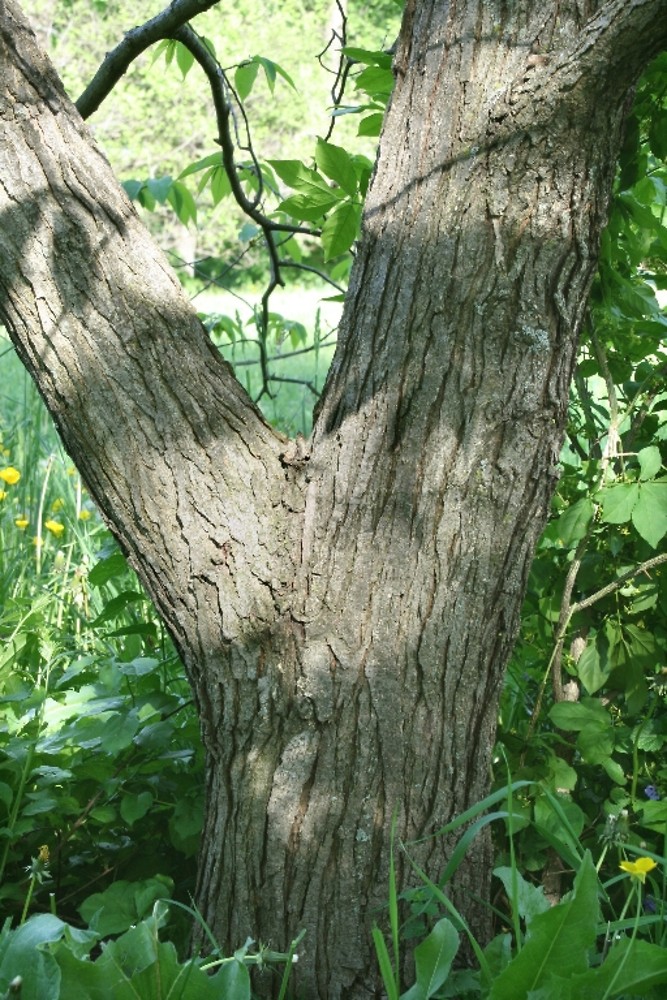
BARK: Light-gray brown with flattened ridges and intervening furrows. The bark does not show buff-colored streaks when sectioned. The inner bark is sticky and slippery to the touch.

SHAPE: Vase
MATURE HEIGHT: 60-70 feet.
Photo credits: Arieh Tal (https://botphoto.info), Steven Baskauf © 2024 CC-BY-NC-SA (www.cas.vanderbilt.edu/bioimages/frame.htm), Donald Cameron

 Lower Olentangy Urban Arboretum