
Scientific name: Acer saccharinum
Family: Sapindaceae (Soapberry family)
The native silver maple is aptly named for its silvery leaf undersides and pale gray bark. This common tree has rapid growth and the ability to adapt to a wide range of soil conditions and moisture types, although it prefers wetland areas. Its buds are eaten by squirrels in early spring, and these trees provide nesting sites for ducks and other birds. Though generally a healthy tree, silver maples can be infected by several pests and diseases and are prone to storm damage or limb breakage.
Identification
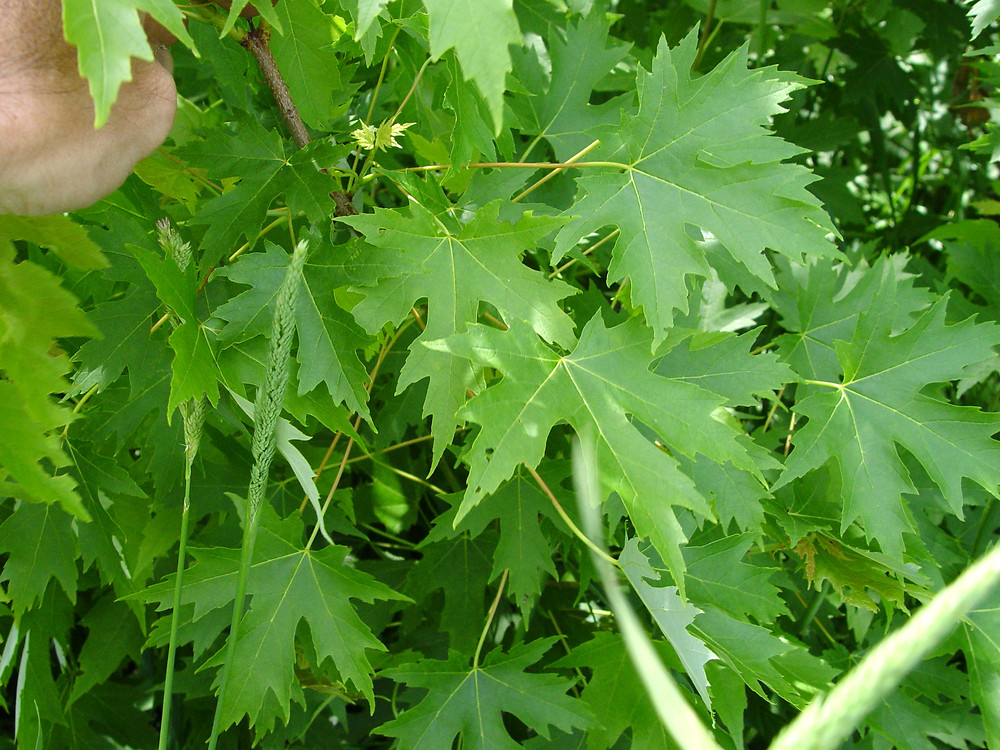
LEAF: Dark green with silver undersides, 4-7 inches long and wide, opposite with long petioles, five lobes with deep sinuses, each of which is incised and serrated.
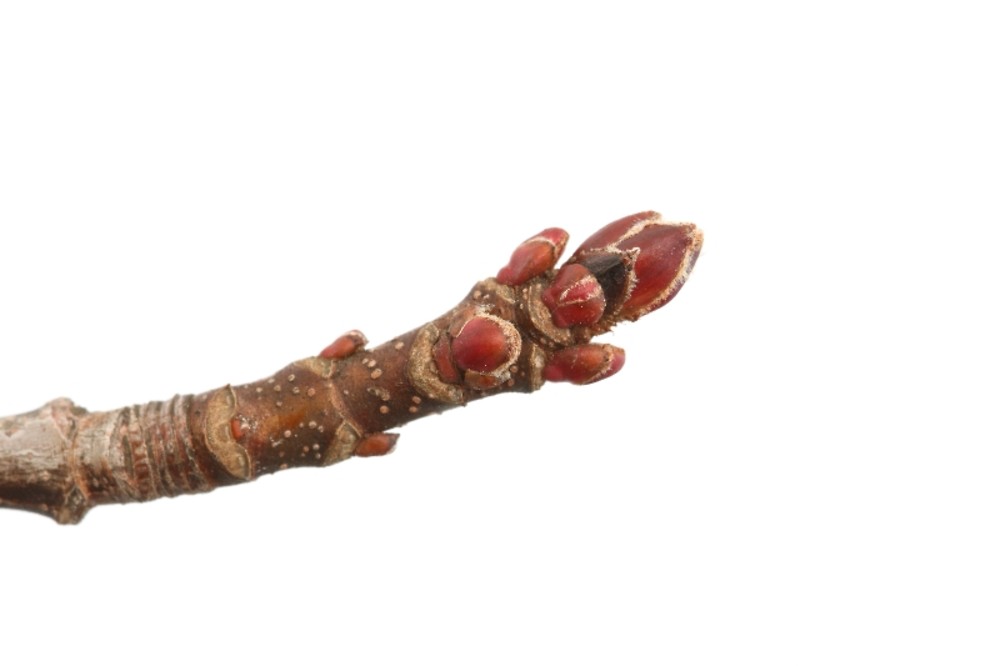
TWIGS AND BUDS: Twigs are odorous and reddish-brown at the end of the first year’s growth but turn to silvery gray by the second year’s growth.
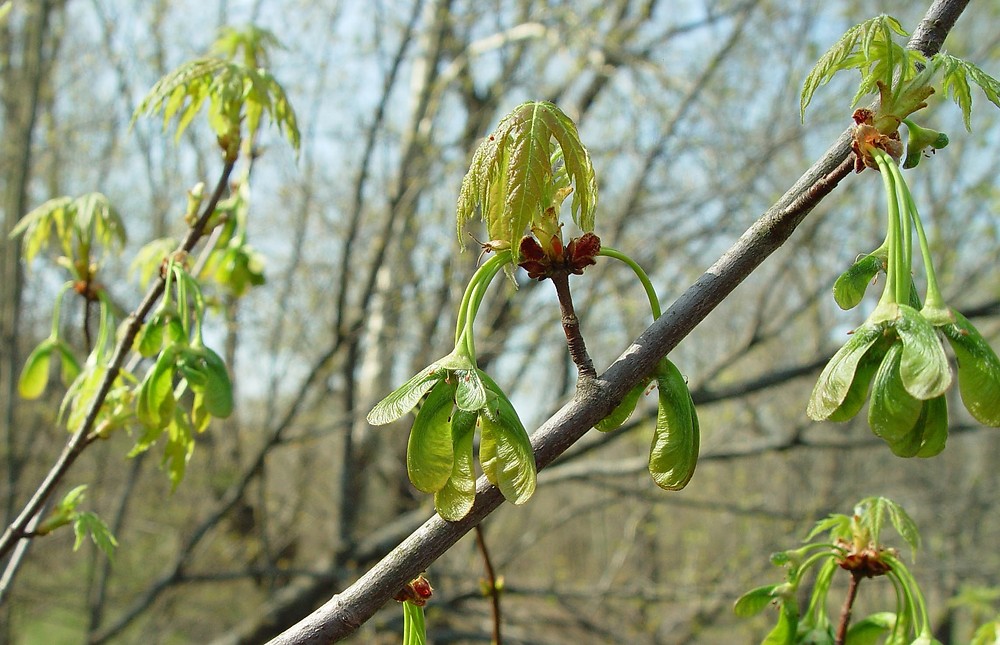
FRUIT OR SEED: Winged, paired fruits hang in greenish-yellow or reddish-yellow clusters each spring.
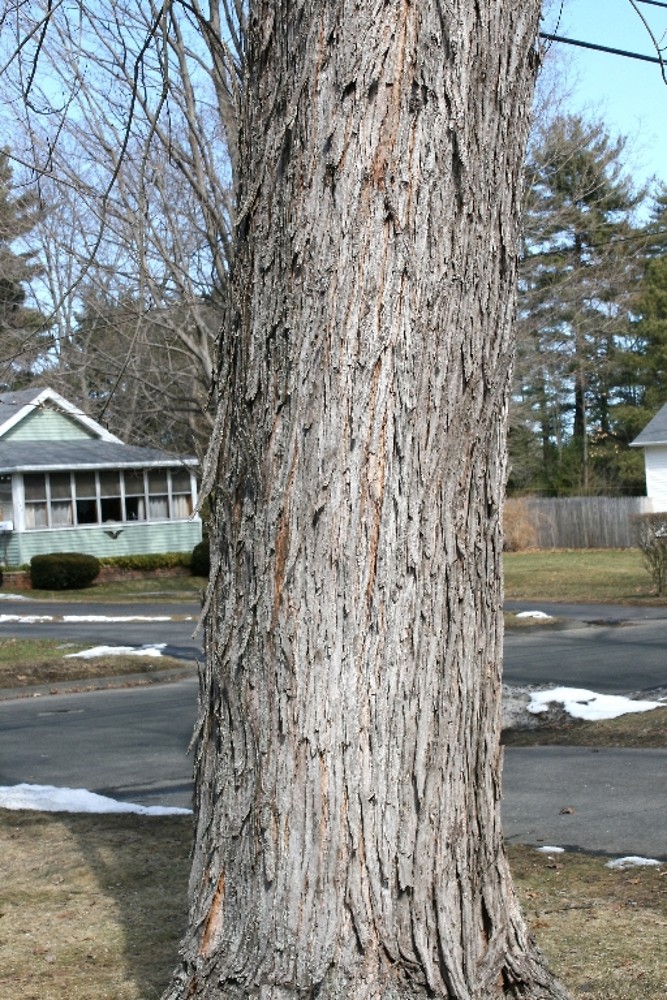
BARK: Smooth and silvery when immature, forming long, shaggy rough scales with age. Mature bark is gray-brown with exterior scales and orange interior bark.
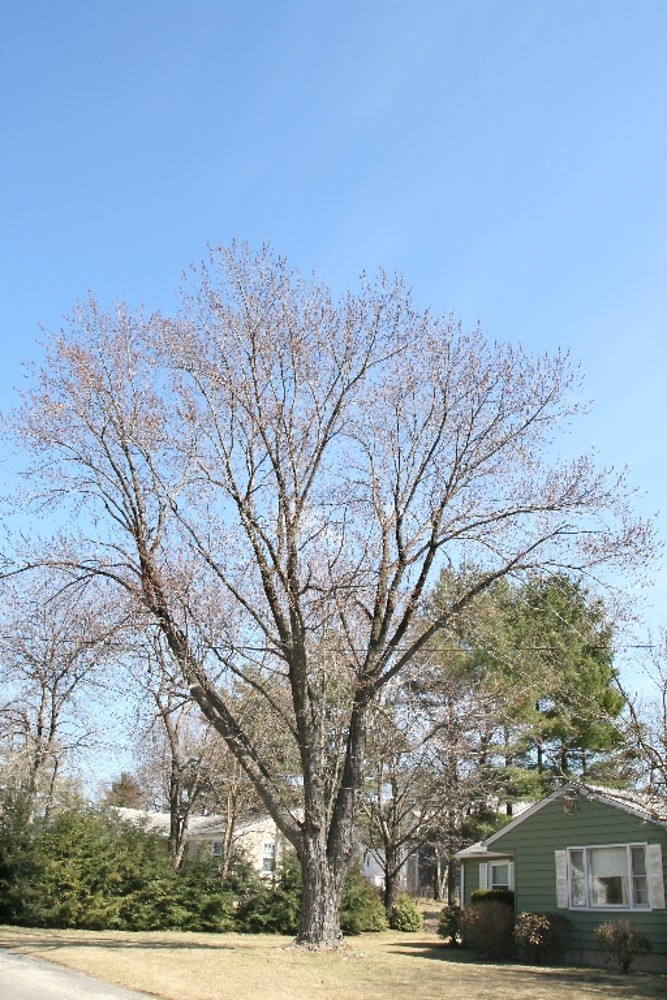
SHAPE: Dense and Spreading
MATURE HEIGHT: 60-90 feet.
Photo credits: Donald Cameron, Arieh Tal (https://botphoto.info), ©Arthur Haines (Native Plant Trust)

 Lower Olentangy Urban Arboretum