
Scientific name: Populus tremuloides
Family: Salicaceae (Willow family)
Quaking aspen is easily recognized by its round-triangular leaves that twist on their petioles and tremble and shimmer in even the slightest breeze. These same leaves turn a blazing yellow in the fall. Its thin bark is white when young, becoming yellow or greenish brown in mature trees. The bitter inner bark is nibbled by beavers, which also use the branches to construct their lodges. A wide variety of moths and beetles depend on this species for food. The primary use for the wood is as pulp, but it is also used to construct sauna benches and playground structures because it does not splinter.
Identification
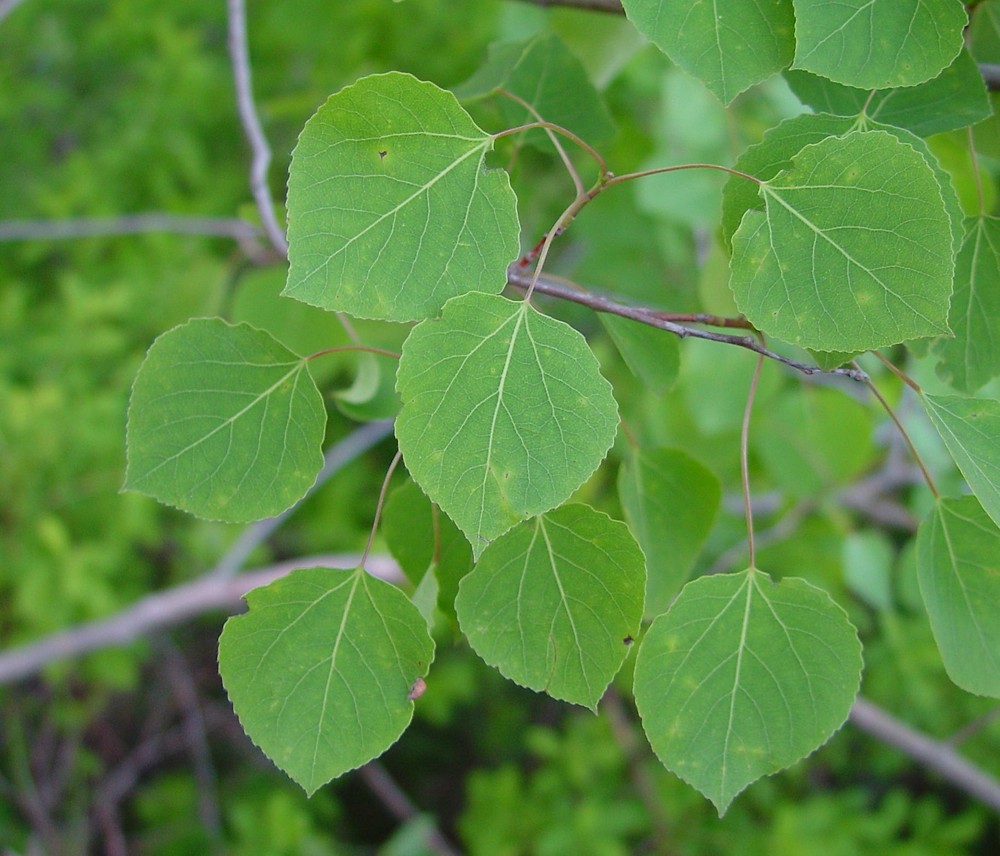
LEAF: Aspen leaves are simple, alternate, nearly round in outline, 2-3 inches in diameter with a flattened petiole 2-3 inches long. The leaf is broadest near the base, has a short pointed tip, and is finely toothed along the margin.
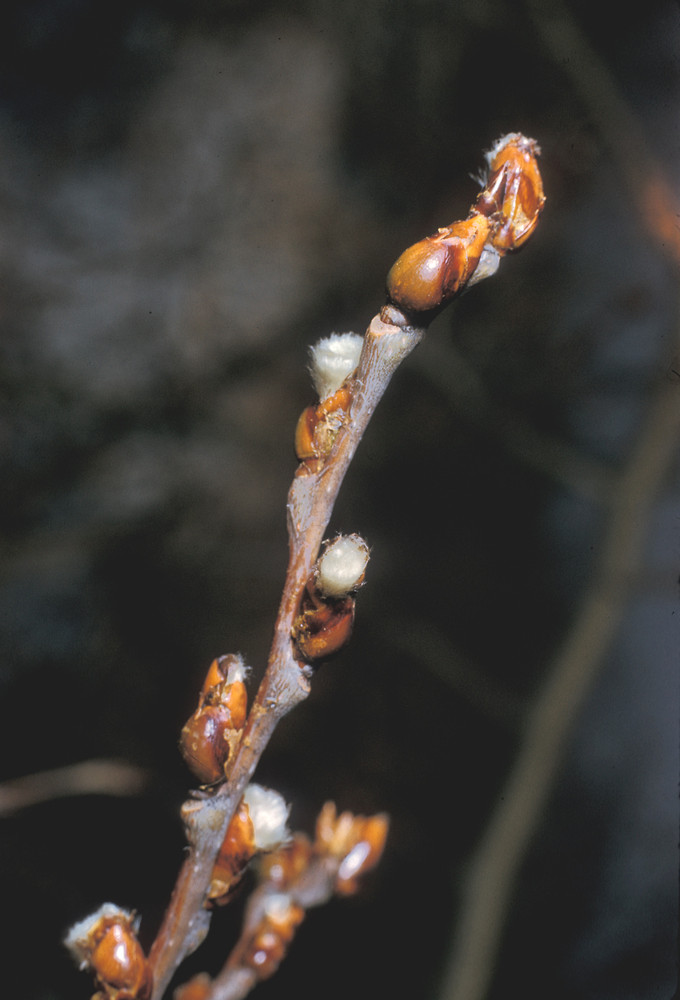
TWIGS AND BUDS: Their twigs are slender, orange to dark brown, with half-round leaf scars with three bundle scars. Winter buds are 1/4 to 1/2 inch long, closely appressed to the twig, each with its lowest bud scale directly lined up with the leaf scar. The bud is shiny dark brown in color and slightly sticky.
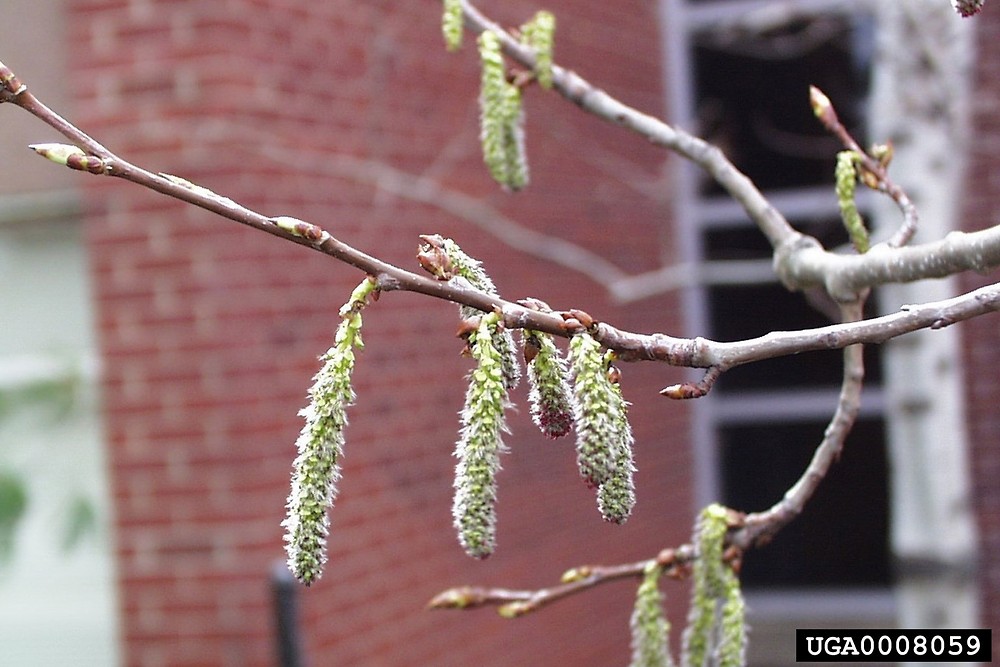
FRUIT OR SEED: Their fruit is dry in texture and splits open when completely ripe.
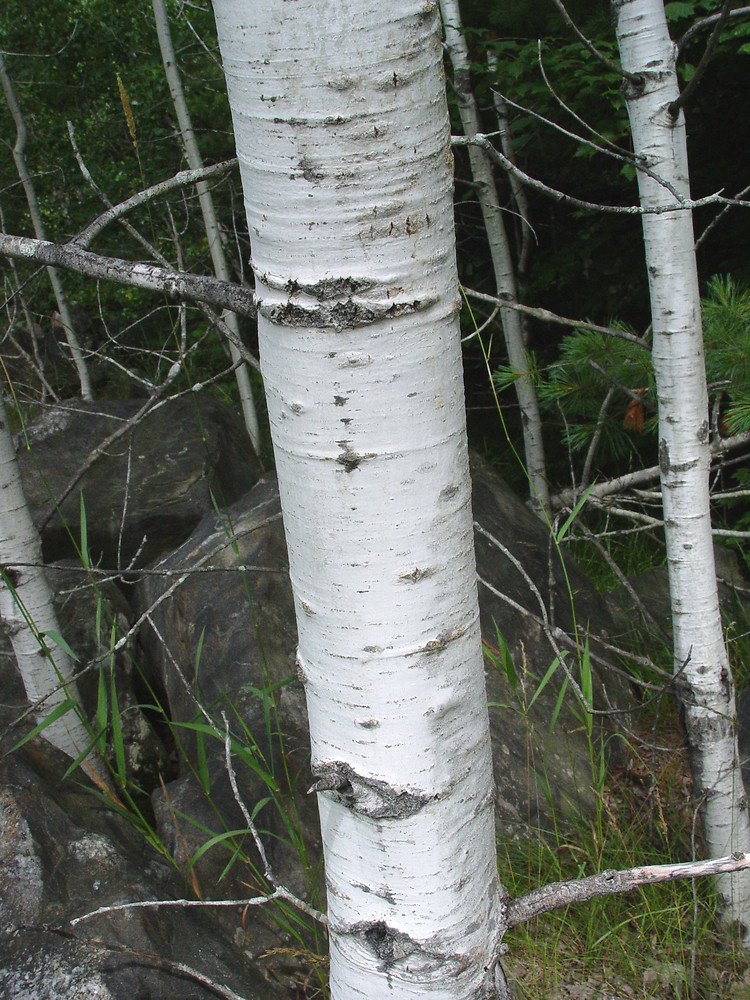
BARK: The bark on young trees is thin, pale green to creamy white; on older trees it becomes thick, roughened by warty bands, divided into flattened ridges, and almost black in color.
MATURE HEIGHT: 50-100 feet.
Information credits: Iowa State Extension, Go Botany
Photo credits: ©Arthur Haines (Native Plant Trust), ©Frank Bramley (Native Plant Trust), Donald Cameron, Paul Wray

 Lower Olentangy Urban Arboretum