
Scientific name: Quercus stellata
Family: Fagaceae (Beech family)
Post oak gets its common name from the use of its tough wood in making posts, railroad ties, and lumber. Its leaves are variably shaped, from deeply to barely lobed; the lobes are longest toward the front of the leaf, giving it a top-heavy look. Infusions of the astringent bark have been used by Native Americans to treat a variety of ailments, from chapped skin and sores to dysentery.
Identification
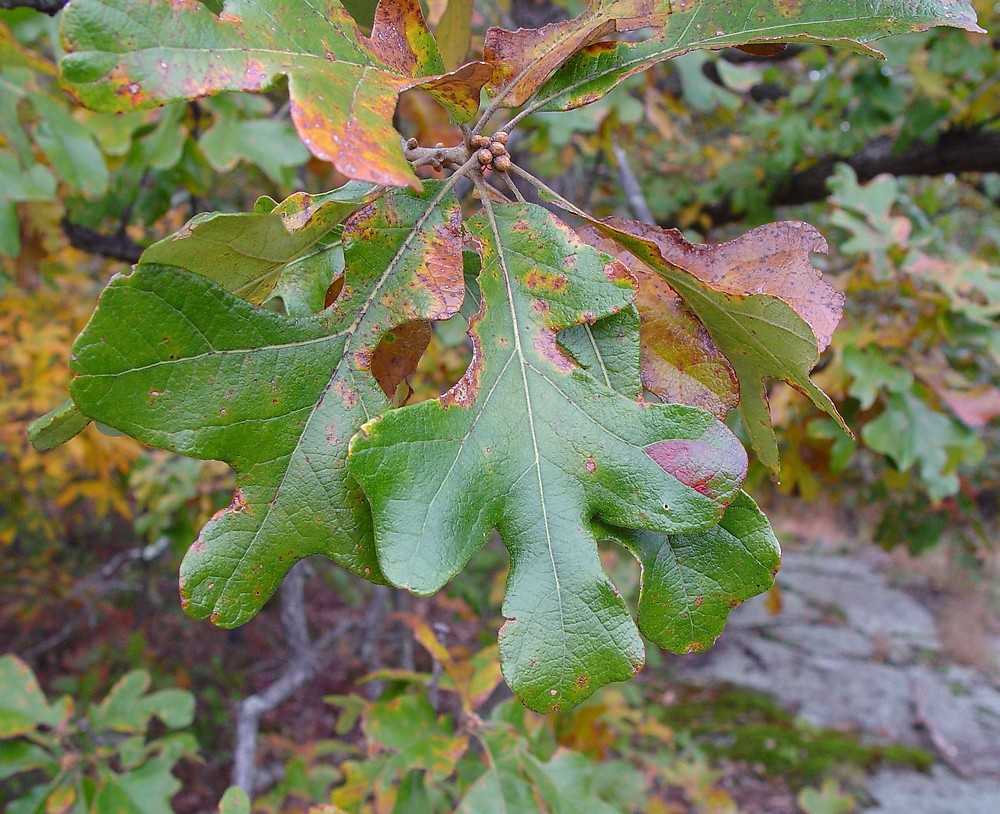
LEAF: The leaves are a distinctive cross-shape; usually 5-lobed with the two middle lobes opposite and much larger than the other lobes displaying a cross-shape. They are typically dark green and rough, due to their scattered star-shaped hairs, and lighter underneath with a layer of yellow fuzz.
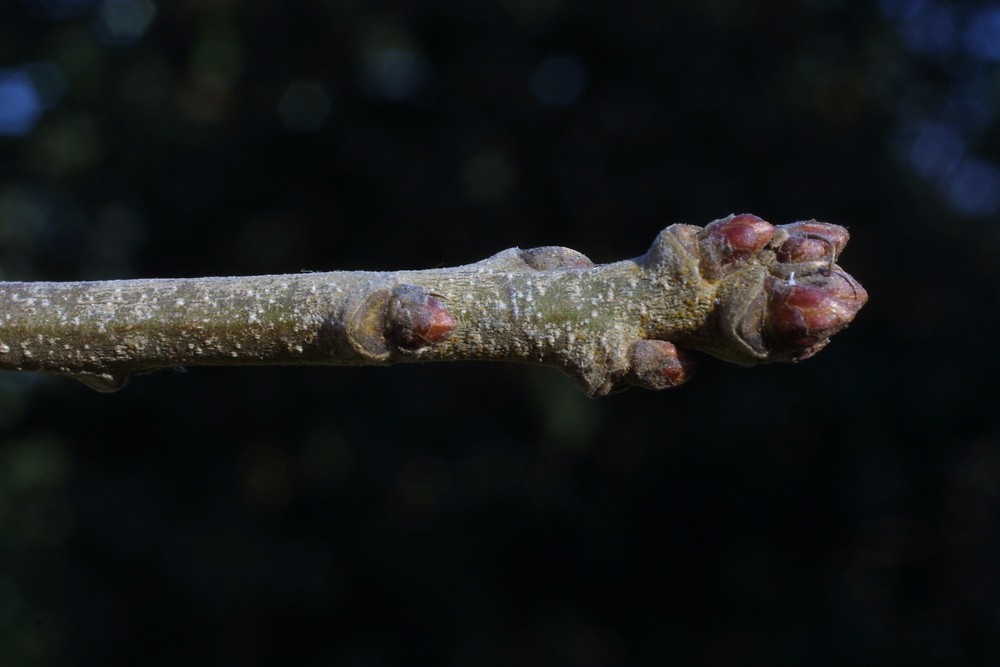
TWIGS AND BUDS: The twigs are notably thickset with a layer of yellow fuzz as well. In the wintertime, typical twig colors include brown, gray, green, and yellowish.
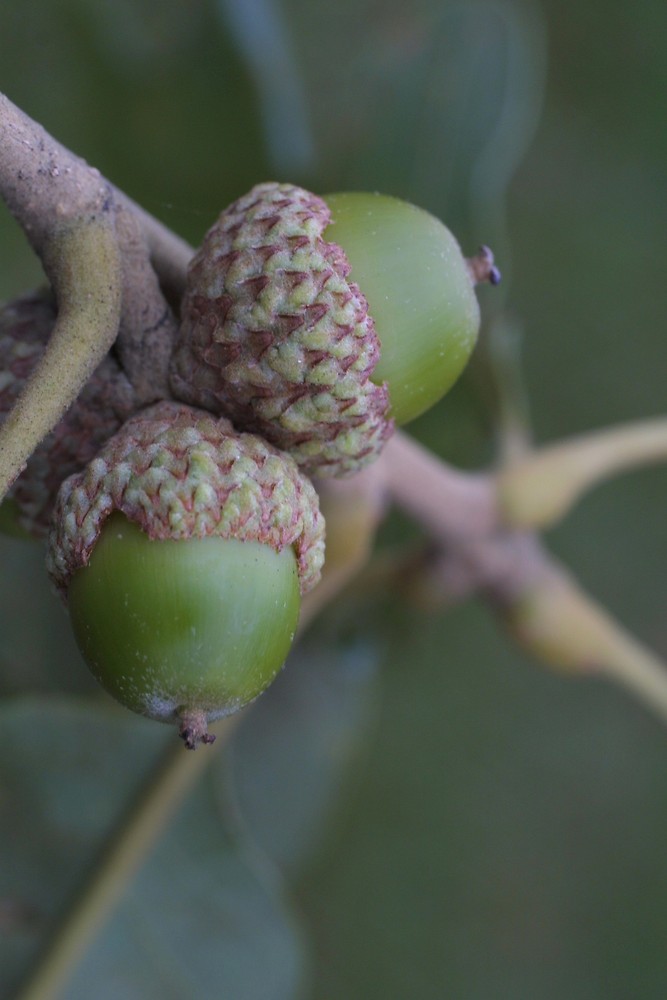
FRUIT OR SEED: Post oak fruit is dry in texture, but does not split open when fully ripened.
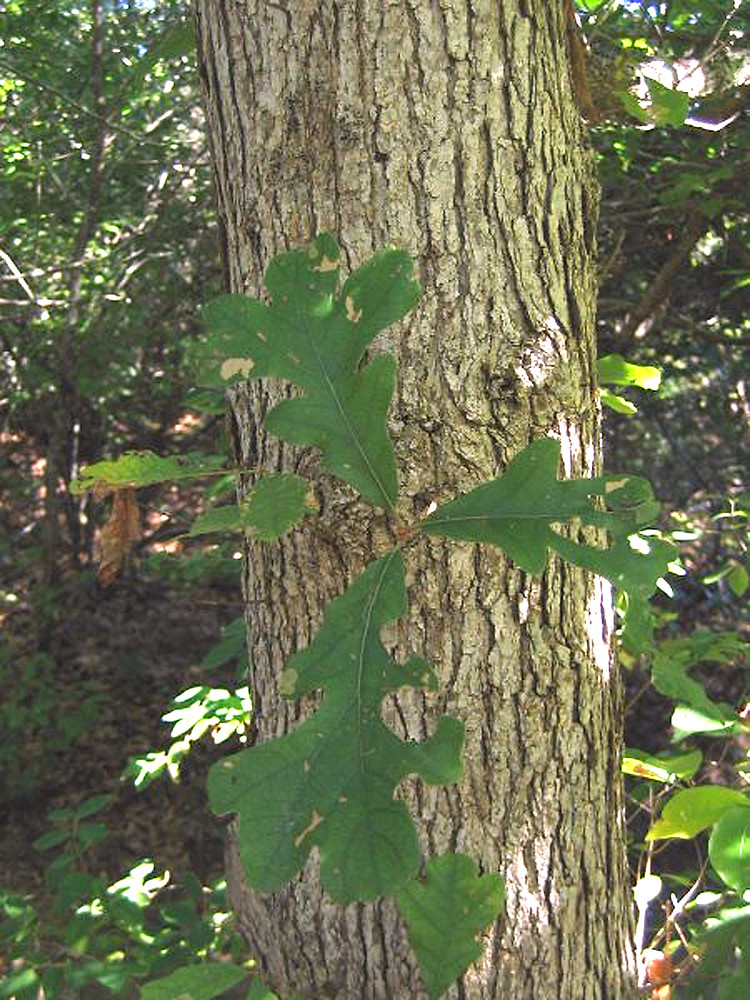
BARK: The bark can appear similar to that of white oak, however, post oak is generally darker in color and has more defined vertical scaly ridges.
MATURE HEIGHT: 50-75 feet.
Information credits: Iowa State Extension, Go Botany
Photo credits: ©Arthur Haines (Native Plant Trust), Steven Baskauf, Alexey Zinovjev

 Lower Olentangy Urban Arboretum