
Scientific name: Cornus alternifolia
Family: Cornaceae (Dogwood family)
The pagoda dogwood is the only dogwood in the genus that has alternate leaves. It is a common understory shrub in forests on rich soils in New England. Candelabras of reddish-green fruits mature to black drupes which are eaten by a variety of birds as well as black bears. This species reproduces vegetatively by layering and suckering and can be propagated by cuttings.
Identification
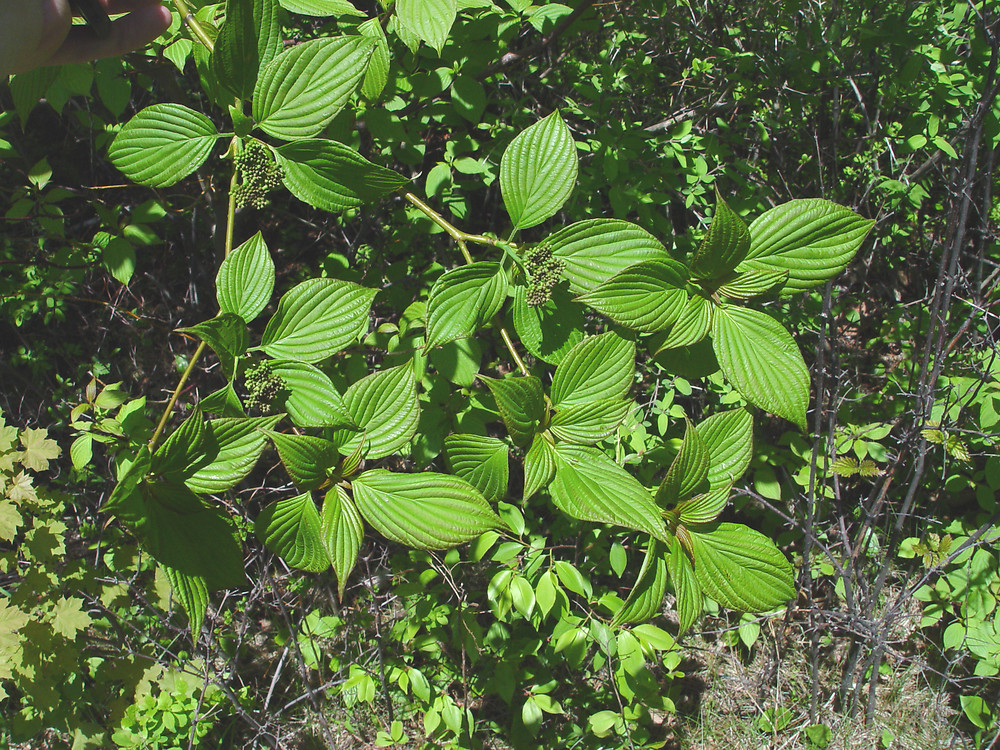
LEAF: The leaves measure 3 to 5 inches in length, and 2 1/2 to 3 1/2 inches in width. Each leaf is dark green on top, and paler or whitened underneath, simple, oval to broadly ovate, entire with wavy margins, alternate, and also clustered at the tips of each branchlet. Petioles are 1 to 2 inches and tinged reddish.
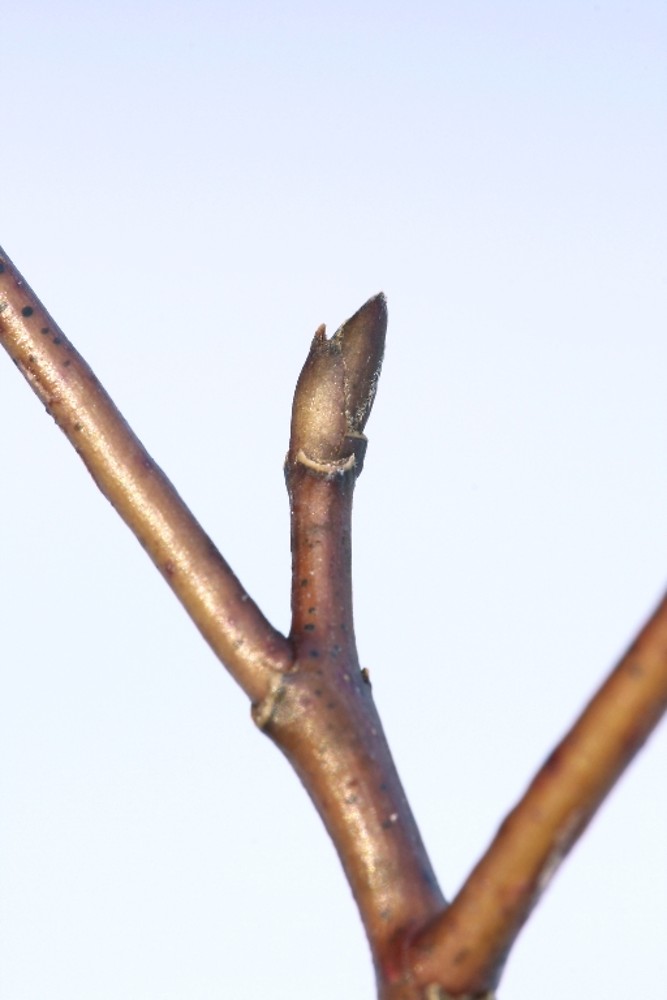
TWIGS AND BUDS: Twigs can present in a variety of hues in the winter such as brown, green, purple, and yellow. There are two scales on each winter bud, with edges that meet.

FRUIT OR SEED: The fruits are drupes, 3/4 inches in diameter, dark blue-black, and in loose flat-topped clusters. The fruits can be seen from July through August, and in some areas as late as October.

BARK: Pagoda dogwood is a popularly planted ornamental shrub. The bark of an adult individual can be ridged or plated or thin and smooth.
MATURE HEIGHT: 15-30 feet.
Information credits: Iowa State Extension, Go Botany
Photo credits: Donald Cameron, Arieh Tal (https://botphoto.info), Frank Bramley (© 2024 Native Plant Trust)

 Lower Olentangy Urban Arboretum