
Scientific name: Aesculus glabra
Family: Sapindaceae (Soapberry family)
The official state tree of Ohio, the Ohio buckeye’s name comes from the appearance of its seed, which resembles the eye of a buck deer. The bitter seeds are poisonous to humans if consumed in large quantities, but not to wildlife including squirrels and deer. This deciduous native tree is found primarily as a smaller understory tree in western Ohio but is scattered throughout eastern portions of the state, reaching up to 60 feet in height in the open. The Ohio buckeye prefers moist, well-drained soils of variable pH in partially sunny to partially shaded conditions. Its light, soft wood was historically used for pulpwood, woodenware, and the production of artificial limbs.
Identification
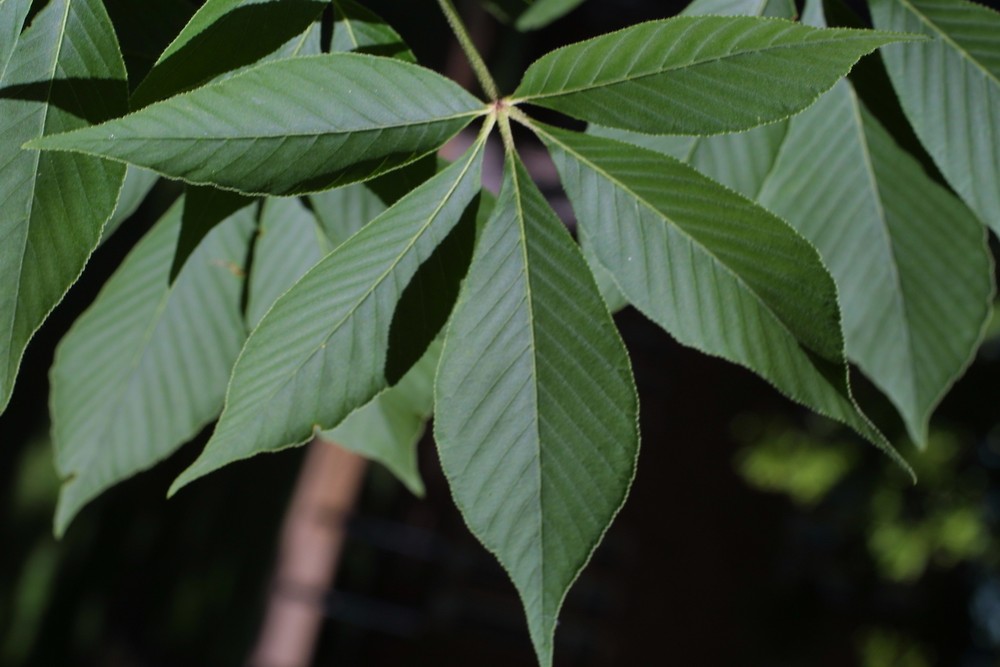
LEAF: Opposite, 4-6 inches wide, palmately compound with five long, narrow leaflets attached at a common point. They are very prone to scorching, discoloration, and leaf diseases, often resulting in a brown, fall-like appearance to the canopy in summer if they are not nearly defoliated. This tree is one of the first to leaf out in spring and one of the first to lose its leaves in the fall.
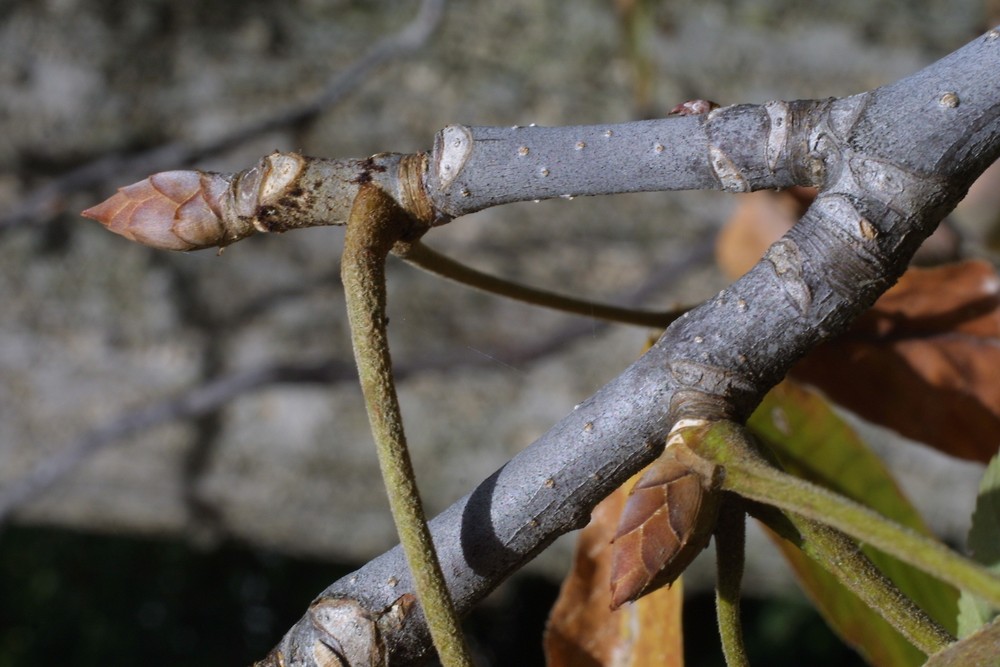
TWIGS AND BUDS: Dormant buds can resemble those of yellow buckeye, but up close they feature overlapping scales that resemble the keel of a boat. Large terminal buds are a good identifier of this tree. Twigs are stout and odorous when scratched; end branches typically curve upwards.

FLOWER: Showy, yellow-green flowers that emerge in early spring in short clusters with long, extending stamens.
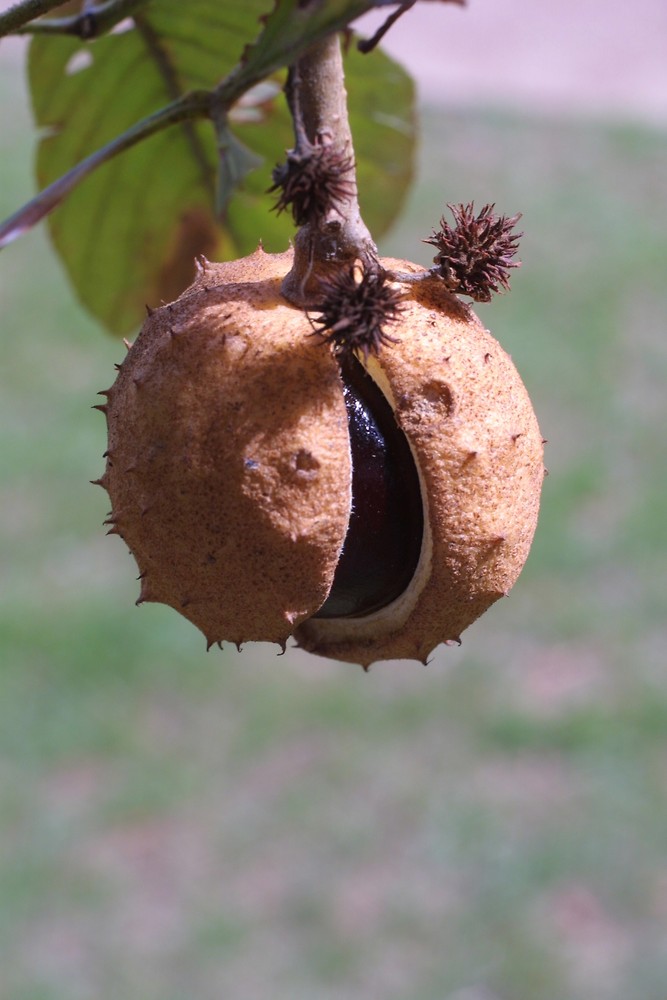
FRUIT OR SEED: Spiny or warty fruit capsules usually contain one to three dark-brown, shiny nut-like seeds that each feature a characteristic pale basal scar or eye.
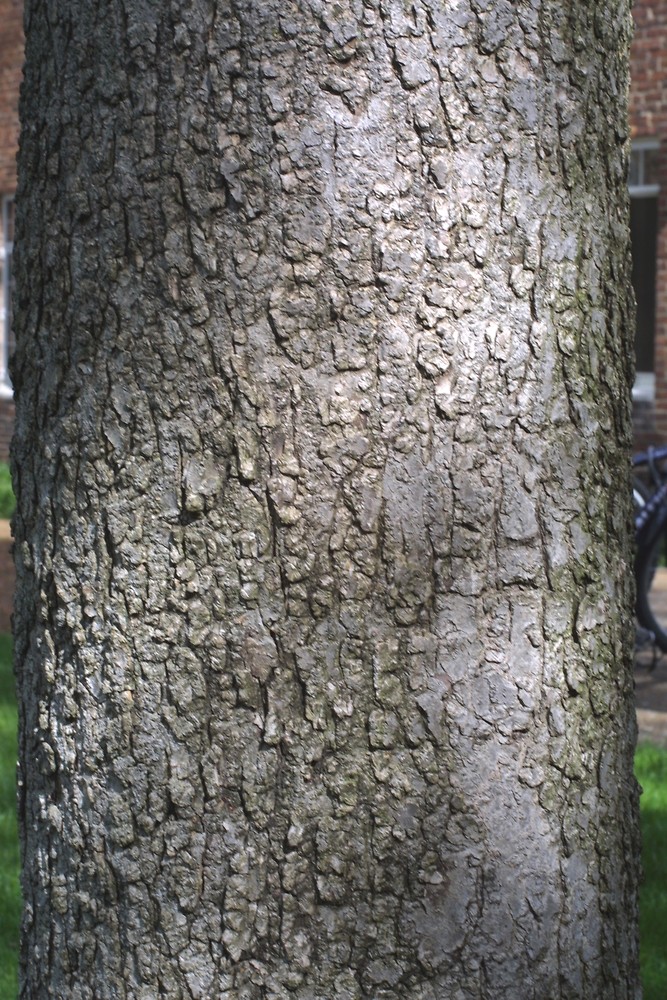
BARK: Variable, but broken into subtle flaky ridges, fissures, and long, warty plates with age. Light gray to light brown in color, without the rectangular platy appearance of yellow buckeye.
MATURE HEIGHT: 40-60 feet.
Photo credits: Steven Baskauf

 Lower Olentangy Urban Arboretum