
Scientific name: Gymnocladus dioicus
Family: Fabaceae (Legume family)
The Kentucky coffeetree is easily recognized by its massive bipinnately compound leaves in the summer and by its bold outline in the winter. It can be found throughout Ohio but is primarily located in the alkaline soils of the western half of the state. As a member of the bean family, Kentucky coffeetree is related to redbud, honey locust, black locust, and wisteria. Kentucky coffeetree prefers deep, moist, alkaline soils, but thrives almost anywhere it is planted, except for permanently wet soils. It is very tolerant to many stresses, including heat, drought, poor soils, compacted soils, high pH soils, occasional brief flooding, and air pollution. Its geographic range has been extended due to the extensive planting of this species in parks along the east coast.
Identification

LEAF: Alternate, bipinnately compound, 12-36 inches long, and composed of alternately arranged leaflets up to 3 inches long.
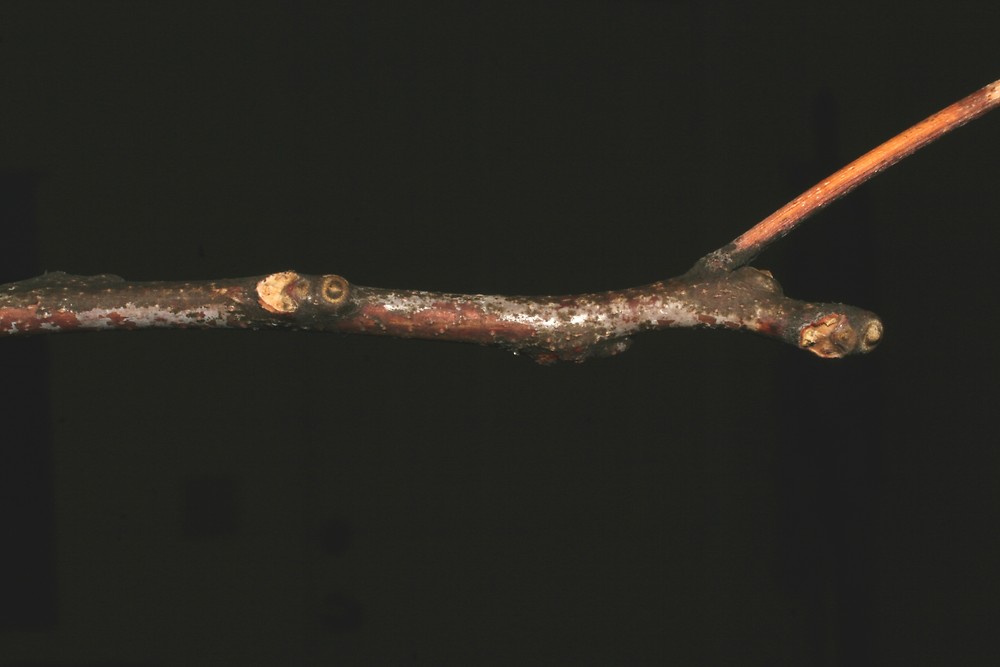
TWIGS AND BUDS: Twigs are stout, and brown, with a thick salmon-colored pith. Large, heart-shaped leaf scars have one or two small lateral buds that are barely visible
above the leaf scars. The terminal bud is absent.
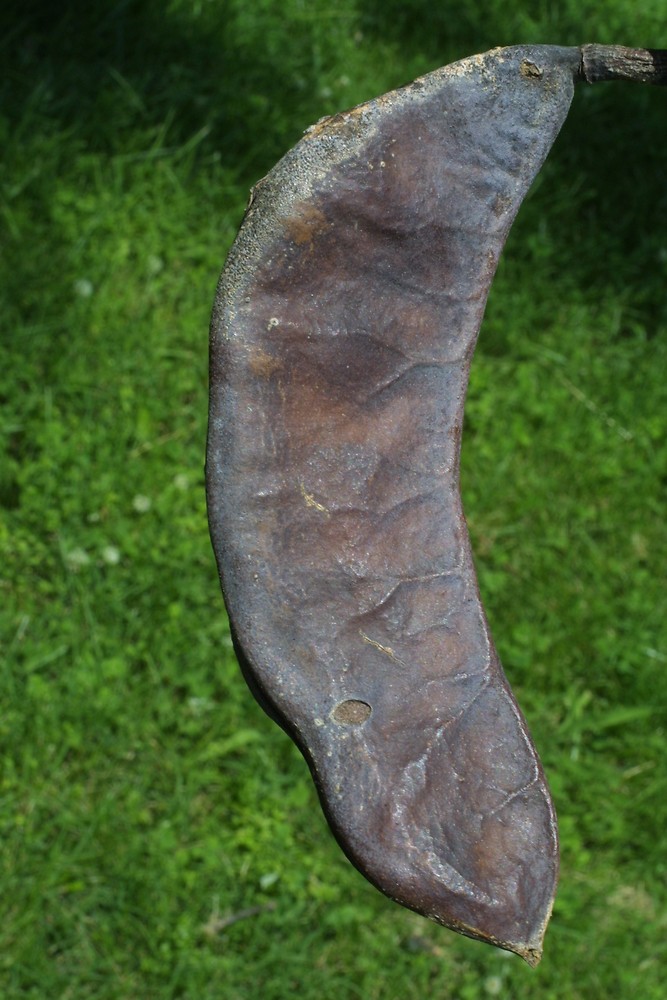
FRUIT OR SEED: A flat thickened pod, 3-8 inches long and reddish-brown in color, contains six or more dark brown lima bean-sized seeds embedded in a sticky pulp, and ripens in late summer.

BARK: Bark is gray, deeply furrowed into narrow scaly ridges. Salmon color on the underside of plates that curl from the side.
MATURE HEIGHT: 70-80 feet.
Photo credits: Steven Baskauf

 Lower Olentangy Urban Arboretum