
Scientific name: Euonymus atropurpureus
Family: Celastraceae (Bittersweet family)
Eastern wahoo is a large, gangly, deciduous shrub or small tree in the bittersweet family that is native to the central and eastern United States. Its native habitat is moist, open woods, stream banks, and thickets. The best specimens are found in deep rich humus soils, limestone soils, and stream bottoms and woods. As with most of the Euonymus species, eastern wahoo is susceptible to scale. Protection from deer and rabbits may be needed.
Identification
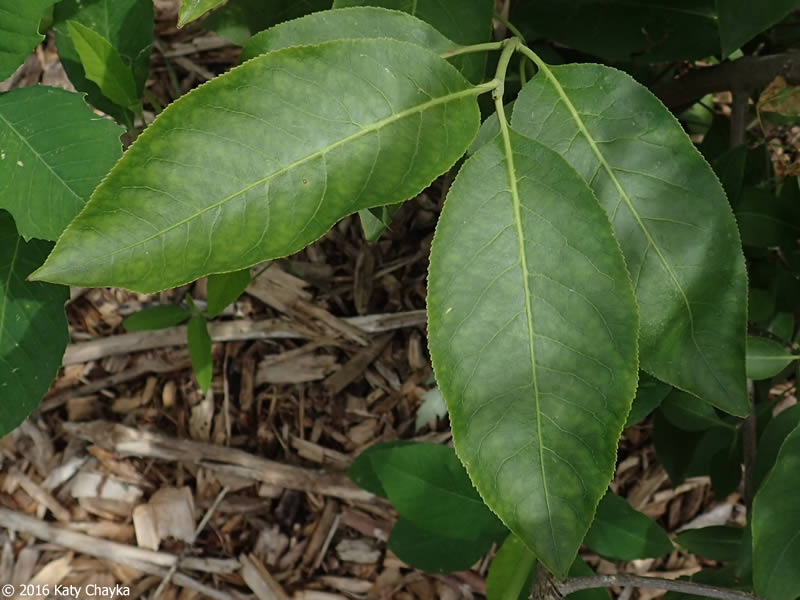
LEAF: Leaves are opposite, simple, and elliptical, 2 1/2 to 4 inches long and 4 inches across, and finely serrated. Leaf pairs develop along young shoots and smaller branches. The upper surface of each leaf is dark green and hairless, while the lower surface is pale green and finely pubescent.
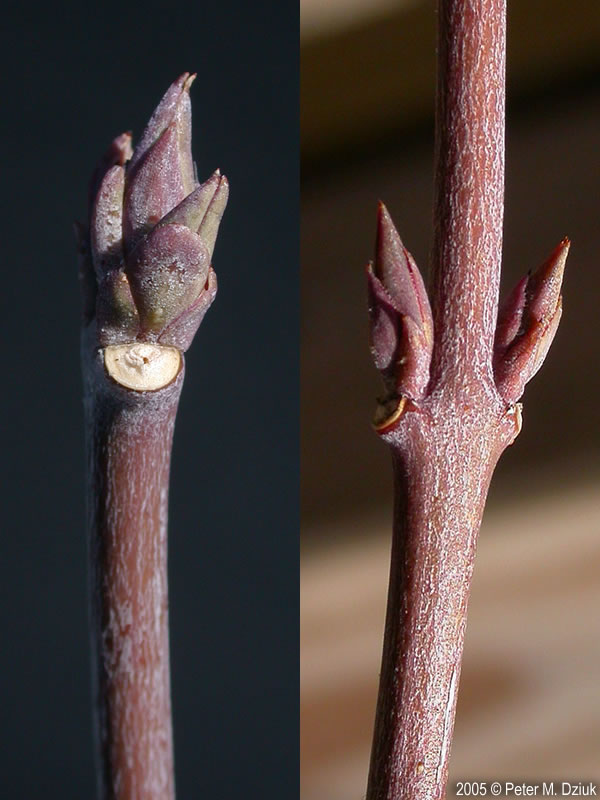
TWIGS AND BUDS: Twigs have a zigzag growth pattern and are gray to green in color. Buds have a sharp tip.

FLOWER: The petals are reddish purple and oval in shape, while the smaller sepals are greenish purple and oval. The blooming period occurs from late spring to early summer and lasts about a month.

FRUIT OR SEED: The flowers are replaced by 4-lobed seed capsules that become mature during the fall. The seed capsules are light pink or pale purple with a smooth surface; they later become more dark-colored.
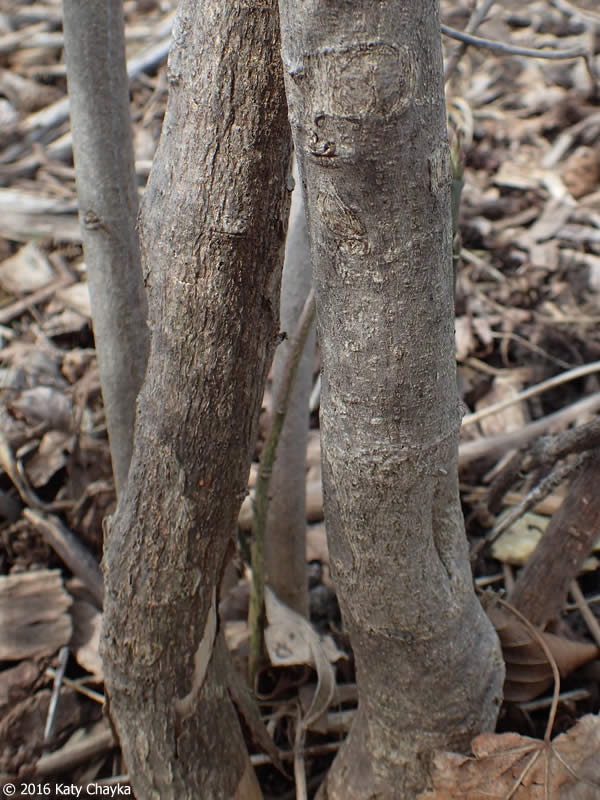
BARK: The central trunk and larger branches are covered with a thin, rough gray bark. Smaller branches are dull green with thin vertical stripes of gray bark. Young shoots are entirely green.
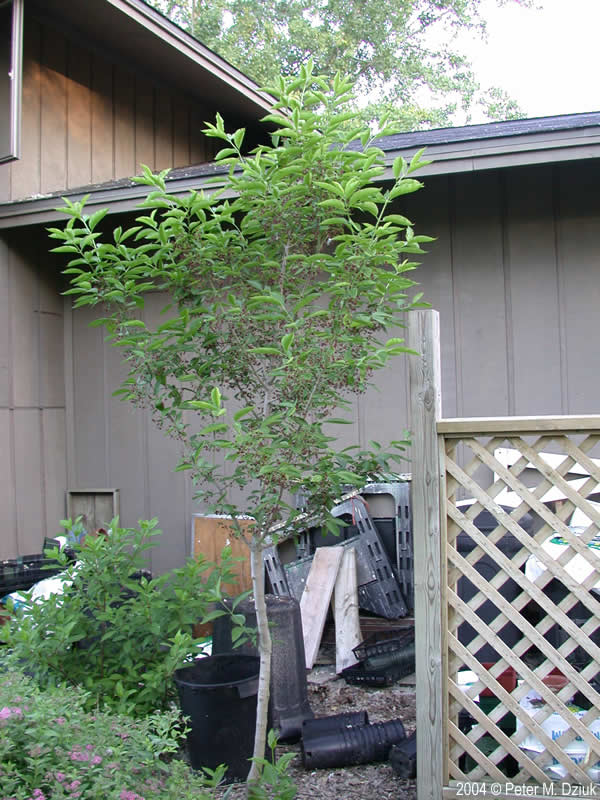
SHAPE: Shape ranges from oval to irregular; lower limbs are pendulous but upswept at tips.
MATURE HEIGHT: 12-25 feet.
Information credits: NC State Extension
Photo credits: R. A. Nonenmacher, Arieh Tal (https://botphoto.info), Katy Chayka, Peter M. Dziuk.

 Lower Olentangy Urban Arboretum