
Scientific name: Populus deltoides
Family: Salicaceae (Willow family)
The eastern cottonwood is a massive, rapid-growing poplar present throughout the state. It does best on moist, well-drained soils but can also adapt to poor, dry soils and tolerates perpetual drought. This tree’s dense mature bark is thick enough to survive forest fires with minimal outer bark loss. Its moderately light wood is used for pulpwood, blocking, and pallets. Eastern cottonwood has a host of pests and diseases that affect its health, but most trees grow with great vigor and do not have serious problems until they reach a large size when lightning or wind begin to take their toll.
Identification
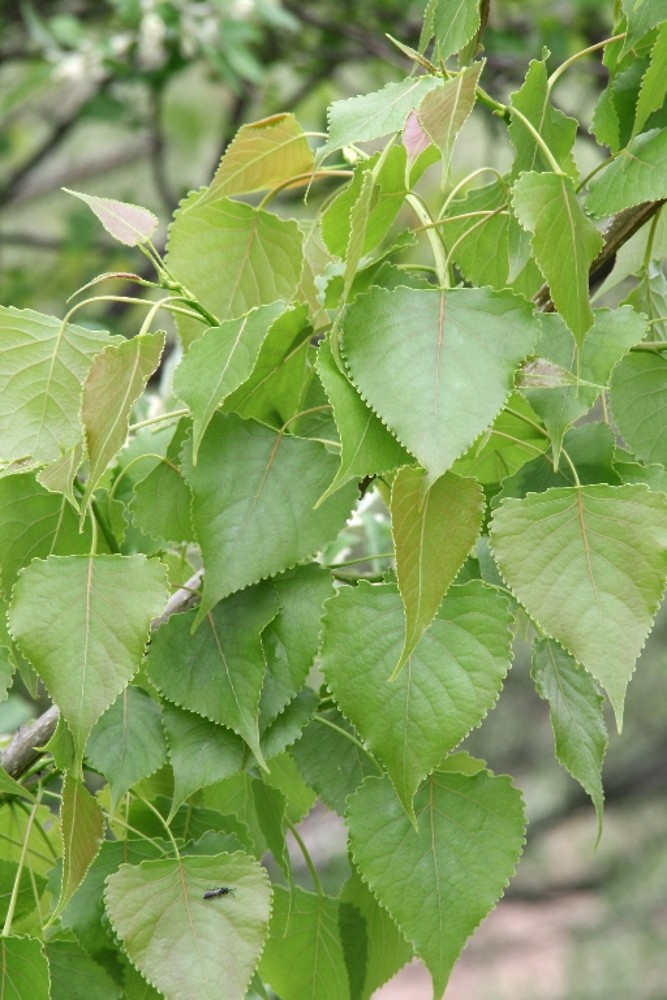
LEAF: Alternate, 3-7 inches long and 3-6 inches wide, roughly triangular with a flattened base and a long, flat petiole. Leaves are dark green in summer and fade throughout the autumn to poor shades of light green, yellow, and brown.

TWIGS AND BUDS: Twigs are stout and often angled with raised triangular-leaf scars. Buds are sticky or resinous.
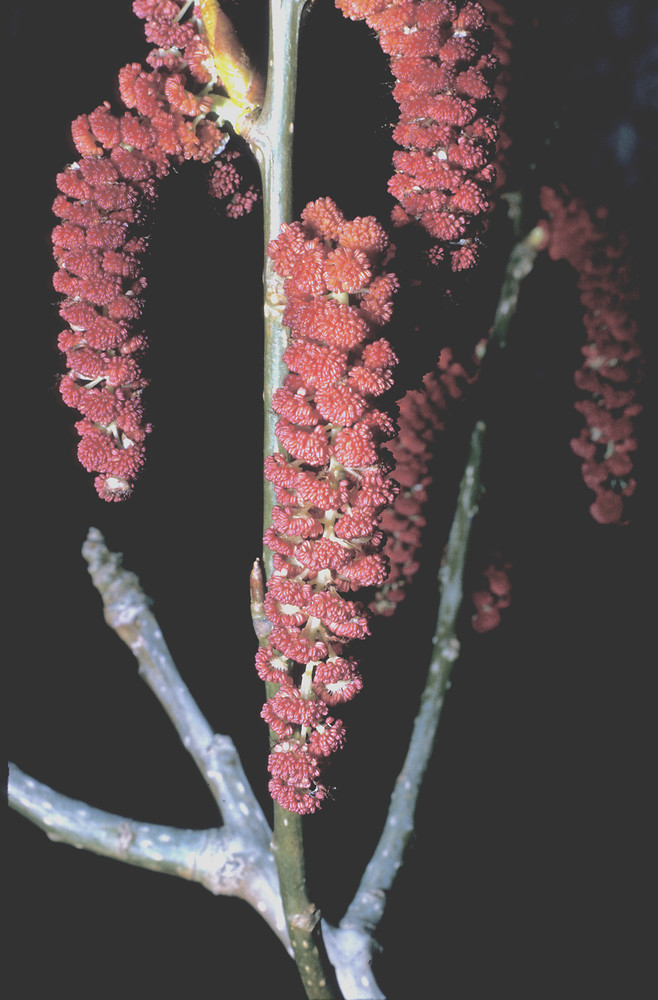
FLOWER: Male and female flowers appear on separate trees. The large male flowers shed abundant amounts of pollen in early spring and can have bright gold, green, or red flowers.
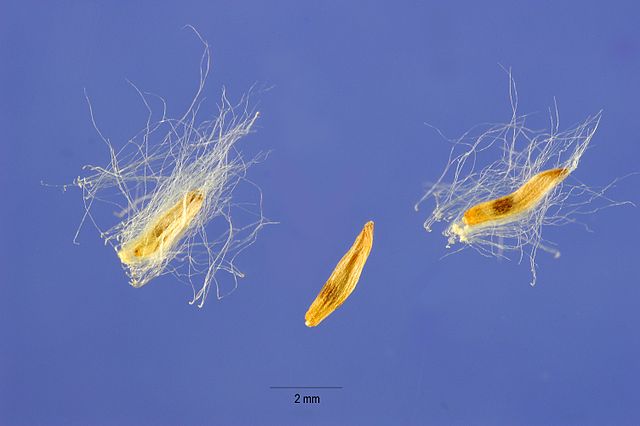
FRUIT OR SEED: Fruit consists of green bud-shaped capsules clustered along short stems that hang from branches. Seeds are attached to a tuft of wispy cotton-like strands. The cotton seeds are windblown and very noticeable, covering the ground like snow at their peak.

BARK: Smooth and greenish when young; dark brown-gray, heavily furrowed, and ridged with deep fissures when mature.
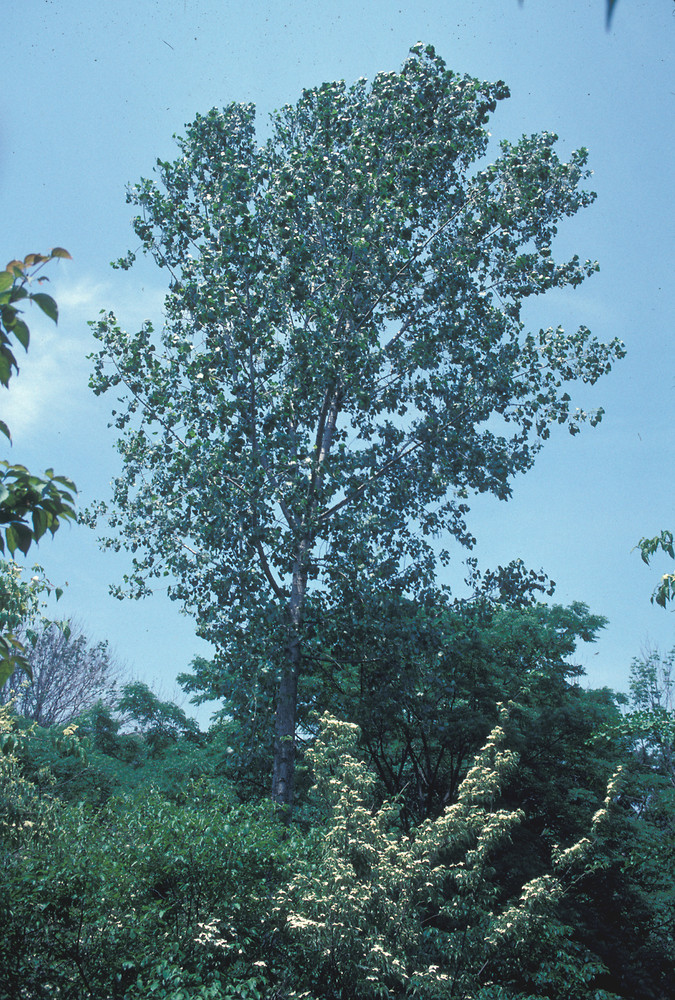
SHAPE: Broad and vase-shaped.
MATURE HEIGHT: 80-110 feet.
Photo credits: Frank Bramley (© 2024 Native Plant Trust), John Lynch (© 2024 Native Plant Trust), Steve Hurst, Arieh Tal (https://botphoto.info)

 Lower Olentangy Urban Arboretum