
Scientific name: Salix nigra
Family: Salicaceae (Willow family)
Black willow is the most common willow in Ohio. It has been planted extensively for stream bank stabilization and is found throughout the state, usually in wet areas or along streams. It is named for the black bark that is found on mature trunks. Its soft, lightweight wood was once used in the production of artificial limbs and is now used in wickerwork. Black willow grows in any type of soil and tolerates permanently wet sites. If planted on dry land, it prefers moist, poorly drained soils of variable pH. Willows were historically used as a source of salicylic acid, a key ingredient in the medicine aspirin, although now the chemical ingredient is biosynthesized. Black willow is susceptible to many insects and diseases, including crown gall, trunk sprouts, cankers, and borers, but usually grows rapidly despite occasional minor setbacks.
Identification
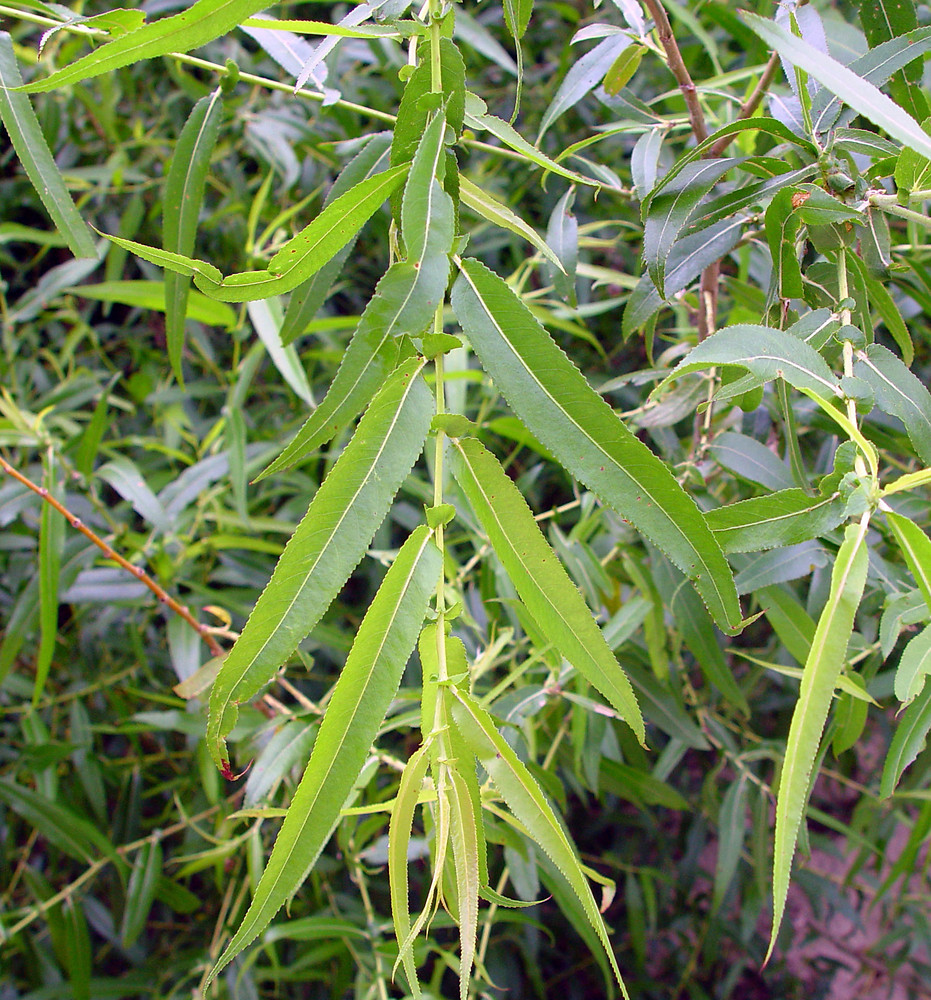
LEAF: Alternate, light green, simple, pinnately veined, 3-6 inches long, thin, and finely serrated with a short petiole and a persistent stipule that encircles the stem. Fall color is light green or yellow-green before leaf drop.

TWIGS AND BUDS: Twigs are slender, smooth, brittle, drooping, bright reddish-brown to orange. Buds are small, covered by one bud scale with the terminal bud absent.
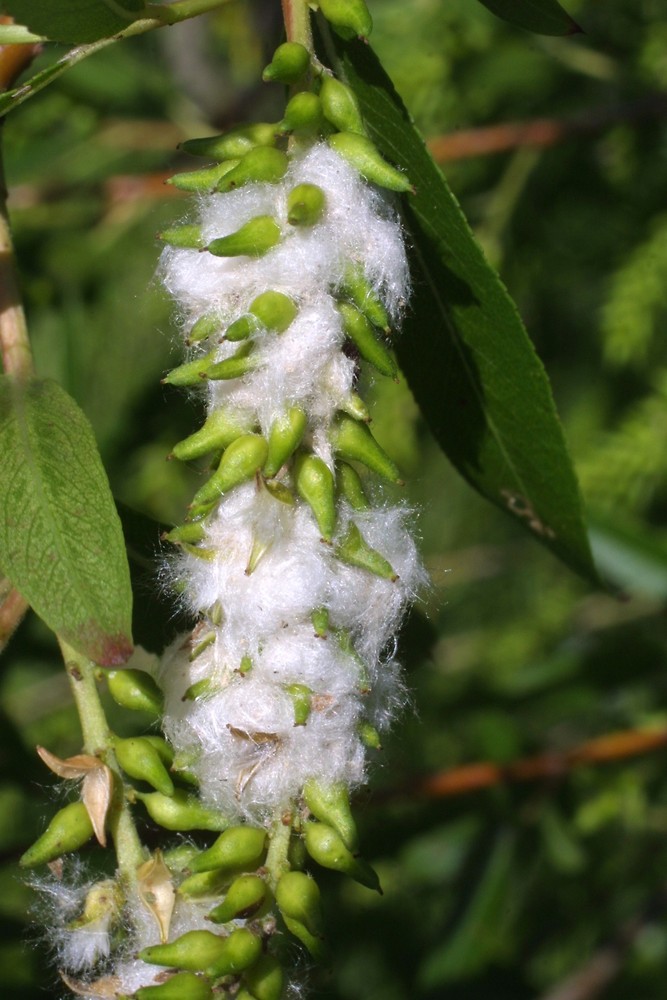
FRUIT OR SEED: Cone-shaped green capsules appear in long hanging clusters and contain many small, cottony seeds, borne on catkins; capsules split at maturity to release seeds.
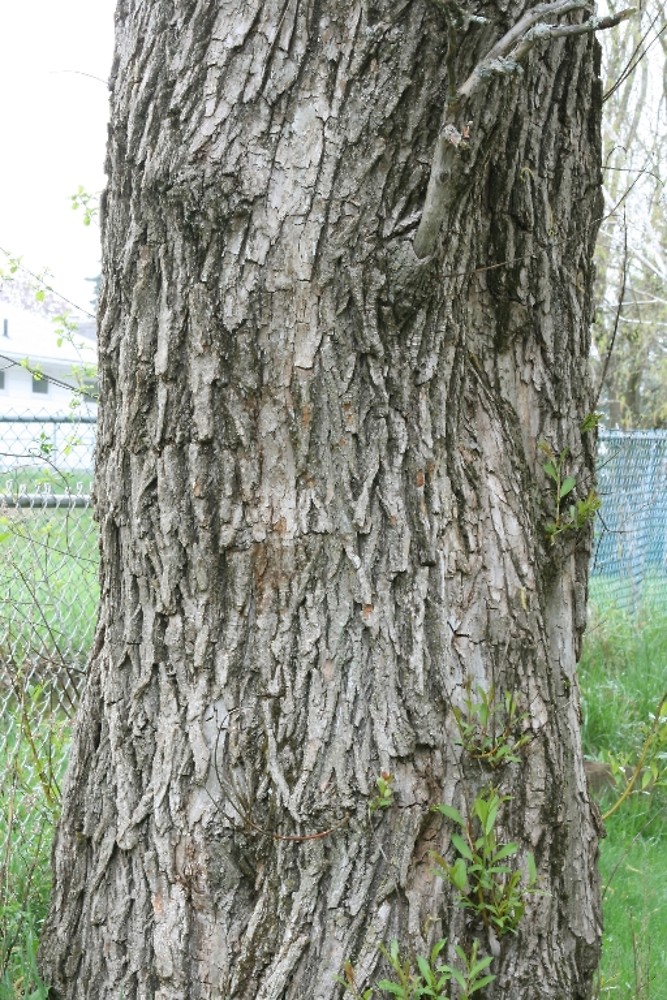
BARK: Thick, rough, blackish-brown, with scaly interlacing ridges and deep furrows.

SHAPE: Spreading, irregular.
MATURE HEIGHT: 60-85 feet.
Photo credits: Arieh Tal (https://botphoto.info), Steven Baskauf, Alexey Zinovjev, ©Arthur Haines (Native Plant Trust)

 Lower Olentangy Urban Arboretum