
Scientific name: Platanus occidentalis
Family: Platanaceae (Plane tree family)
The American sycamore is a massive tree easily identified by its height, spreading canopy, and unique bark. Its wood was historically used for lumber, butcher blocks, flooring, and handles. This native tree prefers deep, moist, well- or moderately-drained soils of variable pH and full to partial sun; it is often found naturally along rivers and streams. The American sycamore is prone to annual infections of anthracnose, a fungus that destroys new growth in spring by causing leaf dieback and forces a second round of growth in late spring.
Identification
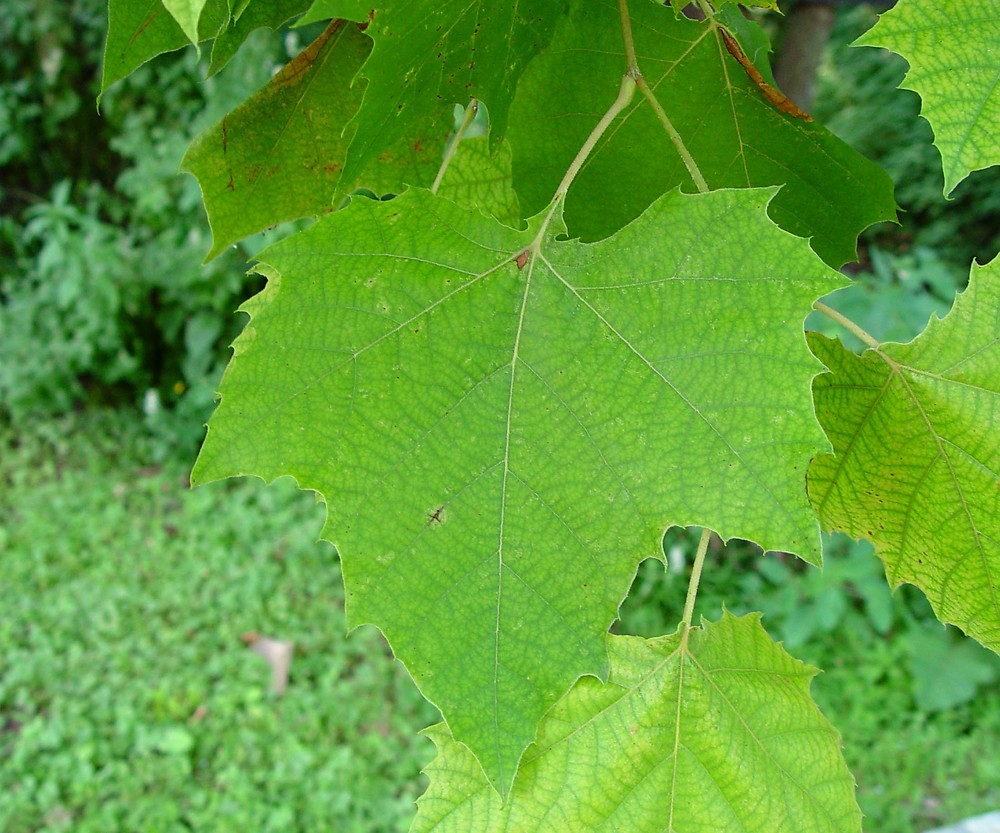
LEAF: Alternate, simple, three to five-lobed with varying numbers and sizes of incisions, 5-8 inches across. Leaf shape is variable but generally wider than long; leaves are medium green above with light pale or wooly undersides. Leaf petioles swollen at base.
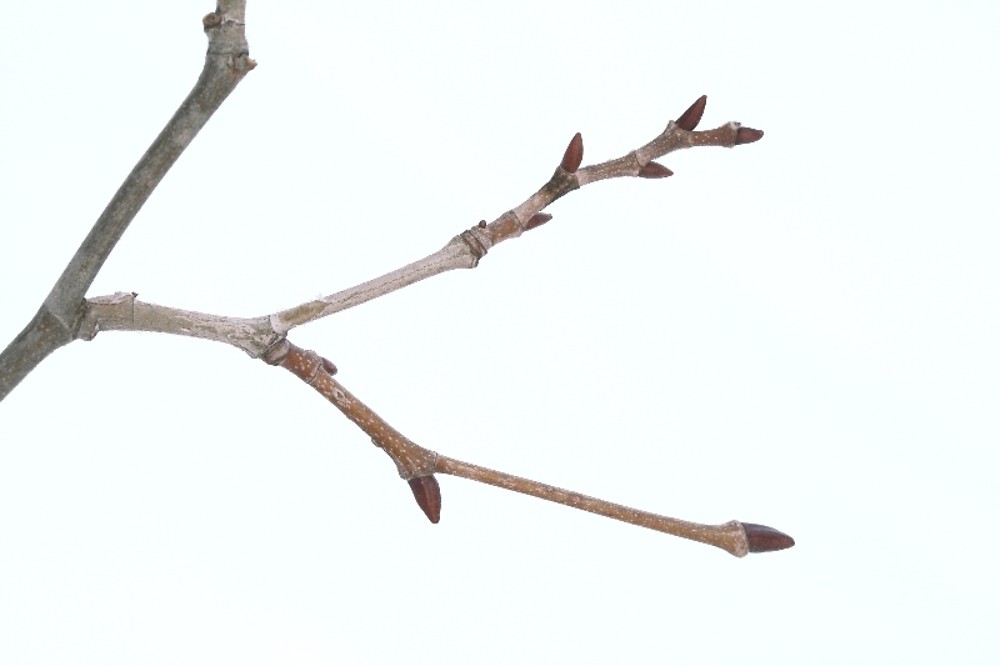
TWIGS AND BUDS: Twigs are green and hairy at first, then brown and smooth. They grow in a zigzag pattern with absent terminal buds and prominent, smooth reddish-brown winter buds. Leaf scars surround the entire bud. Branches ascend and grow quickly in the upper canopy but remain pendulous in the lower reaches.
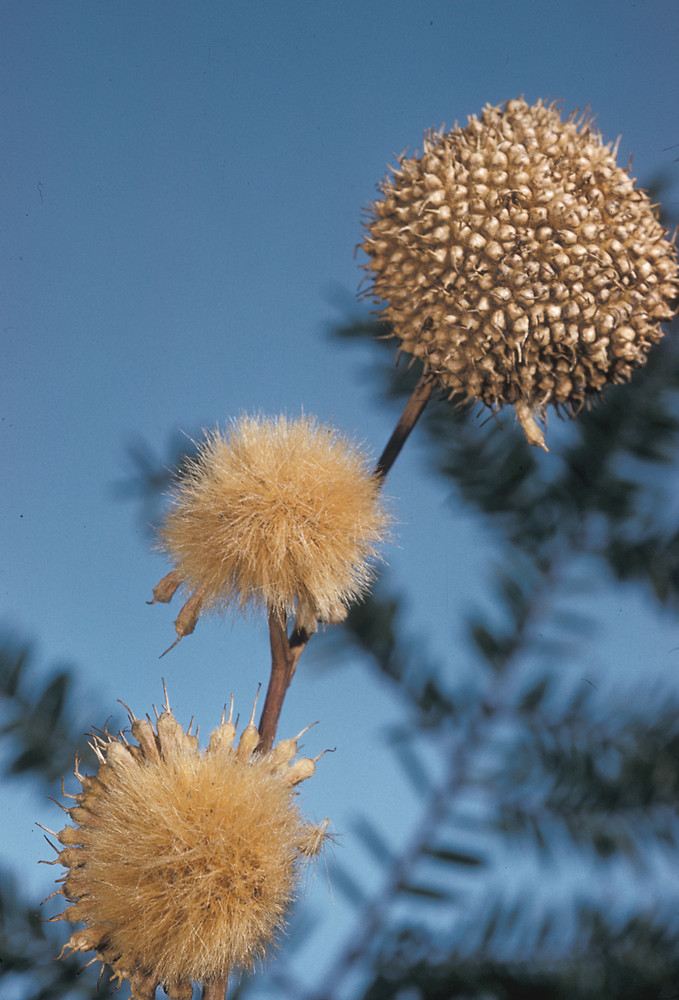
FRUIT OR SEED: A round, light brown ball, 1 inch in diameter, made up of many seeds surrounded by silky hairs, hanging singly by a tough, slender stalk throughout the winter.
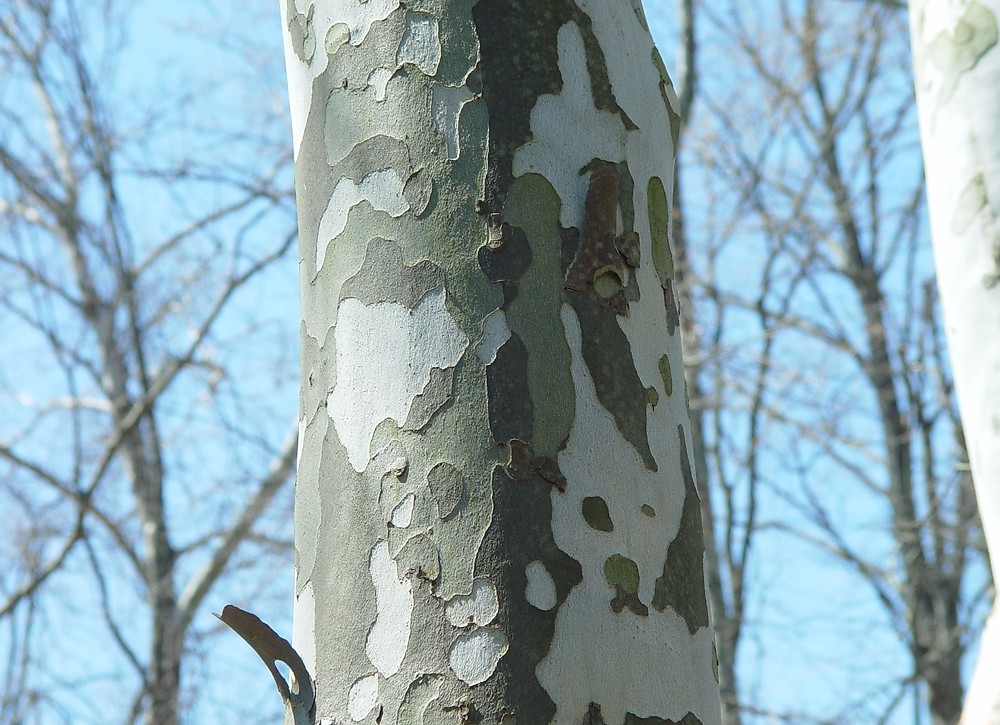
BARK: Smooth, whitish bark peels off in irregular patches from upper branches to reveal darker bark underneath, creating a characteristic gray, green, and brown mosaic.

SHAPE: Open, massive crown.
MATURE HEIGHT: 70-110 feet.
Photo credits: Arieh Tal (https://botphoto.info), Adelaide Pratt (© 2024 Native Plant Trust), ©Arthur Haines (Native Plant Trust)

 Lower Olentangy Urban Arboretum