
Scientific name: Diospyros virginiana
Family: Ebenaceae (Ebony family)
Persimmon is native to the southern and eastern parts of Ohio but can be planted farther north due to its cold tolerance. It is known primarily for its large edible fruits, which are consumed by humans and wildlife including opossums, skunks, deer, birds, and raccoons. Its hard, dense wood was historically used to produce wooden golf club heads and billiard cues. Persimmon prefers moist, well-drained, average soils of variable pH and full to partial sun, but easily adapts to poor, rocky, clay, sandy, or even organic soils of dry or moist constitution. Aside from being slow-growing and the potential in heavy fruiting years to create a sticky mess at the bottom of female trees, persimmon is relatively free from any possible health problems.
Identification
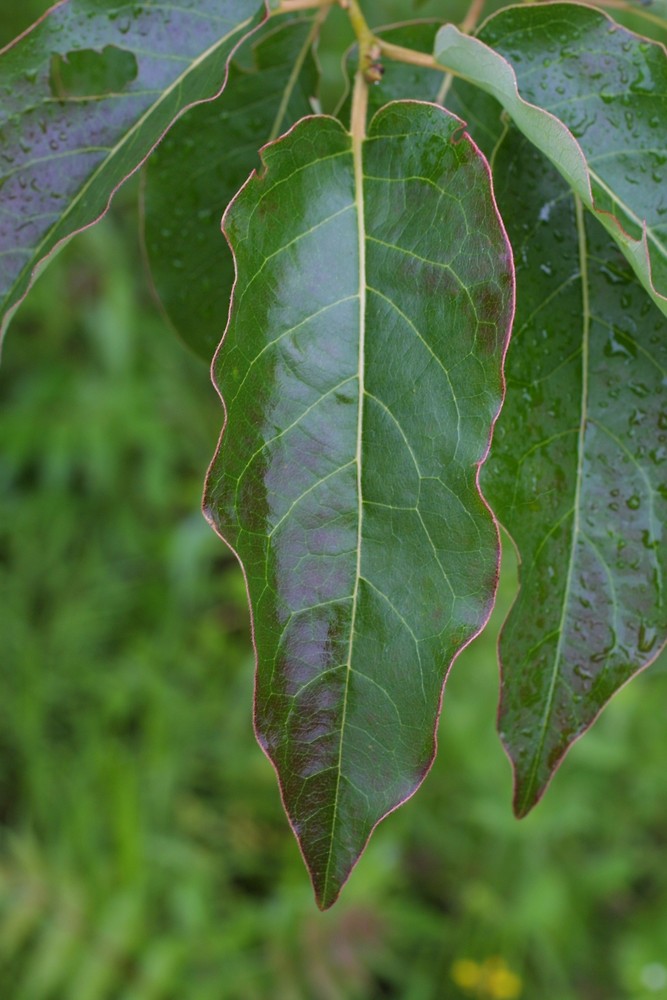
LEAF: Alternate, simple, oblong to elliptical, 4 to 6 inches in size, medium to dark green with pale undersides in summer, sometimes with hints of yellow-orange, and purple or red during fall but usually fading to light green or chartreuse and abscising during autumn.
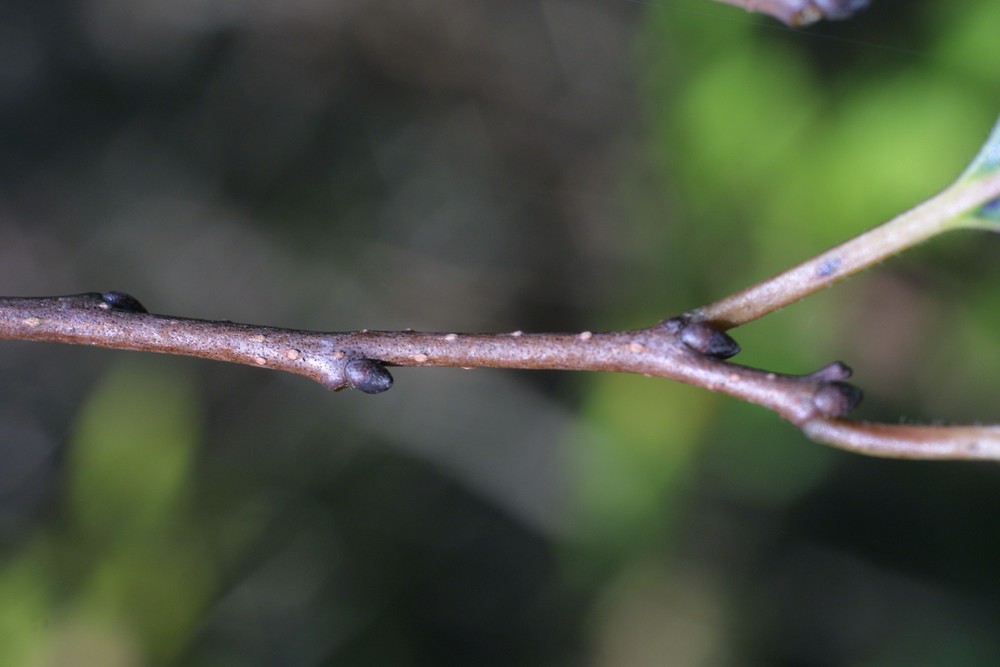
TWIGS AND BUDS: Twigs are slender, light brown to gray, maybe scabrous or pubescent with no true terminal bud and prominent twig scars. Buds are triangular, appressed, dark red to black with two bud scales.
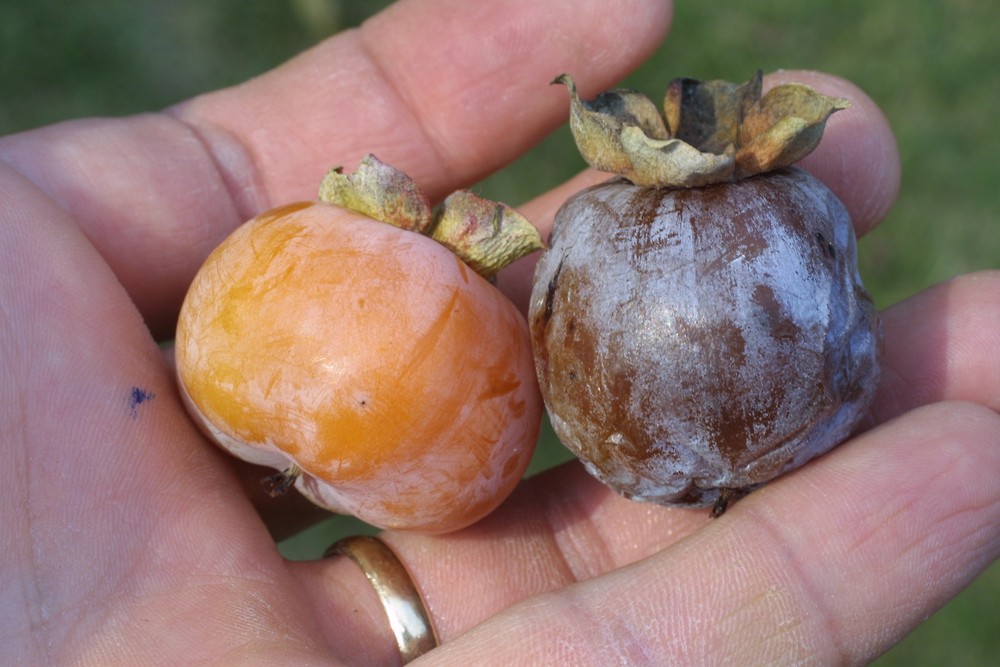
FRUIT OR SEED: Plum-like berry that changes from green to pink-orange when ripe in autumn, up to 2 inches in diameter, and contains several flat dark brown seeds. Fruit is sweet and edible when ripe after a hard freeze and matures in mid to late fall.
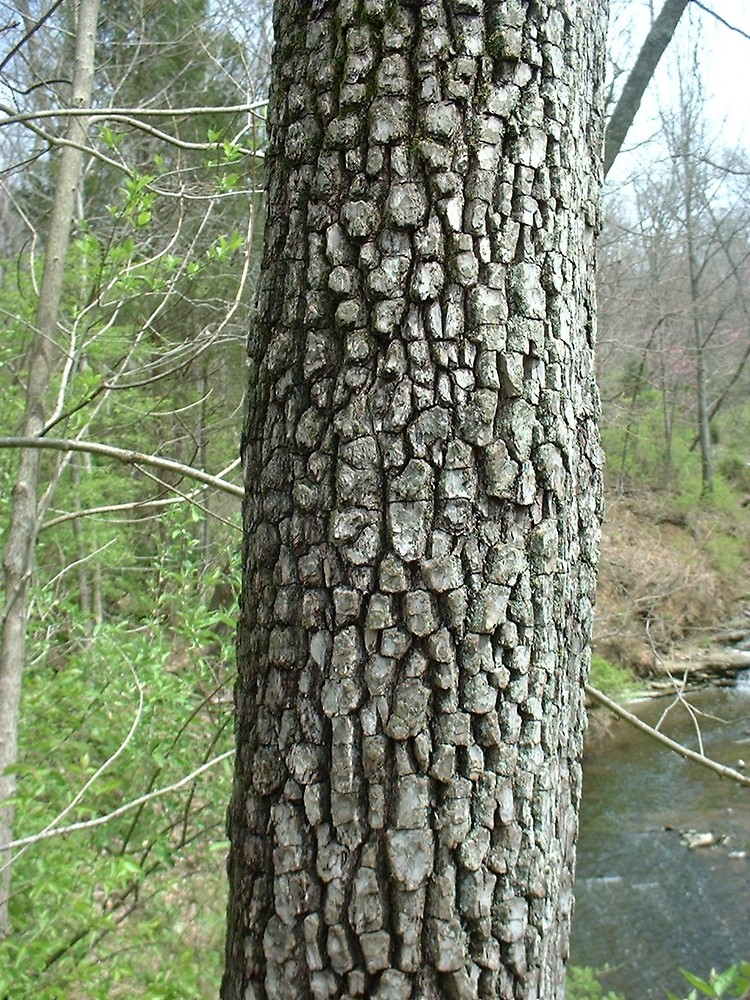
BARK: Mature bark is thick and blocky in texture and dark gray in color.
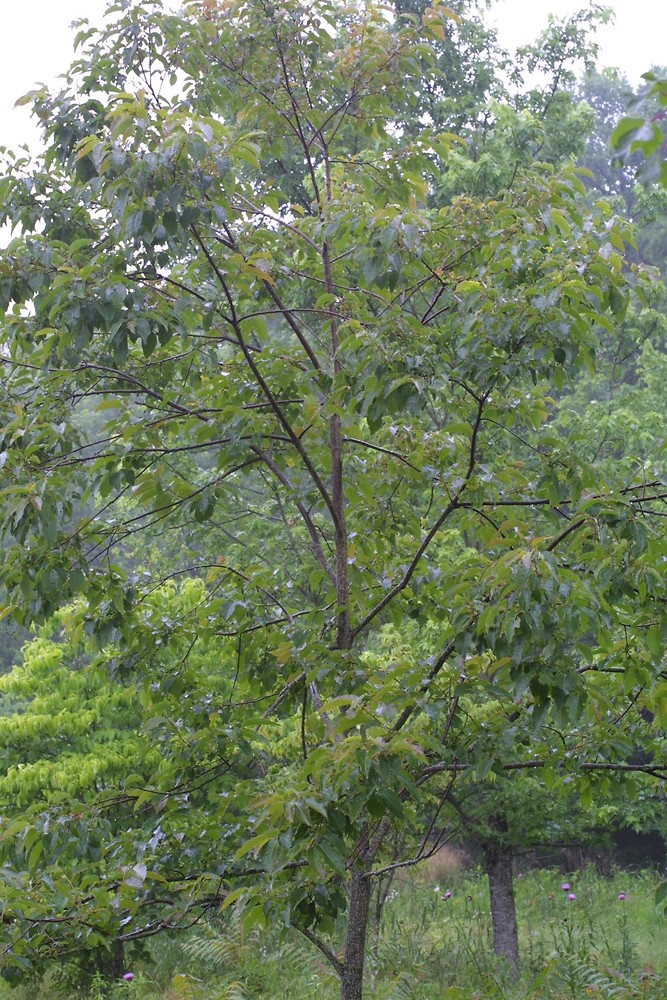
SHAPE: Slender, oval-rounded crown.
MATURE HEIGHT: 40-60 feet.
Photo credits: Steven Baskauf

 Lower Olentangy Urban Arboretum