
Scientific name: Ostrya virginiana
Family: Betulaceae (Birch family)
American Hophornbeam, also known as Ironwood, is found throughout all of Ohio as well as throughout most of the Eastern United States and southernmost Eastern Canada. The “hop” portion of its name refers to the resemblance of its fruits to those of true hops that are used in the production of beer. Hornbeam refers to a related European tree whose wood was used to yoke oxen; therefore, its American counterpart wood was also used as a “beam” with which to yoke “horned” beasts of burden. Ironwood refers to its strength and is confusing since this is also a common name for Blue Beech.
Identification

LEAF: The leaves are alternate with a doubly toothed margin and fuzzy stem. Birch-like, oval to lance-shaped, sharply-serrated, dark yellowish-green leaves (to 5 inches long). The leaves turn an undistinguished yellow in autumn and often drop early.
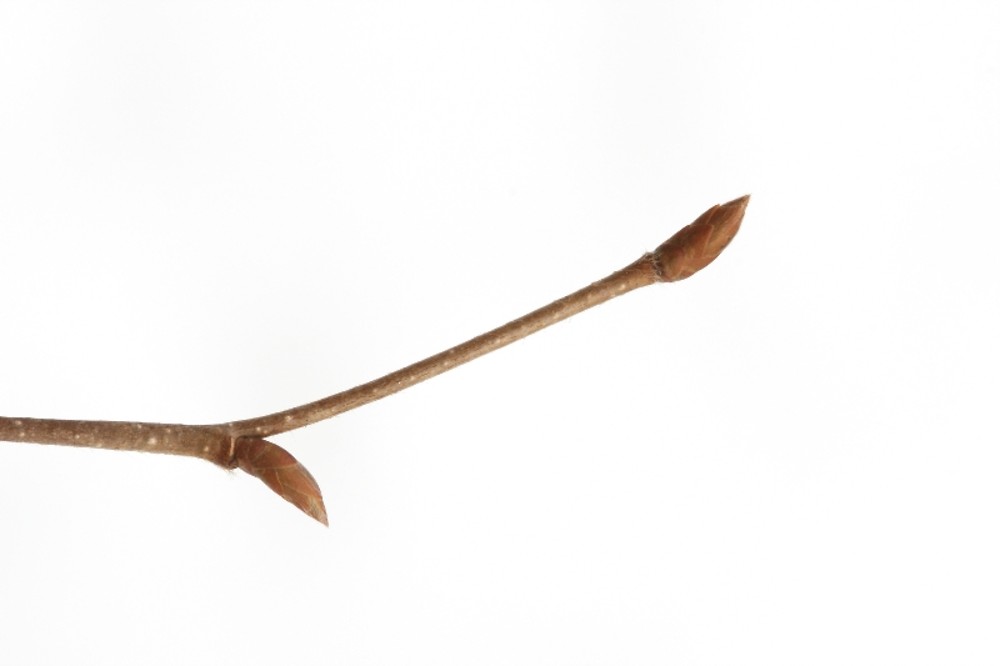
TWIGS AND BUDS: Twigs are fine, reddish brown in color, smooth, and shiny. The terminal bud is absent as in all birches and elms; lateral buds are small, light reddish brown in color, bending away from the twig.
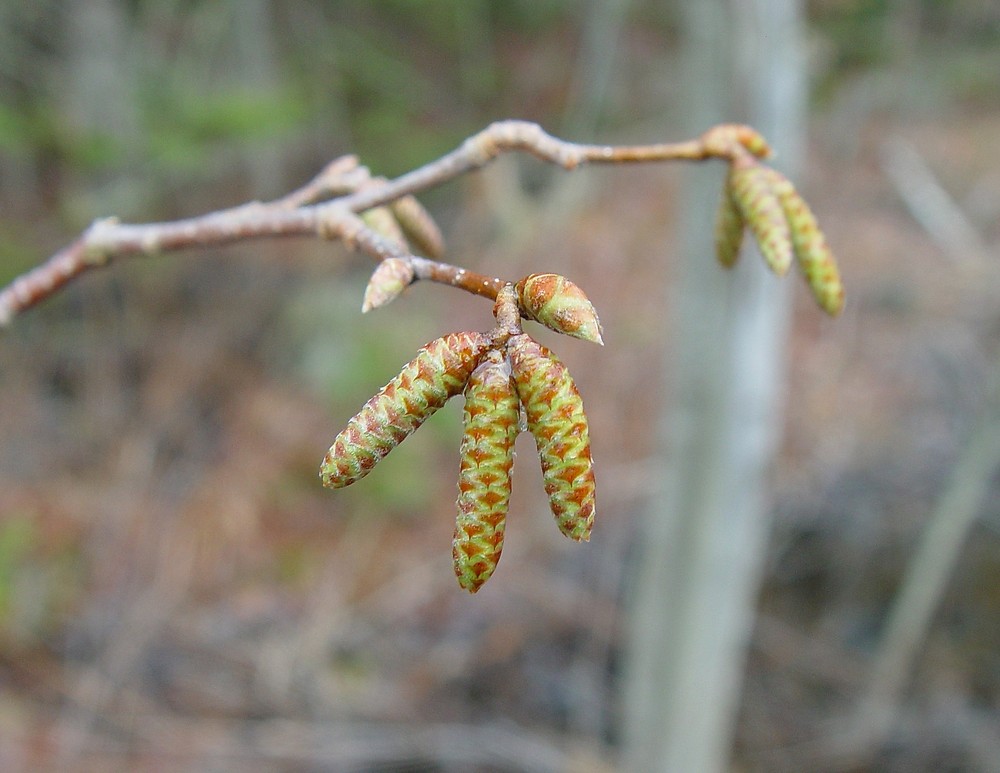
FLOWER: Male catkins are green and detectable in mid-summer, brown and easily seen in winter, and yellow-brown and in flower in mid-spring. They often occur in a cluster of three but can be single or double as well. The small, nearby female flowers give rise to hop-like fruits.

FRUIT OR SEED: Female catkins are followed by drooping clusters of sac-like, seed-bearing pods which, as the common name suggests, somewhat resemble the fruit of hops and persist from summer through winter. The fruit is a 1/4-inch nutlet enclosed in a dried, leafy, inflated sac.
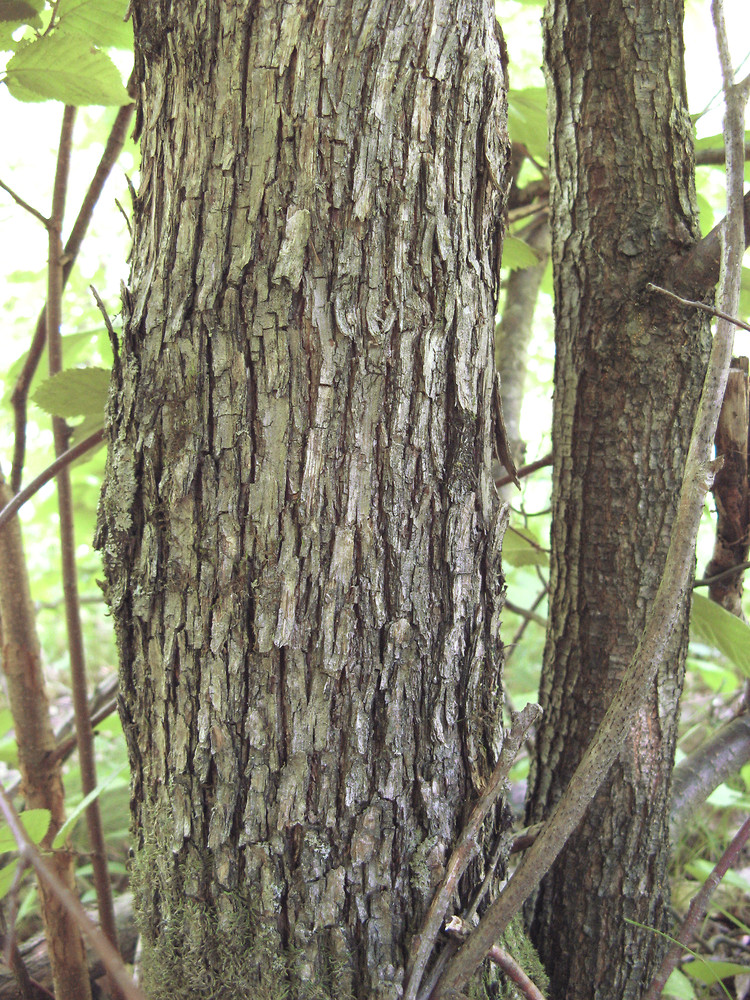
BARK: The immature bark of American Hophornbeam is very flaky, loosely covering the spreading branches and upper trunks. Mature trunks, however, have bark that occurs as thin vertical strips, slightly shredding at the ends. Both types of bark are gray-brown in color.

SHAPE: Somewhat pyramidal when young, usually rounded or oval later. Has many horizontal or drooping branches.
MATURE HEIGHT: 20-40 feet.
Information credits: Ohio DNR, NC State Extension
Photo credits: Frank Bramley (© 2024 Native Plant Trust), Arieh Tal (https://botphoto.info), ©Arthur Haines (Native Plant Trust), Donna Kausen, Paul Wray

 Lower Olentangy Urban Arboretum