
Scientific name: Ulmus americana
Family: Ulmaceae (Elm family)
Once a prized ornamental and shade tree, American elm has been tragically impacted by Dutch elm disease in recent years. The non-native fungal pathogen (transmitted by the elm bark beetle) plugs the vascular system of the tree, preventing the flow of water and nutrients, and slowly killing it. Also known as white elm, this stately native tree is found throughout Ohio and can be recognized by its distinctive vase shape. American elm prefers moist, deep rich soils of variable pH and full to partial sun. Fully mature specimens are becoming harder to find as most trees succumb to Dutch elm disease by the time they reach 40 feet tall. American elm is also subject to numerous pests and pathogens including elm phloem necrosis, which has symptoms similar to Dutch elm disease.
Identification
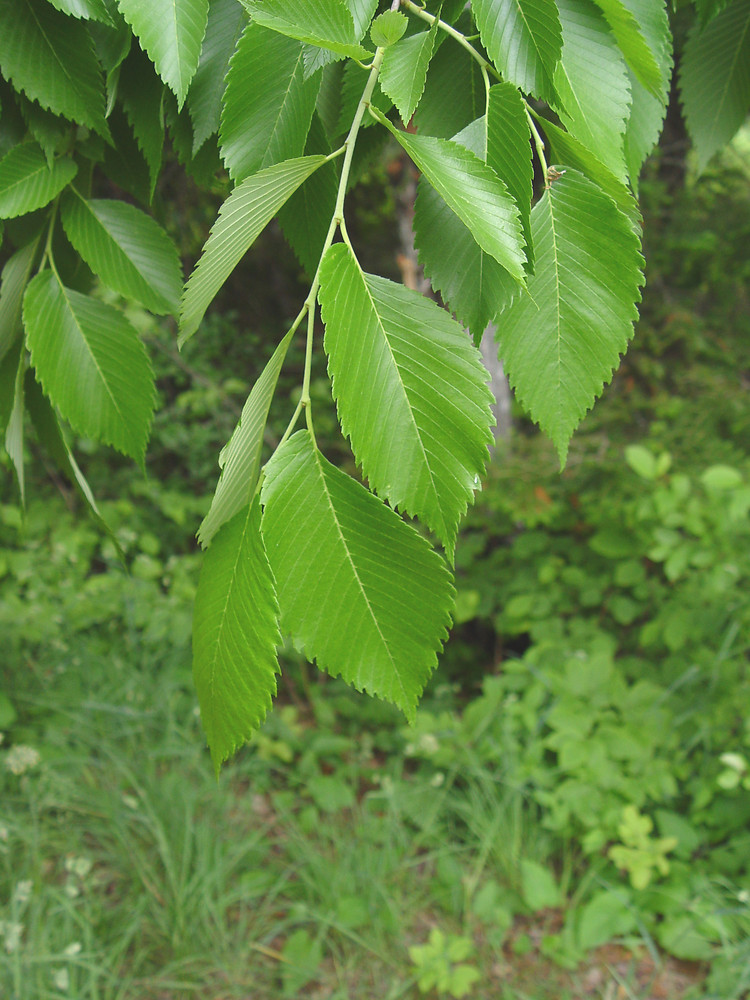
LEAF: Leaves are alternate, simple, 3-5 inches long, asymmetrical at the base, elliptical to ovate, and smooth or rough upper surface with prominent veins and doubly-serrated margins.

TWIGS AND BUDS: Twigs are generally smooth, slender, zigzag, brown, and slightly hairy. Buds are small, smooth, or slightly hairy and similar to twig color.
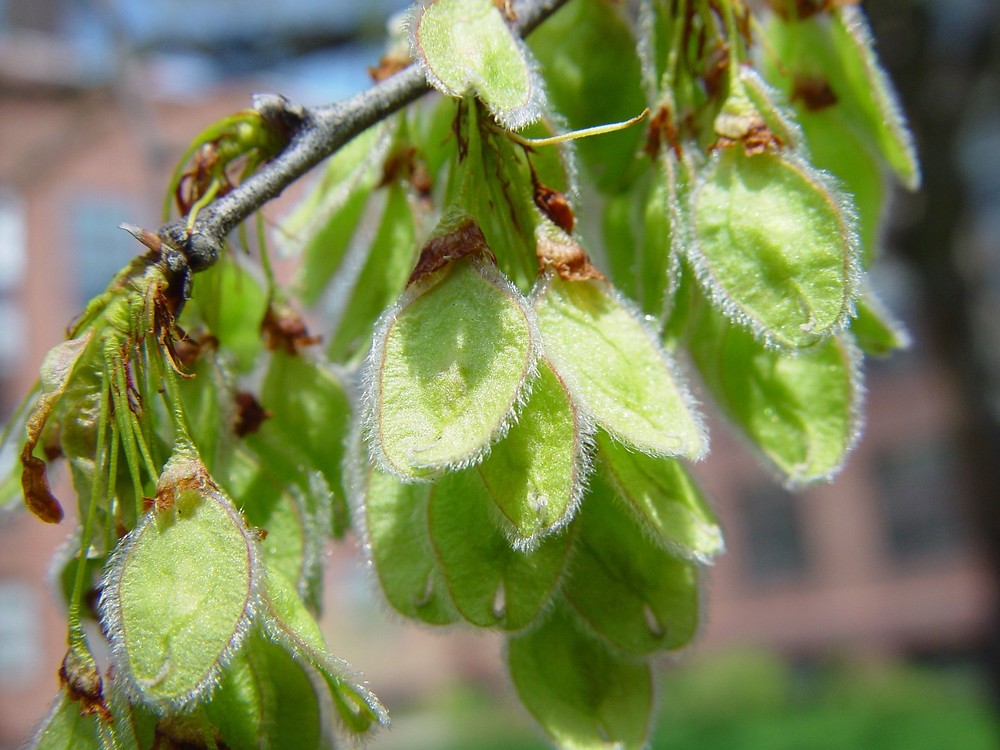
FRUIT OR SEED: Seeds are surrounded by an oval, thin papery wing, ½ inch long, and deeply notched at the tip, ripening in spring and borne in clusters.
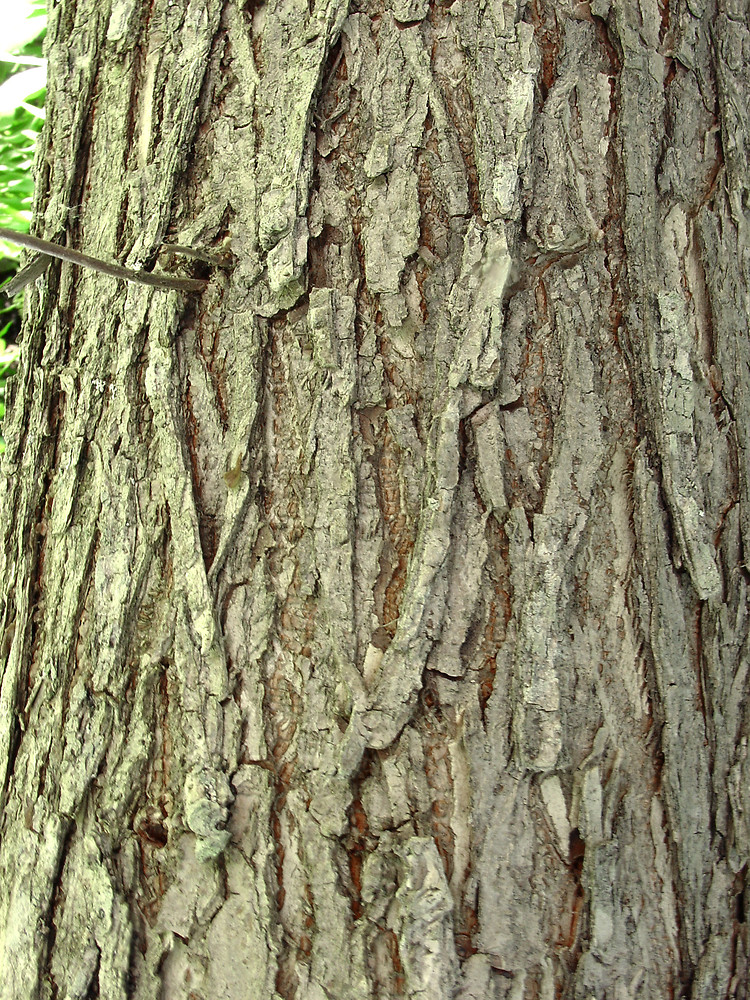
BARK: Dark gray to gray-brown with flattened ridges and intervening furrows; separated by diamond-shaped fissures on older trees. Outer bark, when sectioned, shows alternating brown and cream-colored layers. Bark can be thick and often spongy.
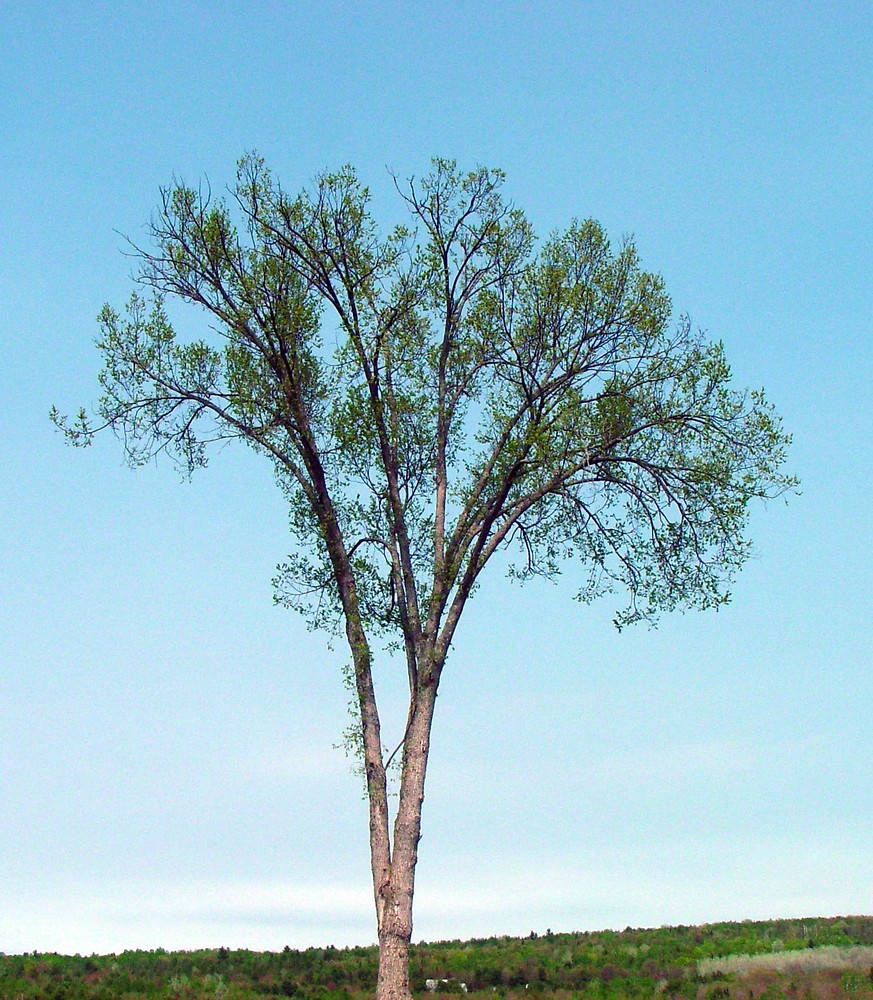
SHAPE: Vase
MATURE HEIGHT: 80-120 feet.
Photo credits: ©Arthur Haines (Native Plant Trust), Arieh Tal (https://botphoto.info), Glen Mittelhauser, Donald Cameron

 Lower Olentangy Urban Arboretum