
Scientific name: Castanea dentata
Family: Fagaceae (Beech family)
Formerly a common mature forest tree across eastern Ohio, the American chestnut was devastated by the chestnut blight disease. Most American chestnuts found in the wild today are sprouts from old chestnut trees that died back from the blight and sprouted from the stumps, a cycle that has been repeated multiple times over the years. Breeding programs have introduced blight-resistance genes from Asian chestnuts into resistant strains of American chestnut with some success, but it’s uncertain when large-scale reintroduction into forests will become an option. Historically, it preferred moist, deep, acidic soils in full sun. Its nuts were once a staple food of the Native Americans, pioneers, and a diversity of wildlife. It has rot-resistant wood that was harvested to produce a variety of products from furniture to construction lumber.
Identification

LEAF: Alternate, smooth surface, simple, 5-9 inches long, elliptical to oblong in shape, with sharp-pointed tips and sharply pointed teeth on margins. Fall color is yellow, gold, or brown.
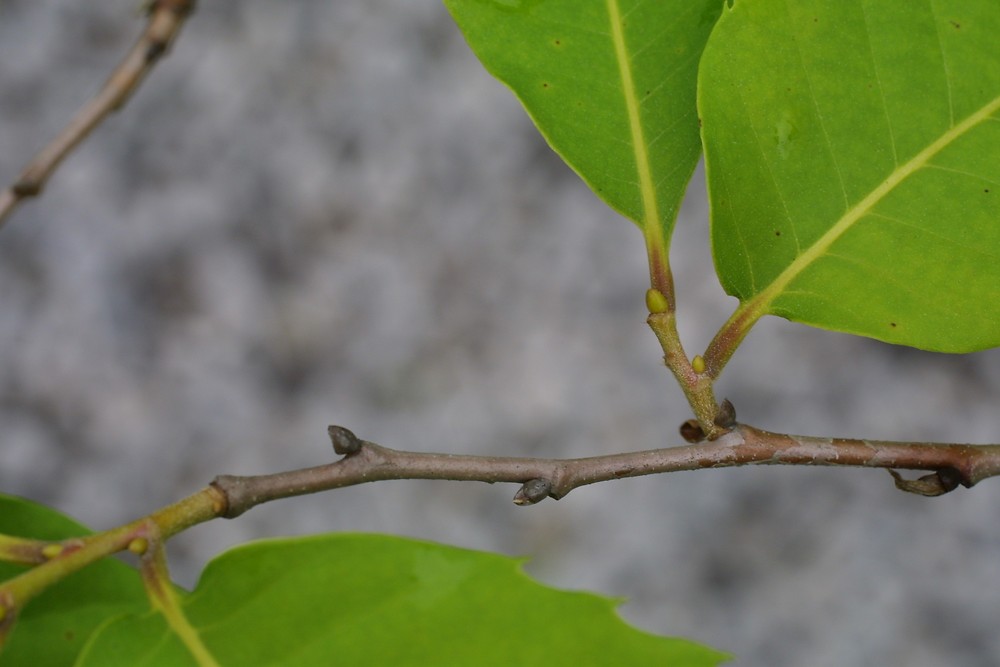
TWIGS AND BUDS: Stout, hairless, orange-brown in color. Buds are orange-brown and measure up to ¼ inch long. Terminal buds are singular, not clustered like oaks.
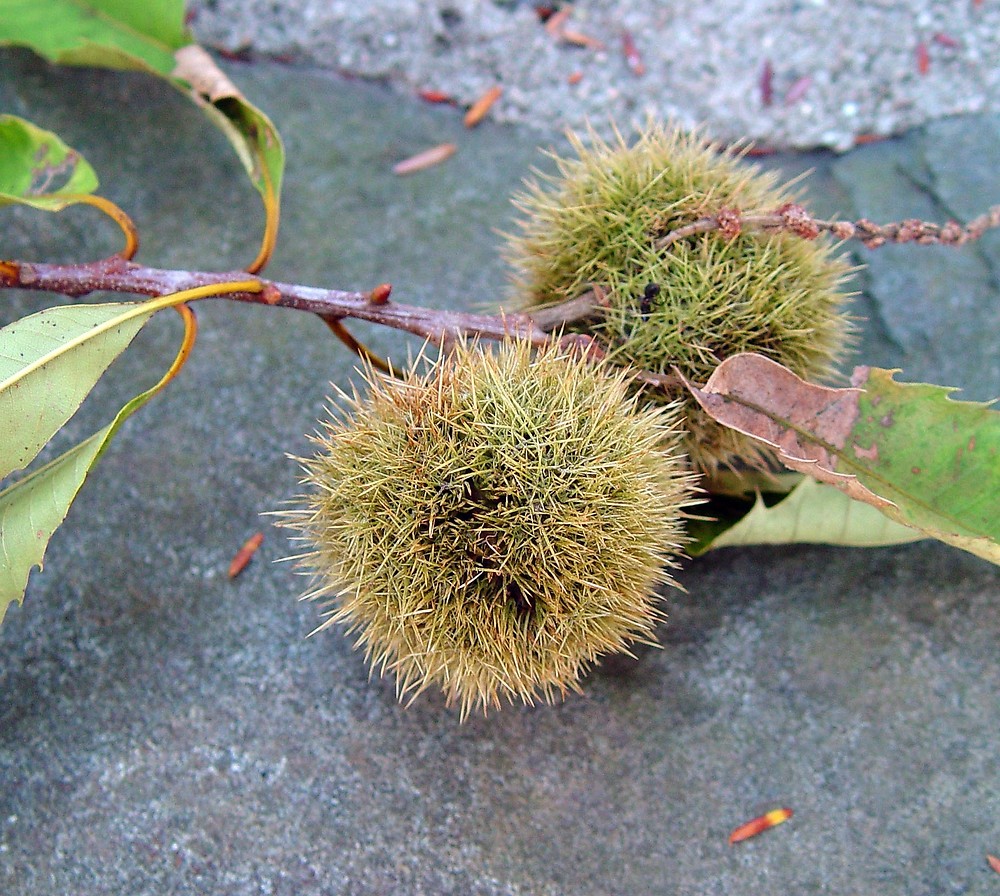
FRUIT OR SEED: Large, round, prickly husks containing several shiny chestnut-brown nuts that are flattened on one or two sides. Husks split open in autumn and exposed nuts are eaten by wildlife.
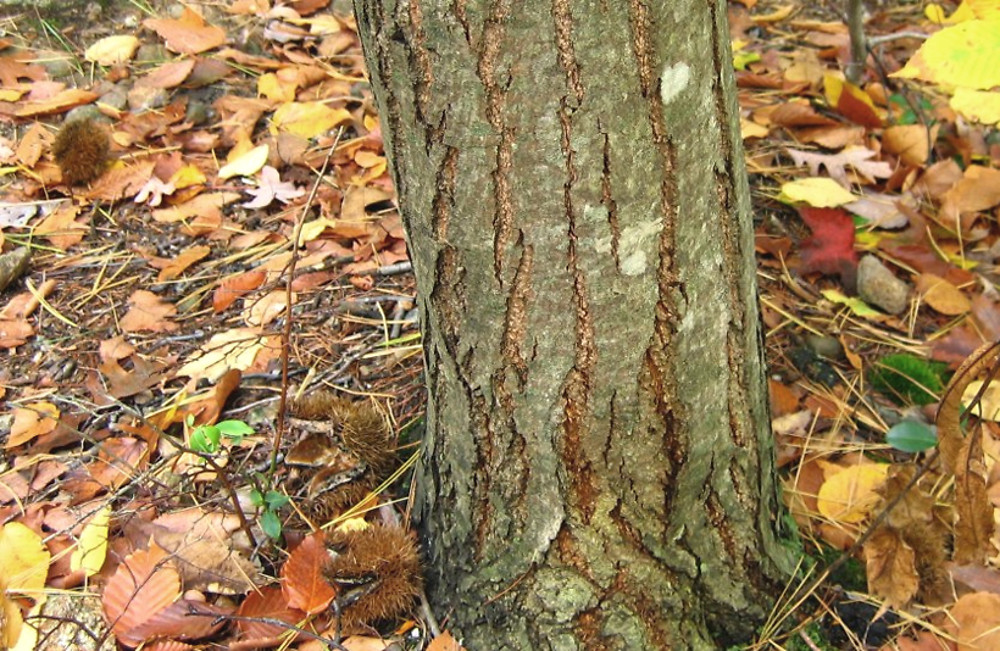
BARK: Young bark is smooth, shiny, and olive-brown with prominent lenticels. Mature bark is dark gray-brown and thick with shallow irregular furrows separating broad flat-topped shiny ridges.
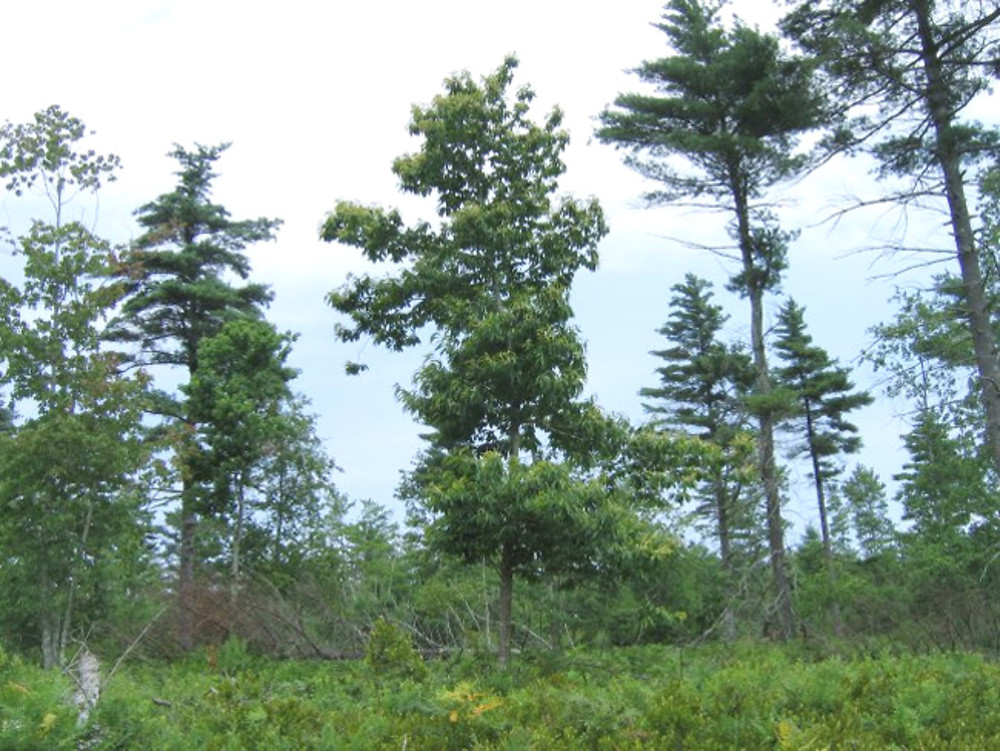
SHAPE: Once a tall and excellent formed tree, the American chestnut is now found mostly as small stump sprouts.
MATURE HEIGHT: 80 feet (historically, prior to blight).
Photo credits: Alexey Zinovjev, ©Arthur Haines (Native Plant Trust)

 Lower Olentangy Urban Arboretum